 Bug FAQ
Bathroom Moth Fly
Clogmia albipunctata · Order: Diptera · Family: Psychodidae
Also called: Drain Fly, Filter Fly, White-spotted Moth Fly
Source: UC IPM
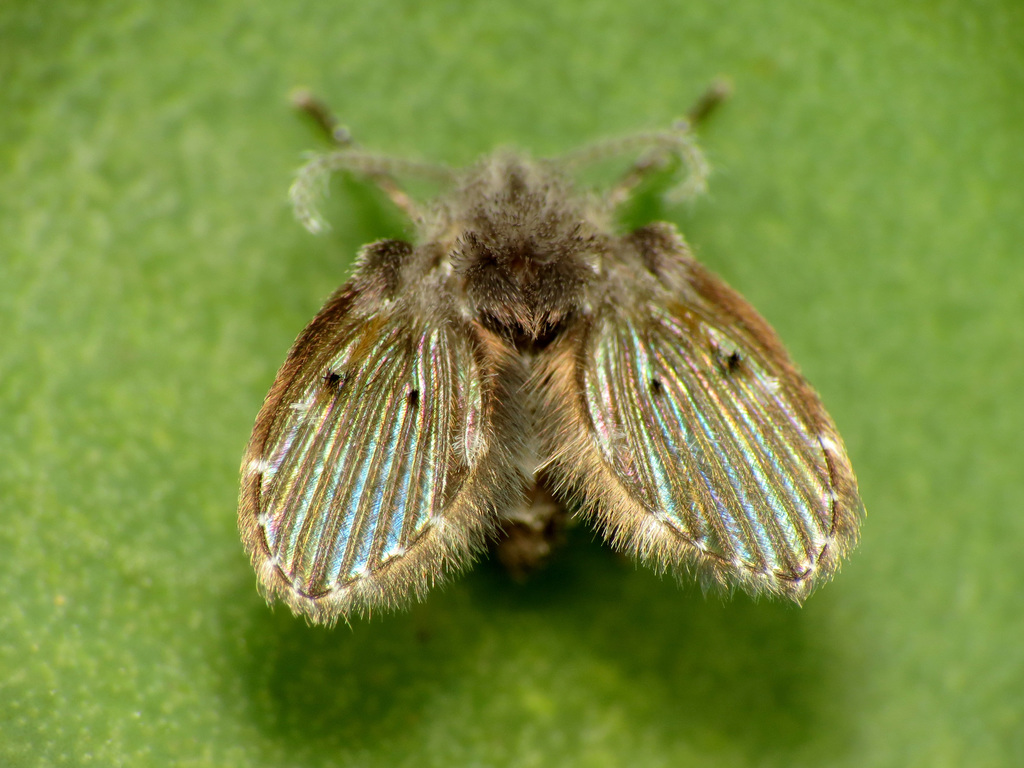
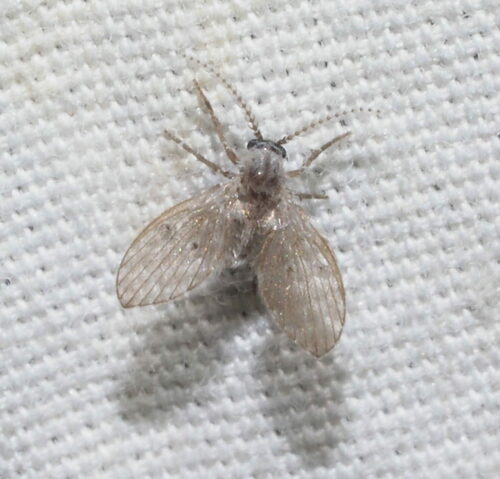
Bathroom moth flies are tiny, about 2 mm long, with broad, hairy wings that show black and white spots. They breed in moist, decaying organic matter such as sink drains, sewage, and plant pots, and are common around household drains. Cleaning drains mechanically or with high-pressure water removes their breeding sites and is the best control method.
How to recognize it
Adults have broad wings covered in brownish-black hairs with a tuft of black hair near each vein fork and white hair at the vein ends, giving a moth-like look. They rest with wings held roof-like over their back, and their wing veins run parallel from base to tip, a trait of the Psychodidae family.
Size
Body length is about 2.2 mm, with wing length roughly the same, though some can reach 2.5 mm.
Source: Wikipedia
Is it a pest in the house?
Common around household drains and in places like sump pits, sewers, and elevator pits where moisture collects. They do not bite, sting, or damage structures, plants, or food, but can carry pathogens from dirty drains to sterile areas.
Does it bite or sting?
They do not bite or sting people or animals. Because they develop in decaying matter, they can transport pathogens to places where sterility is important. Rare cases of myiasis have been reported in very unsanitary conditions.
How to get rid of it
High-pressure drain cleaning eradicates larvae and cleans the pipe length, reducing re-infestation. Eliminating breeding sites is the key to managing moth flies. Physical control methods vary depending on where the flies originated.
Where it lives
Found near sewer drains, sewage plants, plant pots, swamps, and any shaded, moist place with decaying organic matter.
Source: Wikipedia
What it eats
Adults drink water or nectar, while larvae live in water and feed on decaying organic material.
Source: Wikipedia
Lookalikes
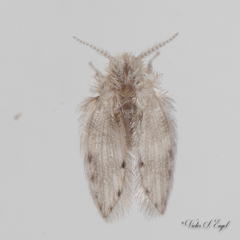
They rest with wings held roof-like and have parallel wing veins, a pattern unique to the Psychodidae family.
Source: UC IPM
Where it is found in the US
Recorded in 49 of 51 states and DC. Most records: California, Texas, Florida, New York, North Carolina, Pennsylvania, Virginia, Maryland.
Darker = more records. Counts are museum and citizen-science records, not population size.
Source: GBIF
Status: introduced in United States. Source: iNaturalist
Months it is reported in the US
Source: GBIF
More photos
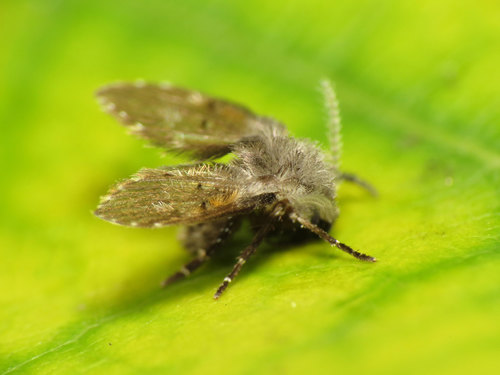
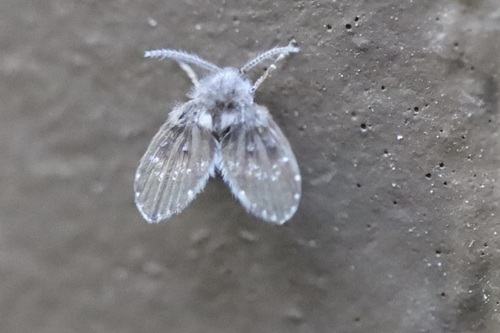
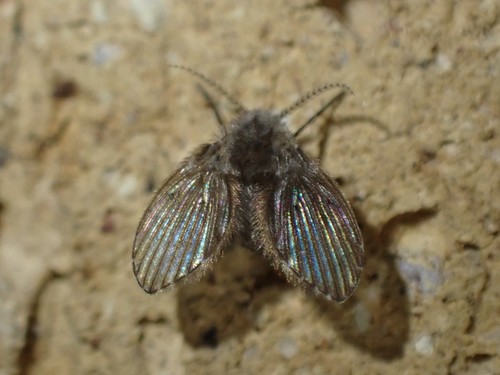
Questions people ask
Same family (Psychodidae)
Sources
- UC IPM: https://ipm.ucanr.edu/PMG/PESTNOTES/pn74167.html
- Wikipedia: https://en.wikipedia.org/wiki/Clogmia_albipunctata
Look it up elsewhere: GBIF · iNaturalist · BugGuide · Wikipedia
Text written 2026-10-22 from the sources above and checked sentence by sentence against them. Data fetched 2026-10-22.