 Bug FAQ
Bath White
Pontia daplidice · Order: Lepidoptera · Family: Pieridae

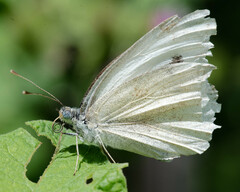
Bath whites are small white butterflies with a wingspan around 45-56 mm. They live on dry, sunny slopes and Mediterranean dunes, and their larvae feed on Brassicaceae such as tower mustard and sea rocket. They are common in central and southern Europe and migrate north each summer, sometimes reaching southern Scandinavia and England.
Source: Wikipedia
How to recognize it
The underside of the hindwing shows greenish blotches that set it apart from other pierids. Males and females can be told apart by distinct markings on the forewing.
Source: Wikipedia
Size
The wingspan is typically 45 to 50 mm, though some sources give 52 to 56 mm.
Source: Wikipedia
Where it lives
It prefers Mediterranean coastal dunes, rocky hot slopes, and other dry, sparsely vegetated ground.
Source: Wikipedia
What it eats
Larvae feed on plants in the Brassicaceae family.
Source: Wikipedia
When you see it
Adults appear during the summer migration northward.
Source: Wikipedia
Where it comes from
Each summer it migrates northward, sometimes reaching southern Scandinavia and occasionally southern England.
Source: Wikipedia
Lookalikes
The greenish blotches on the hindwing underside are a key feature that distinguishes Bath whites from similar pierids.
Source: Wikipedia
Same family (Pieridae)


Sources
- Wikipedia: https://en.wikipedia.org/wiki/Pontia_daplidice
Look it up elsewhere: GBIF · iNaturalist · BugGuide · Wikipedia
Text written 2026-10-22 from the sources above and checked sentence by sentence against them. Data fetched 2026-10-22.