 Bug FAQ
Basswood Round-blotch Miner Moth
Phyllonorycter tiliacella · Order: Lepidoptera · Family: Gracillariidae
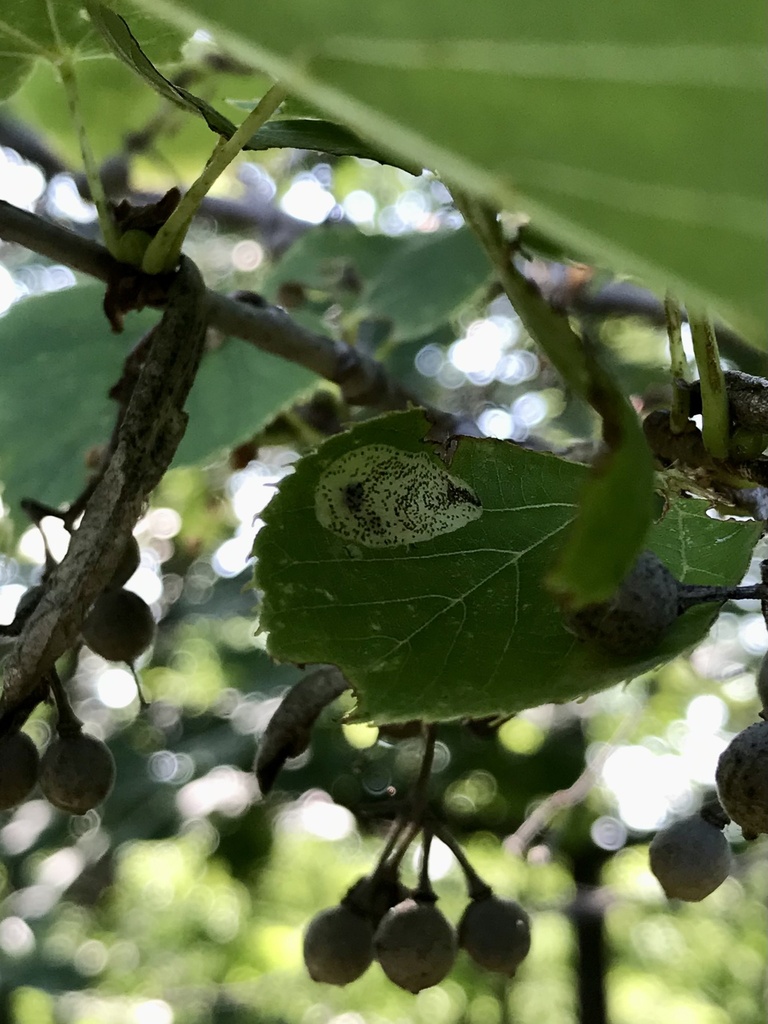
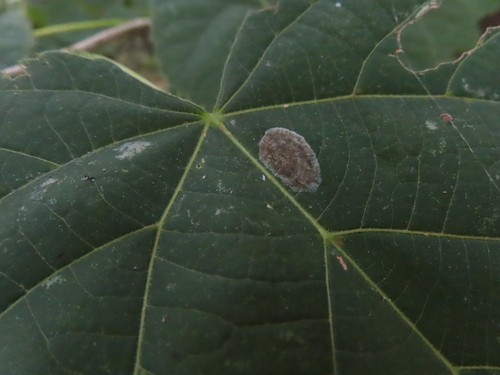
The leaf mines made by the larvae are white and densely speckled with dark brown. The caterpillars feed on basswood trees such as Tilia americana.
Source: Wikipedia
How to recognize it
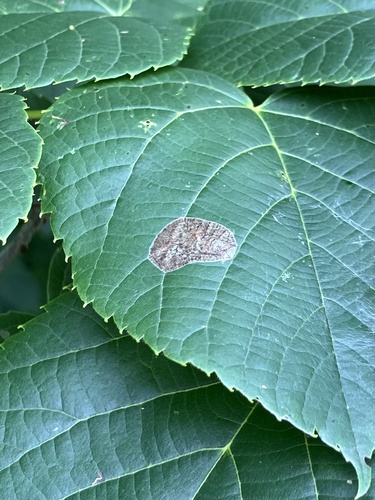
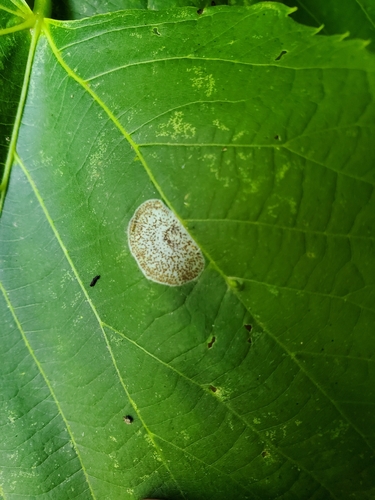
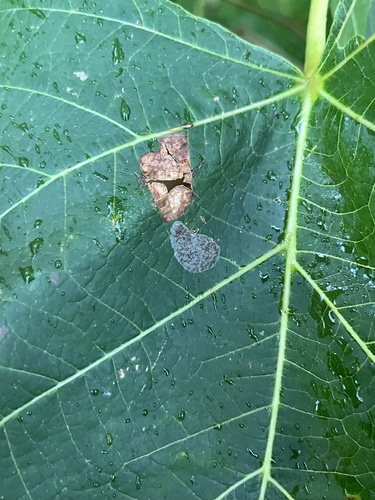
Mines appear white with many dark brown speckles.
Source: Wikipedia
What it eats
Larvae eat leaves of Tilia species, for example Tilia americana.
Source: Wikipedia
Life cycle
The summer generation pupates in a thin silken web and overwinters as a pupa, later spinning a denser cocoon attached above and below.
Source: Wikipedia
Where it comes from
Native to eastern Canada and the northeastern United States.
Source: Wikipedia
Where it is found in the US
Recorded in 19 of 51 states and DC. Most records: Massachusetts, Pennsylvania, Minnesota, Ohio, Wisconsin, New York, New Jersey, Michigan.
Darker = more records. Counts are museum and citizen-science records, not population size.
Source: GBIF
Status: native in North America; native in Canada. Source: iNaturalist
Months it is reported in the US
Source: GBIF
More photos
Questions people ask
What do the leaf mines look like?
They are white and densely speckled with dark brown.
Source: Wikipedia
Which trees do the larvae feed on?
They feed on basswood trees, especially Tilia americana.
Source: Wikipedia
Same family (Gracillariidae)
 Horse-chestnut LeafminerCameraria ohridellaDamages trees, gardens or crops
 Aspen Serpentine Leafminer MothPhyllocnistis populiellaDamages trees, gardens or crops
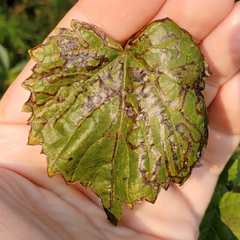 Phyllocnistis vitegenella complexPhyllocnistis vitegenellaDamages trees, gardens or crops
 Locust Digitate Leafminer MothParectopa robiniellaDamages trees, gardens or crops
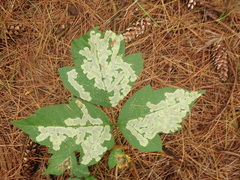 Poison Ivy Leaf-miner MothCameraria guttifinitella
 Phyllocnistis insignisDamages trees, gardens or crops
Sources
- Wikipedia: https://en.wikipedia.org/wiki/Phyllonorycter_tiliacella
Look it up elsewhere: GBIF · iNaturalist · BugGuide · Wikipedia
Text written 2026-10-27 from the sources above and checked sentence by sentence against them. Data fetched 2026-10-27.