 Bug FAQ
Barrens Dagger
Acronicta albarufa · Order: Lepidoptera · Family: Noctuidae
Also called: Barrens Dagger Moth
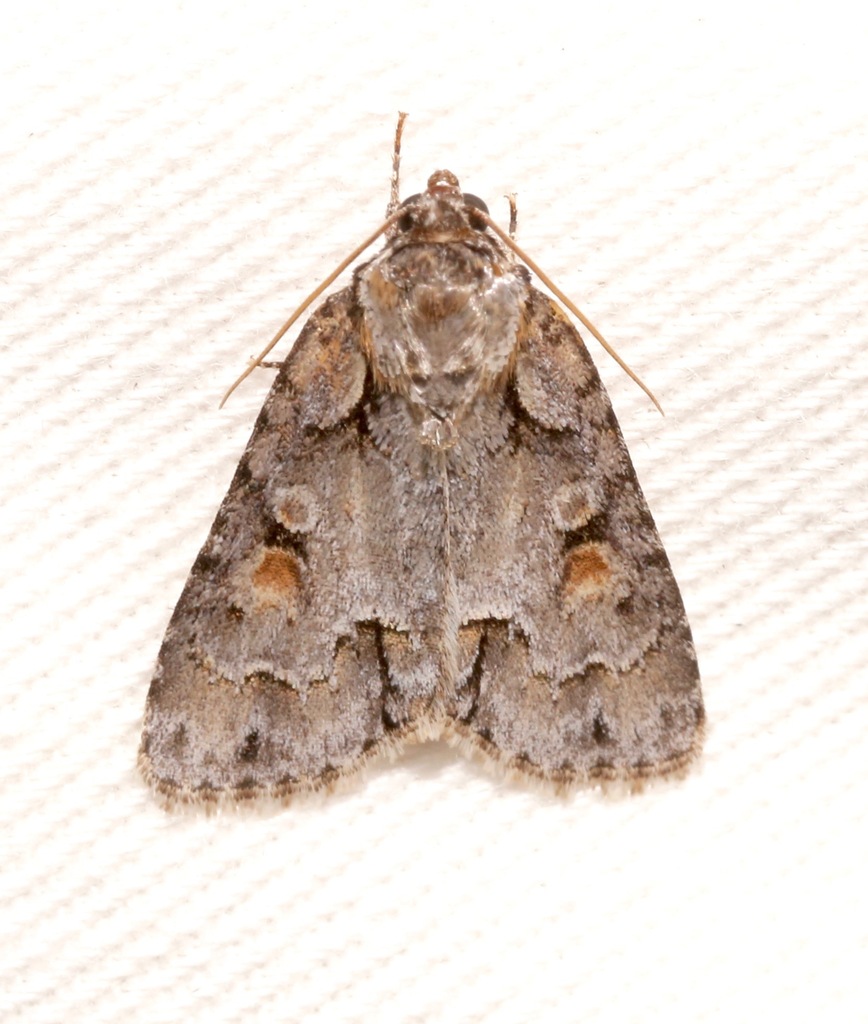
Barrens dagger moths are nocturnal insects about an inch long that live in sandy, dry oak- or pine-dominated barren habitats. Their larvae feed on scrub oak and related oak species, and adults fly mainly from June to August across a fragmented North American range.
Source: Wikipedia
How to recognize it
Barrens dagger moths are nocturnal.
Source: Wikipedia
Size
Adults are just over an inch long (about 3.0 to 3.5 cm).
Source: Wikipedia
Where it lives
They occur in oak or pine barren communities that are sandy, xeric, and open.
Source: Wikipedia
What it eats
Larvae feed on scrub oak (Quercus ilicifolia) and have also been recorded on post oak and dwarf chinkapin oak.
Source: Wikipedia
Life cycle
Adults emerge from cocoons over a two-month period, while pupae can be found in fall, winter and spring.
Source: Wikipedia
Lookalikes
Populations in the southwestern United States may represent a separate species.
Source: Wikipedia
Where it is found in the US
Recorded in 16 of 51 states and DC. Most records: Colorado, New Jersey, New Mexico, New York, Massachusetts, Michigan, Missouri, Connecticut.
Darker = more records. Counts are museum and citizen-science records, not population size.
Source: GBIF
Status: native in North America; native in Canada; native in United States. Source: iNaturalist
Months it is reported in the US
Source: GBIF
More photos
Questions people ask
When are Barrens dagger moths active?
Adults are usually on the wing from June to August, though they can appear as early as late May and as late as September in some areas.
Source: Wikipedia
Same family (Noctuidae)
 Ipsilon Dart MothAgrotis ipsilonDamages trees, gardens or crops
 Fall Armyworm MothSpodoptera frugiperdaDamages trees, gardens or crops
 Army Cutworm MothEuxoa auxiliarisDamages trees, gardens or crops
 Large Yellow UnderwingNoctua pronubaDamages trees, gardens or crops
 Silver ΥAutographa gamma
 American DaggerAcronicta americanaCan irritate skin
Sources
- Wikipedia: https://en.wikipedia.org/wiki/Acronicta_albarufa
Look it up elsewhere: GBIF · iNaturalist · BugGuide · ITIS · Wikipedia
Text written 2026-10-28 from the sources above and checked sentence by sentence against them. Data fetched 2026-10-28.