 Bug FAQ
Barred Coprosma Carpet
Austrocidaria gobiata · Order: Lepidoptera · Family: Geometridae
Also called: barred Coprosma carpet moth, pale oblique-barred moth
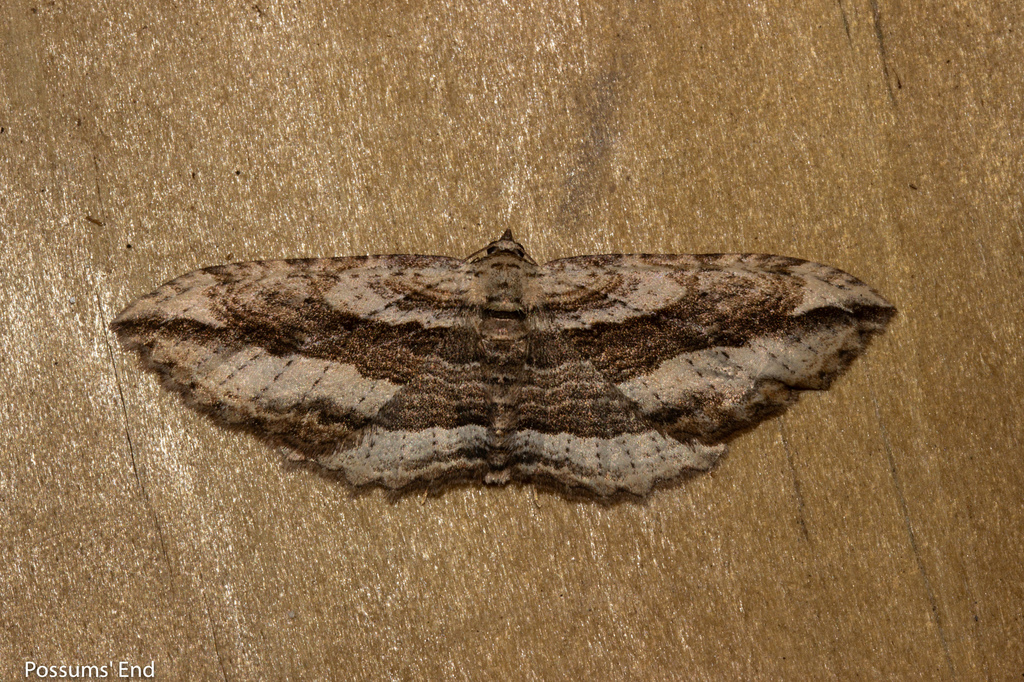
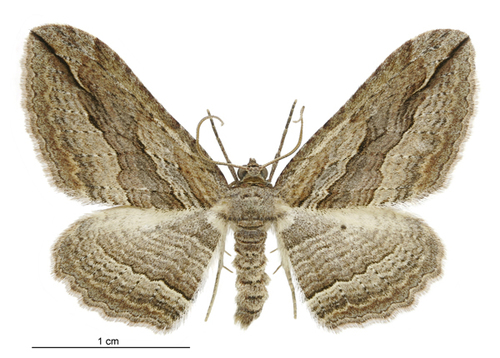
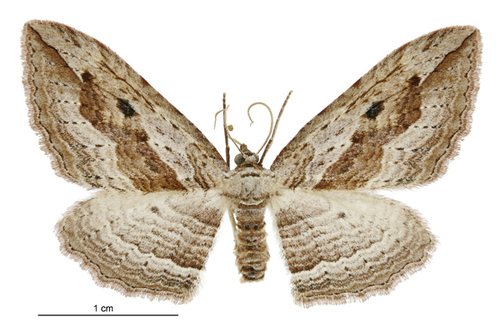
Barred Coprosma Carpet moths have a wingspan of about 1 to 1¼ inches. Adults are pale purplish-grey with distinctive dark diagonal dashes on the forewing tips and several wavy brown lines. They are endemic to New Zealand and live in native forest where the host plant Coprosma areolata grows.
Source: Wikipedia
How to recognize it
Most specimens show a dark diagonal dash on the tips of the forewings.
Source: Wikipedia
Size
The wings expand to about 1¼ inches. The moth’s body length is roughly 1 inch.
Source: Wikipedia
Where it lives
It inhabits native forest, especially where Coprosma areolata is common. It is also found on wind-swept scrubby hilltops with abundant host plants.
Source: Wikipedia
What it eats
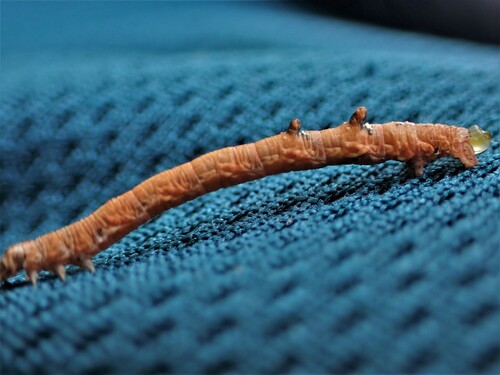
Larvae feed on the leaves of Coprosma areolata. Larvae are hosts for the fly Pales aurea.
Source: Wikipedia
Life cycle
Pupation occurs in leaf litter or among the host-plant leaves. There are likely two broods per year, with the species overwintering as larvae.
Source: Wikipedia
When you see it
Adults can be on the wing throughout the year but are most often seen from October to April. Observations show adults present in all months, with a peak between October and April.
Source: Wikipedia
Where it comes from
The species is endemic to New Zealand. It occurs only in New Zealand.
Source: Wikipedia
Lookalikes
It differs from its sister species Austrocidaria anguligera by having smooth wing margins.
Source: Wikipedia
More photos
Questions people ask
What do the larvae eat?
The caterpillars feed on the leaves of the native plant Coprosma areolata.
Source: Wikipedia
When are adult moths most likely to be seen?
Adults are most commonly observed from October through April, though they can be seen all year.
Source: Wikipedia
Where is this moth found?
It is endemic to New Zealand and lives in native forest where its host plant grows.
Source: Wikipedia
How can I tell this moth apart from similar species?
Look for a dark diagonal dash on the forewing tips and smooth wing margins, which separate it from Austrocidaria anguligera.
Source: Wikipedia
Same family (Geometridae)
 Willow BeautyPeribatodes rhomboidaria
 Pale BeautyCampaea perlataDamages trees, gardens or crops
 Large Lace-border MothScopula limboundataDamages trees, gardens or crops
 Riband WaveIdaea aversata
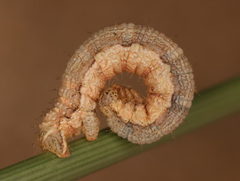 Yellow Shell MothCamptogramma bilineata
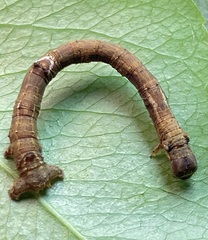 Large Maple Spanworm MothProchoerodes lineolaDamages trees, gardens or crops
Sources
- Wikipedia: https://en.wikipedia.org/wiki/Austrocidaria_gobiata
Look it up elsewhere: GBIF · iNaturalist · BugGuide · Wikipedia
Text written 2026-10-23 from the sources above and checked sentence by sentence against them. Data fetched 2026-10-23.