 Bug FAQ
Bare-bellied Falsehorn
Temnostoma barberi · Order: Diptera · Family: Syrphidae
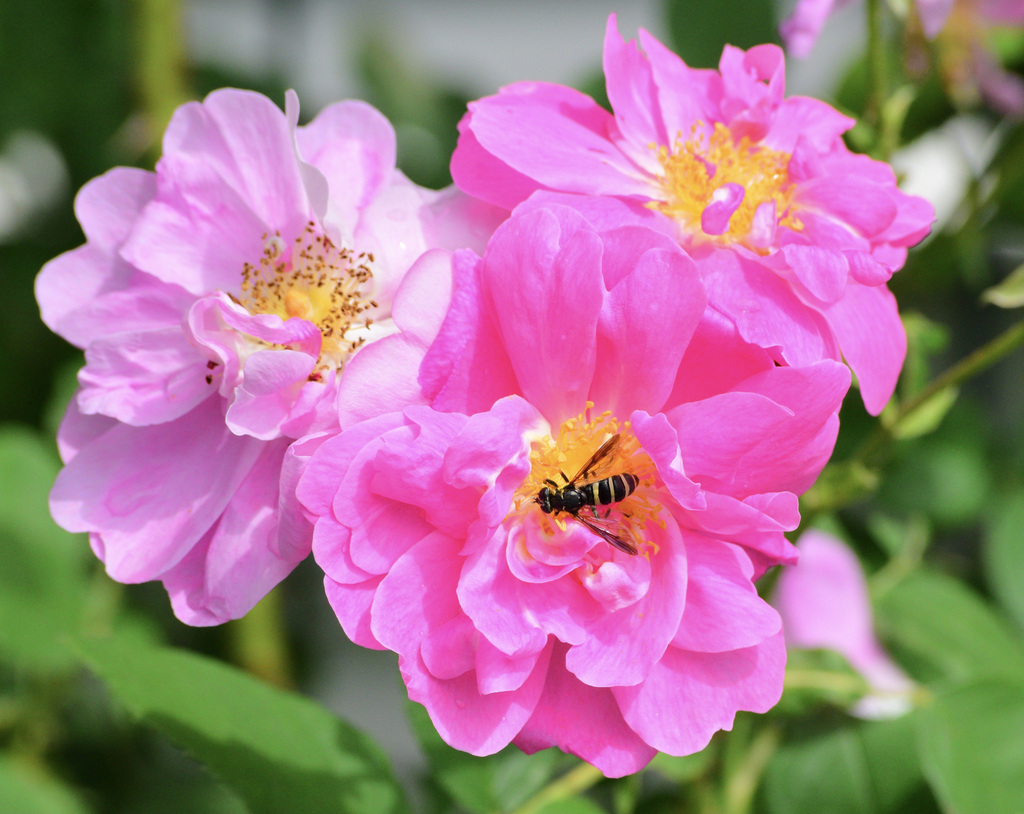
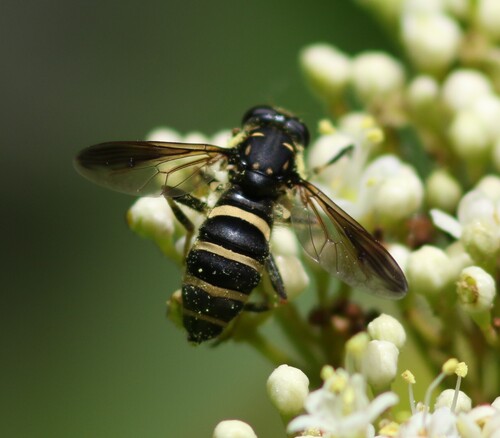
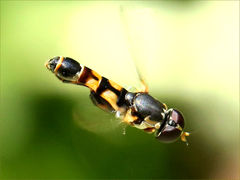
The Bare-bellied Falsehorn looks a lot like a wasp, which can cause people to mistake it for a stinging insect. Adults are often seen visiting flowers for nectar and pollen, while the larvae live inside moist, decaying wood. It is native to the eastern United States and nearby parts of Canada.
Source: Wikipedia
How to recognize it
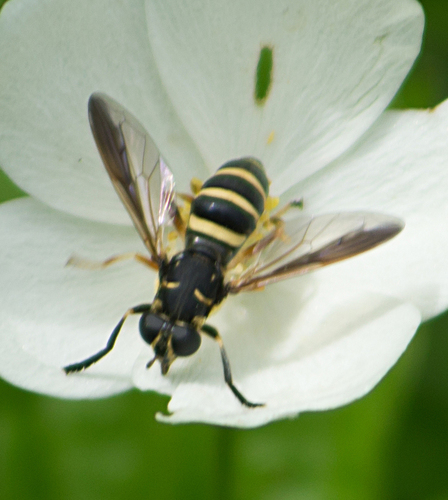
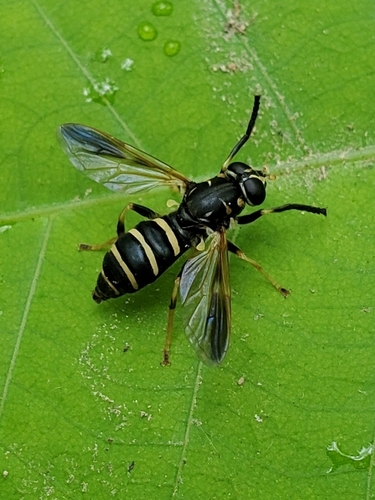
Adults strongly resemble wasps in appearance.
Source: Wikipedia
Where it lives
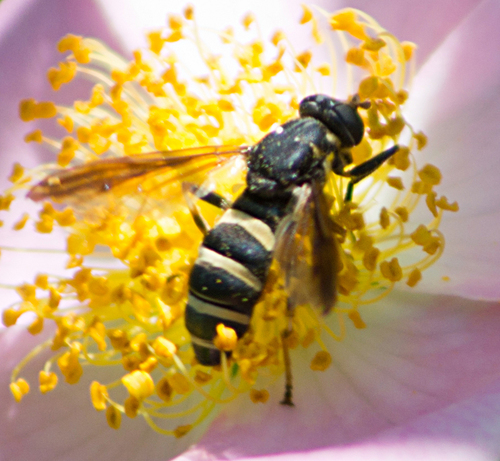
Adults are commonly found on flowers.
Source: Wikipedia
What it eats
Adults feed on nectar for energy and pollen for protein.
Source: Wikipedia
Life cycle
Larvae burrow into moist, decayed wood where they develop.
Source: Wikipedia
Lookalikes
Because of their strong wasp mimicry, they are often mistaken for true wasps.
Source: Wikipedia
Where it is found in the US
Recorded in 23 of 51 states and DC. Most records: Maine, Vermont, Minnesota, Illinois, Michigan, Massachusetts, New Hampshire, New York.
Darker = more records. Counts are museum and citizen-science records, not population size.
Source: GBIF
Status: native in North America; native in Canada. Source: iNaturalist
Months it is reported in the US
Source: GBIF
More photos
Questions people ask
What does the Bare-bellied Falsehorn look like?
It is a strong wasp mimic, looking much like a wasp.
Source: Wikipedia
Where can I find this bug?
Adults are usually seen on flowers in the eastern United States and nearby Canada.
Source: Wikipedia
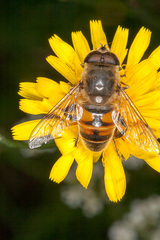
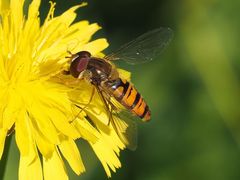
Same family (Syrphidae)


Sources
- Wikipedia: https://en.wikipedia.org/wiki/Temnostoma_barberi
Look it up elsewhere: GBIF · iNaturalist · BugGuide · ITIS · Wikipedia
Text written 2026-10-27 from the sources above and checked sentence by sentence against them. Data fetched 2026-10-27.