 Bug FAQ
Bad-wing Moth
Dyspteris abortivaria · Order: Lepidoptera · Family: Geometridae
Also called: Badwing Moth, The Bad-wing

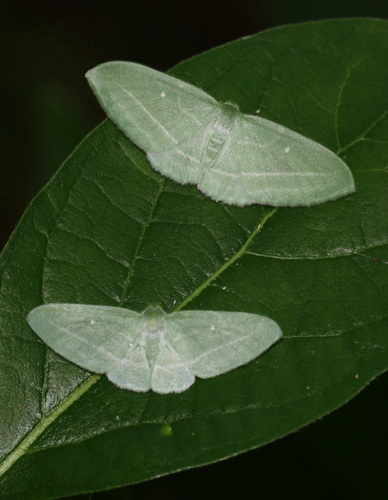
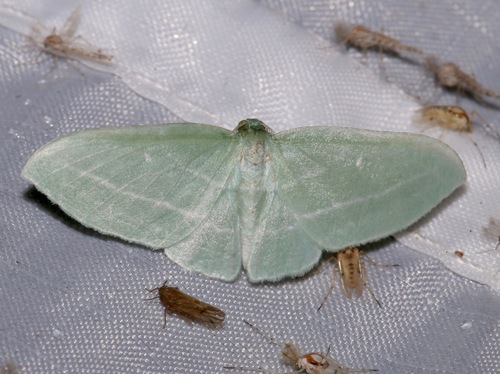
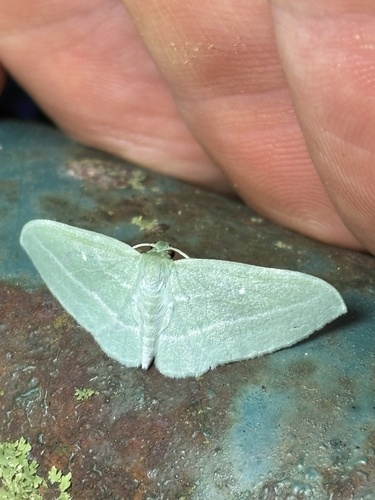
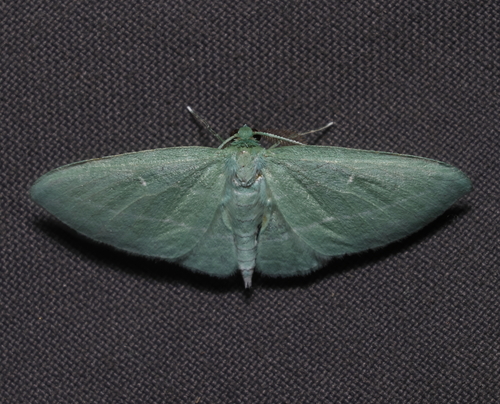
Its common name comes from the fact that the forewing is far larger than the hindwing, which often makes spreading the wings difficult. The species was first described by Herrich-Schäffer in 1855. It is found in North America.
Source: Wikipedia
How to recognize it
The moth’s forewing is much larger than its hindwing, so the wings are hard to pull into position for spreading.
Source: Wikipedia
Where it comes from
The species occurs in North America.
Source: Wikipedia
Where it is found in the US
Recorded in 36 of 51 states and DC. Most records: North Carolina, Ohio, Alabama, Tennessee, Pennsylvania, New York, Virginia, Maryland.
Darker = more records. Counts are museum and citizen-science records, not population size.
Source: GBIF
Status: native in North America; native in Canada; native in United States. Source: iNaturalist
Months it is reported in the US
Source: GBIF
More photos
Same family (Geometridae)
 Willow BeautyPeribatodes rhomboidaria
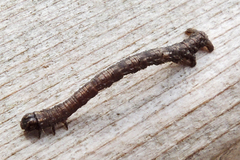 Pale BeautyCampaea perlataDamages trees, gardens or crops
 Large Lace-border MothScopula limboundataDamages trees, gardens or crops
 Riband WaveIdaea aversata
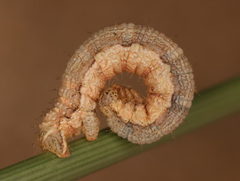 Yellow Shell MothCamptogramma bilineata
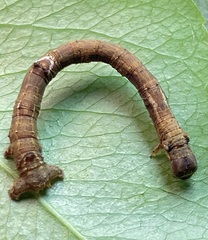 Large Maple Spanworm MothProchoerodes lineolaDamages trees, gardens or crops
Sources
- Wikipedia: https://en.wikipedia.org/wiki/Dyspteris
Look it up elsewhere: GBIF · iNaturalist · BugGuide · ITIS · Wikipedia
Text written 2026-10-23 from the sources above and checked sentence by sentence against them. Data fetched 2026-10-23.