 Bug FAQ
Azalea Leafminer Moth
Caloptilia azaleella · Order: Lepidoptera · Family: Gracillariidae
Also called: Azalea Leaf Miner, Azalea leafminer
Source: Wikipedia
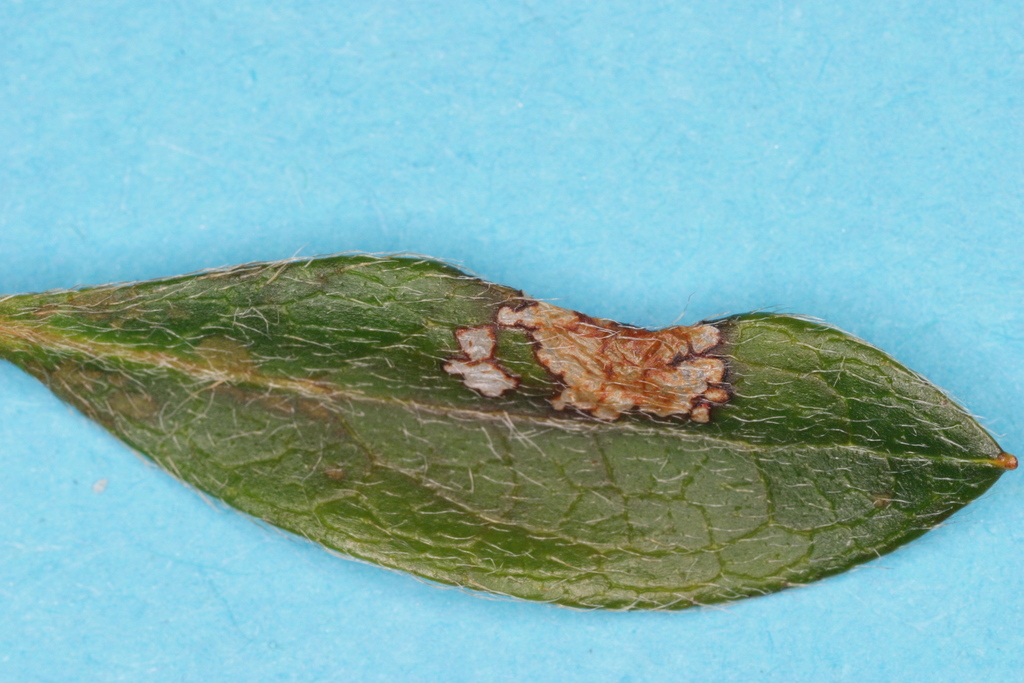
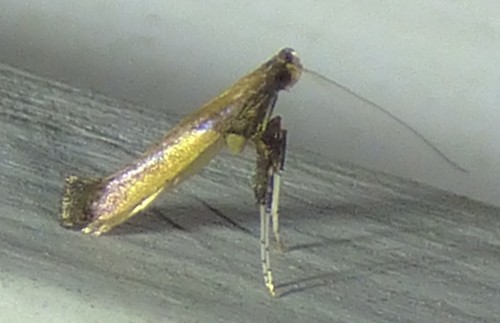
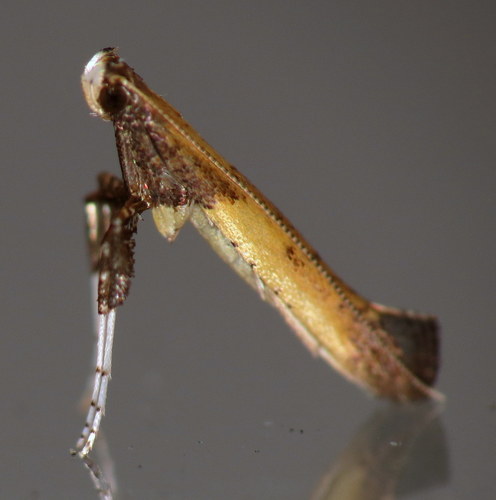
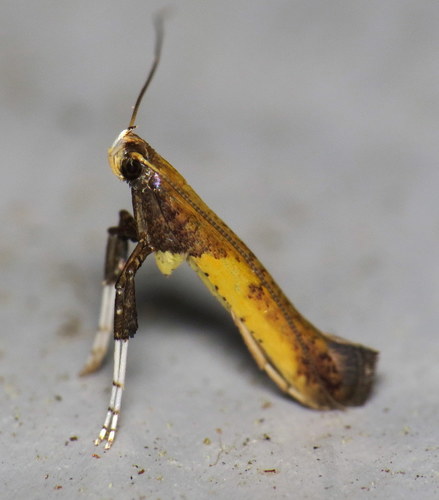
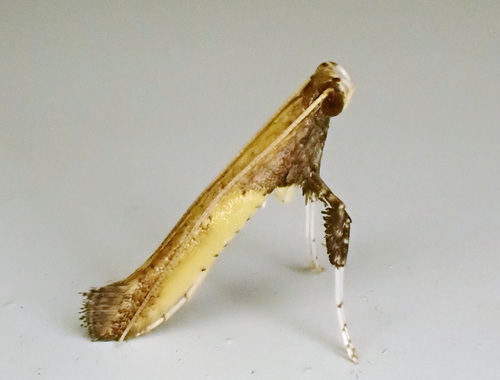
Adults have a wingspan of about 10 to 11 mm and dark brown forewings with a yellow costal band. The larvae mine azalea leaves and later roll the leaf tip into a cone, harming the plant.
Source: Wikipedia
Size
The moth’s wingspan measures 10 to 11 mm (0.39 to 0.43 in).
Source: Wikipedia
Is it a pest in the house?
The moth is frequently reported in greenhouse environments. It also appears in sheltered garden sites like the Royal Horticultural Society Gardens, Wisley.
Source: Wikipedia
Where it lives
It is commonly found in greenhouses and sheltered gardens such as Buckingham Palace and Kew Gardens.
Source: Wikipedia
What it eats
Females lay eggs on azalea leaves, usually near the midrib. Azalea (Rhododendron spp.) is the only recorded host plant.
Source: Wikipedia
Life cycle
Larvae first create a mine in the leaf and later roll the leaf tip downward to form a cone. When fully grown, they pupate in a pale-brown cocoon beneath a leaf and can mate about a week later.
Source: Wikipedia
When you see it
Adults are on the wing from May to October, with two or sometimes three generations in Britain.
Source: Wikipedia
Where it comes from
The species is native to Japan.
Source: Wikipedia
Where it is found in the US
Recorded in 26 of 51 states and DC. Most records: Virginia, Massachusetts, North Carolina, Maryland, Alabama, New Jersey, Ohio, New York.
Darker = more records. Counts are museum and citizen-science records, not population size.
Source: GBIF
Status: introduced in United States; introduced in Canada. Source: iNaturalist
Months it is reported in the US
Source: GBIF
More photos
Questions people ask
How can I tell if azalea leafminer moth larvae are present?
Look for mines in the leaf tissue and later for leaf tips rolled into small cones.
Source: Wikipedia
When are azalea leafminer moths active?
Adults fly from May through October, producing two or sometimes three broods in Britain.
Source: Wikipedia
Where are these moths most likely to be found?
They are common in greenhouses and sheltered gardens such as those at Buckingham Palace and Kew.
Source: Wikipedia
Same family (Gracillariidae)
 Horse-chestnut LeafminerCameraria ohridellaDamages trees, gardens or crops
 Aspen Serpentine Leafminer MothPhyllocnistis populiellaDamages trees, gardens or crops
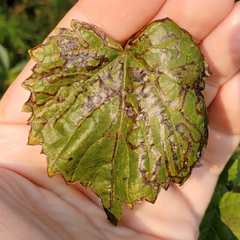 Phyllocnistis vitegenella complexPhyllocnistis vitegenellaDamages trees, gardens or crops
 Locust Digitate Leafminer MothParectopa robiniellaDamages trees, gardens or crops
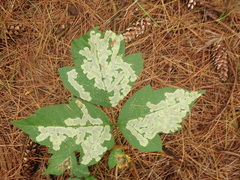 Poison Ivy Leaf-miner MothCameraria guttifinitella
 Phyllocnistis insignisDamages trees, gardens or crops
Sources
- Wikipedia: https://en.wikipedia.org/wiki/Caloptilia_azaleella
Look it up elsewhere: GBIF · iNaturalist · BugGuide · Wikipedia
Text written 2026-10-25 from the sources above and checked sentence by sentence against them. Data fetched 2026-10-25.