 Bug FAQ
Atta laevigata
Atta laevigata · Order: Hymenoptera · Family: Formicidae
Source: Wikipedia
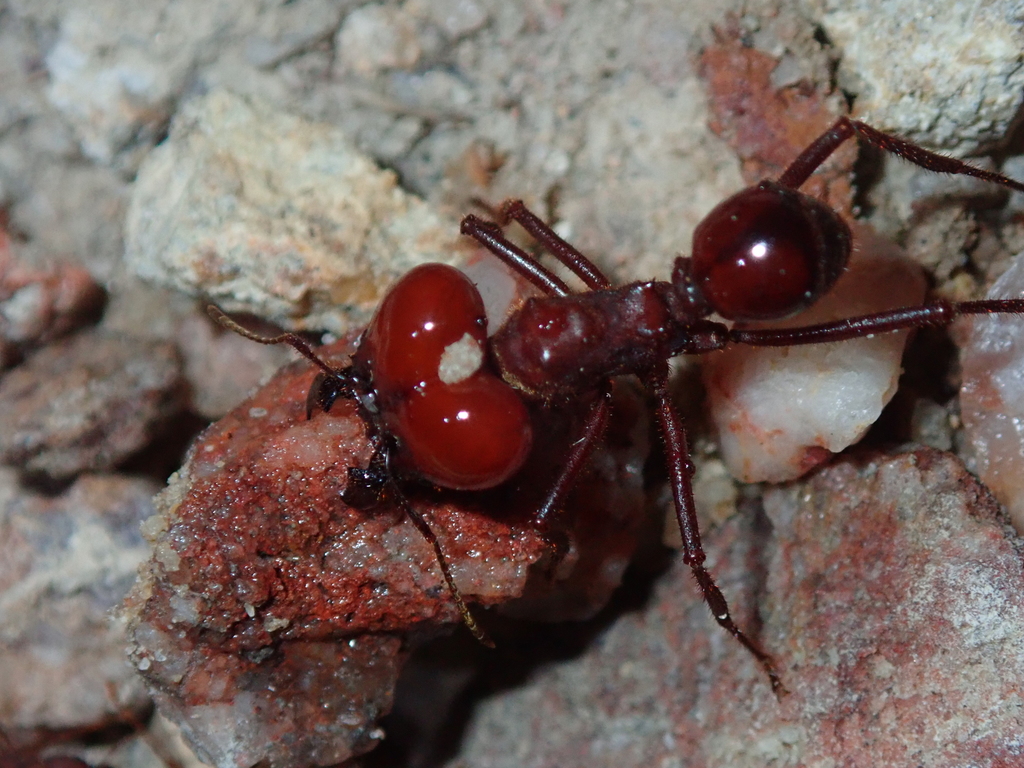
Atta laevigata is one of the largest leafcutter ants, recognizable by the smooth, shining head of its biggest workers. A mature colony can contain around 3.5 million individuals. They are found from Venezuela down to Paraguay and are harvested for about nine weeks each rainy season.
Source: Wikipedia
How to recognize it
The largest workers have a smooth, shining head that makes them easy to spot.
Source: Wikipedia
Size
This species ranks among the biggest leafcutter ants.
Source: Wikipedia
Does it bite or sting?
Local workers often get bitten by these ants with their strong mandibles.
Source: Wikipedia
Where it lives
They live in areas ranging from Venezuela to Paraguay.
Source: Wikipedia
Life cycle
Colonies can reach roughly 3.5 million ants.
Source: Wikipedia
Where it comes from
Their native range extends from Venezuela southward to Paraguay.
Source: Wikipedia
More photos

Questions people ask
Do Atta laevigata ants bite people?
Yes, they can bite with strong mandibles, causing mild bites.
Source: Wikipedia
When are these ants harvested?
They are harvested for about nine weeks each rainy season.
Source: Wikipedia
Same family (Formicidae)
 Eastern Black Carpenter AntCamponotus pennsylvanicusCan damage your home
 Red Imported Fire AntSolenopsis invictaCan sting
 American Winter AntPrenolepis imparis
 Argentine AntLinepithema humileNuisance, not dangerous
 Immigrant Pavement AntTetramorium immigransCan sting
 Odorous House AntTapinoma sessileCan damage your home
Sources
- Wikipedia: https://en.wikipedia.org/wiki/Atta_laevigata
Look it up elsewhere: GBIF · iNaturalist · BugGuide · ITIS · Wikipedia
Text written 2026-10-23 from the sources above and checked sentence by sentence against them. Data fetched 2026-10-23.