 Bug FAQ
Aspilanta hydrangaeella
Aspilanta hydrangaeella · Order: Lepidoptera · Family: Heliozelidae
Source: Wikipedia
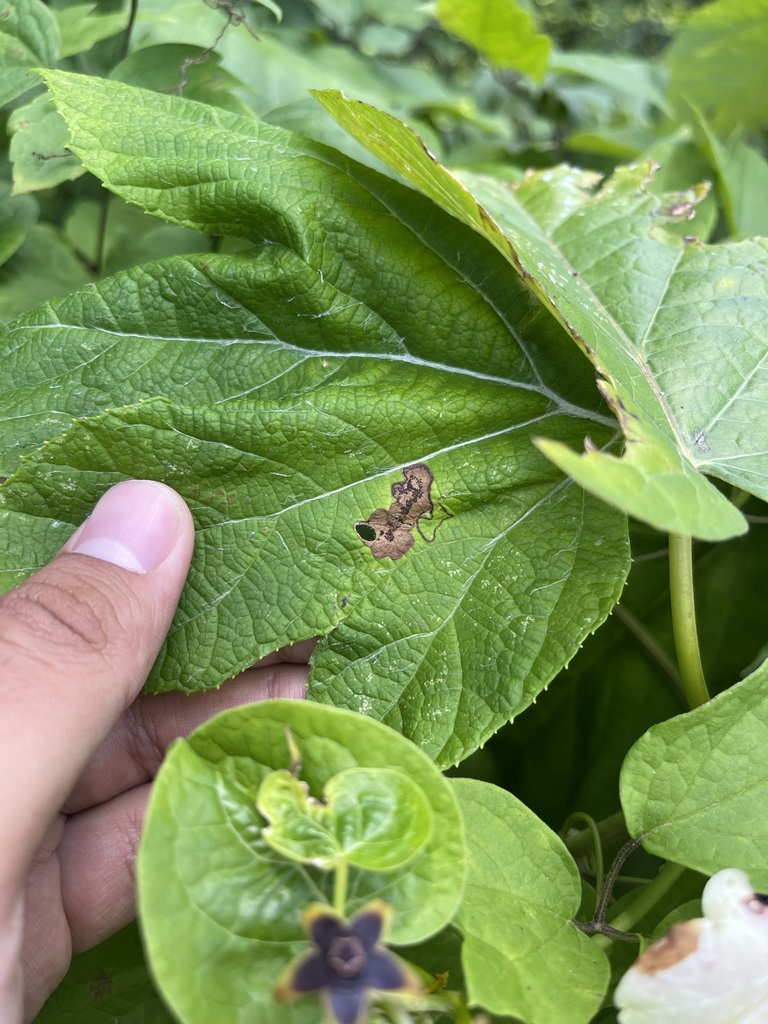
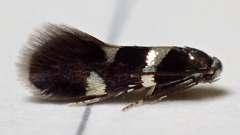
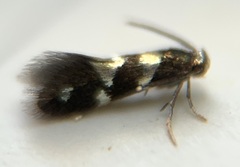
Adults are tiny moths with a wingspan of about 5 mm and forewings just over 2 mm long. The larvae mine the leaves of smooth and snowy hydrangea, creating linear galleries that widen into blotches and eventually cut out a small case to pupate. They are found in the eastern United States, including states such as Georgia, Illinois, and Tennessee.
Source: Wikipedia
How to recognize it
Adults can be told apart from other Aspilanta moths by the white tips on their antennae.
Source: Wikipedia
Size
The wingspan ranges from 5.0 to 5.8 mm, with each forewing measuring 2.2 to 2.8 mm.
Source: Wikipedia
Where it lives
Larvae live inside hydrangea leaves as leaf miners.
Source: Wikipedia
What it eats
Larvae feed on the leaves of smooth hydrangea (Hydrangea arborescens). They are also found, though less often, on snowy hydrangea (Hydrangea radiata).
Source: Wikipedia
Life cycle
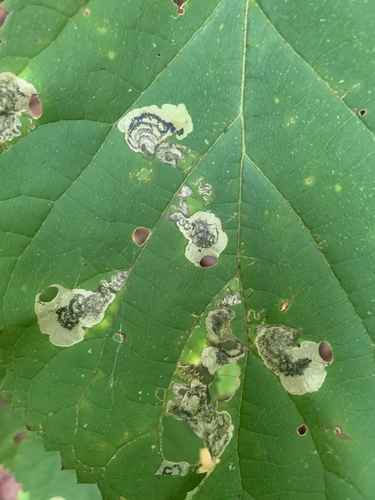
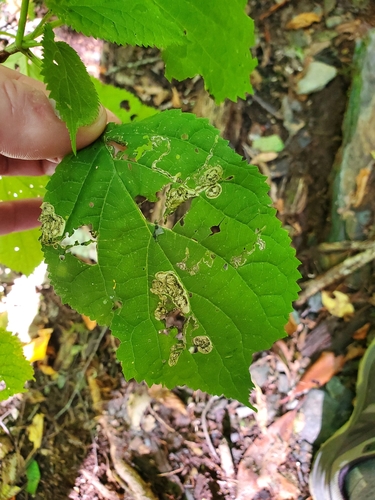
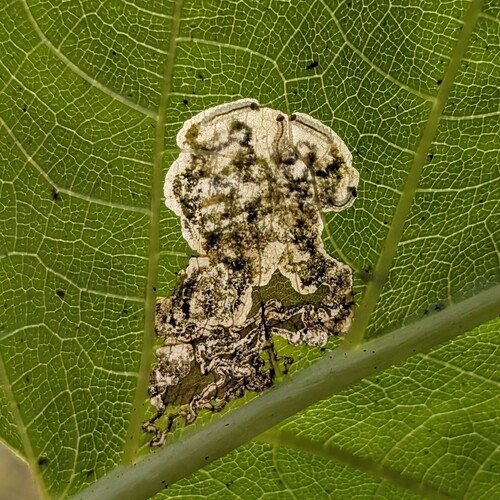
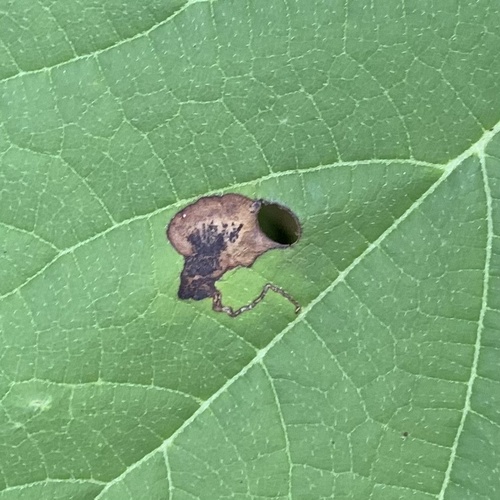
The leaf mine starts as a long, sometimes winding line that widens into an elongated blotch or wide gallery. When ready to pupate, the larva cuts a 3.5 to 4.5 mm long case from the leaf, leaving an elliptical hole.
Source: Wikipedia
Lookalikes
Adults look similar to other Aspilanta species, but the white-tipped antennae set them apart.
Source: Wikipedia
Where it is found in the US
Recorded in 16 of 51 states and DC. Most records: North Carolina, Pennsylvania, Georgia, Ohio, Tennessee, Virginia, South Carolina, Maryland.
Darker = more records. Counts are museum and citizen-science records, not population size.
Source: GBIF
Months it is reported in the US
Source: GBIF
More photos
Questions people ask
What plants do these moths affect?
The larvae mine and damage the leaves of smooth hydrangea and, less frequently, snowy hydrangea.
Source: Wikipedia
How can I tell this moth apart from other small moths?
Look for the distinctive white tips on the antennae of the adult.
Source: Wikipedia
Same family (Heliozelidae)

Sources
- Wikipedia: https://en.wikipedia.org/wiki/Aspilanta_hydrangaeella
Look it up elsewhere: GBIF · iNaturalist · BugGuide · Wikipedia
Text written 2026-10-28 from the sources above and checked sentence by sentence against them. Data fetched 2026-10-28.