 Bug FAQ
Asian Needle Ant
Brachyponera chinensis · Order: Hymenoptera · Family: Formicidae
Source: Wikipedia
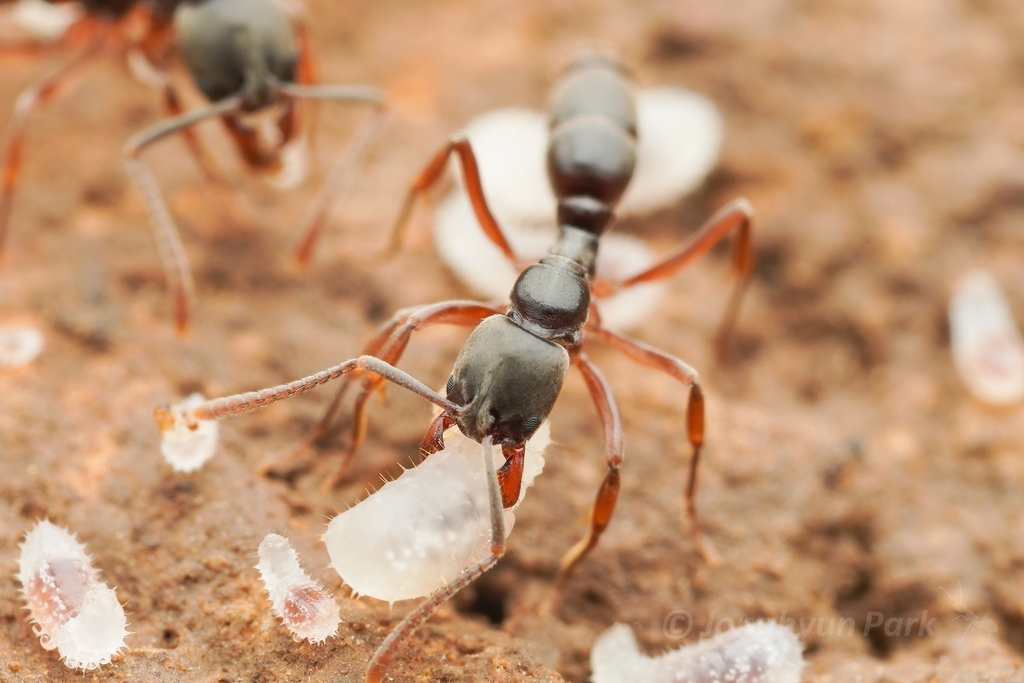
They live in moist, shaded spots such as under hardwood trees, in rice-paddy dykes, and even backyards. They are often confused with other Brachyponera ants because they look very similar.
Source: Wikipedia
How to recognize it
They look a lot like Brachyponera luteipes, B. nigrita, and B. obscurans, so identification can be tricky.
Source: Wikipedia
Is it a pest in the house?
Because they are entering more urban settings, people are likely to encounter them more often over time.
Source: Wikipedia
Does it bite or sting?
They are not aggressive but will sting if disturbed, and the sting can be quite painful. Their venom contains proteins that can trigger allergic reactions, including anaphylaxis and hives.
Source: Wikipedia
Where it lives
In the American South they nest near or under hardwood trees, preferring moist, shaded environments. In their native range they are also found in rice-paddy dykes and other agricultural lands. They have moved into urban areas, showing up in backyards and on sidewalks.
Source: Wikipedia
What it eats
They often set up nests close to termite colonies because termites provide a reliable food source.
Source: Wikipedia
Life cycle
Colonies are eusocial with overlapping generations and a division of labor. Queens store sperm in a special pouch, allowing them to mate once and keep laying eggs for life.
Source: Wikipedia
Where it comes from
Their original range includes Japan, China, both Koreas, Taiwan, Thailand, Vietnam, and Nepal.
Source: Wikipedia
Lookalikes
They are frequently mistaken for other Brachyponera species such as B. luteipes, B. nigrita, and B. obscurans.
Source: Wikipedia
Where it is found in the US
Recorded in 27 of 51 states and DC. Most records: North Carolina, Georgia, South Carolina, Virginia, Alabama, Tennessee, Maryland, New York.
Darker = more records. Counts are museum and citizen-science records, not population size.
Source: GBIF
Status: introduced in North America; introduced in Canada; introduced in United States. Source: iNaturalist
Months it is reported in the US
Source: GBIF
More photos

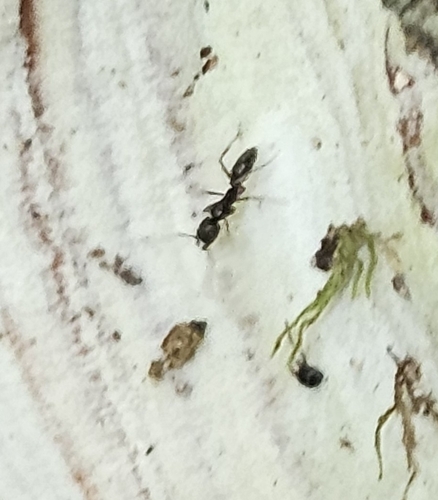
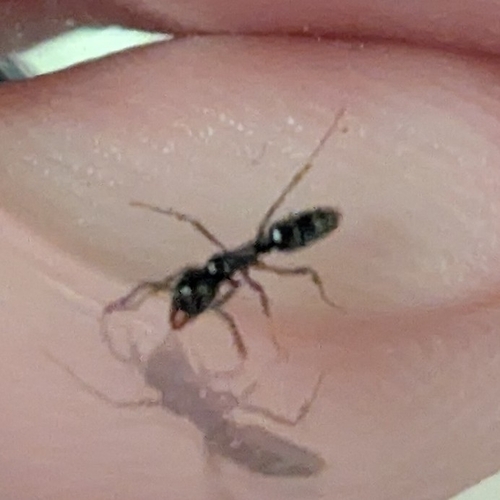
Questions people ask
Do Asian needle ants sting?
Yes, they will sting when disturbed and the sting can be painful.
Source: Wikipedia
Can their sting cause an allergic reaction?
Their venom can cause allergic reactions, including anaphylaxis and hives.
Source: Wikipedia
Where are Asian needle ants likely to be found?
They prefer moist, shaded areas like under hardwood trees, in rice-paddy dykes, and in urban backyards or sidewalks.
Source: Wikipedia
How can I tell Asian needle ants apart from similar ants?
They look very similar to other Brachyponera species, so careful identification is needed.
Source: Wikipedia
Same family (Formicidae)
 Eastern Black Carpenter AntCamponotus pennsylvanicusCan damage your home
 Red Imported Fire AntSolenopsis invictaCan sting
 American Winter AntPrenolepis imparis
 Argentine AntLinepithema humileNuisance, not dangerous
 Immigrant Pavement AntTetramorium immigransCan sting
 Odorous House AntTapinoma sessileCan damage your home
Sources
- Wikipedia: https://en.wikipedia.org/wiki/Brachyponera_chinensis
Look it up elsewhere: GBIF · iNaturalist · BugGuide · Wikipedia
Text written 2026-10-22 from the sources above and checked sentence by sentence against them. Data fetched 2026-10-22.