 Bug FAQ
Asbolus laevis
Asbolus laevis · Order: Coleoptera · Family: Tenebrionidae
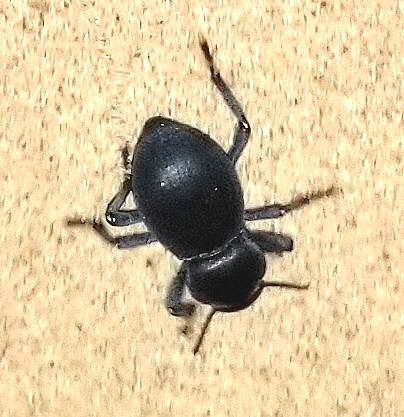
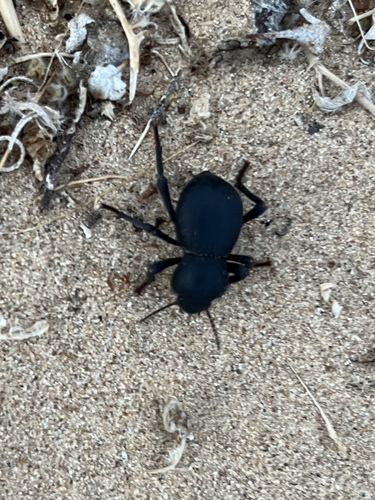
Asbolus laevis is a small beetle that is smooth, black and glossy with fine dots and short rough points near the edges of its wing covers. It lives in dry, sandy places such as the Sonoran Desert. The species is native to the southwestern United States, including southern California, Arizona, and northwestern Mexico.
Source: Wikipedia
How to recognize it
The beetle’s surface is smooth, black, glossy, with sparse fine dots and short rough points on the margins of the elytra.
Source: Wikipedia
Size
It is generally smaller than related species in its genus.
Source: Wikipedia
Lookalikes
It can be confused with Asbolus verrucosus, but is smaller and smoother.
Source: Wikipedia
Where it is found in the US
Recorded in 2 of 51 states and DC. Most records: California, Arizona.
Darker = more records. Counts are museum and citizen-science records, not population size.
Source: GBIF
Status: native in North America; native in United States. Source: iNaturalist
Months it is reported in the US
Source: GBIF
More photos
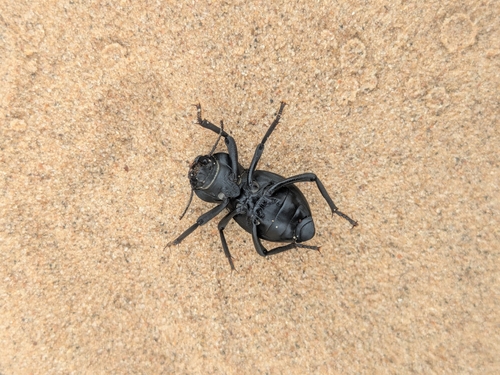
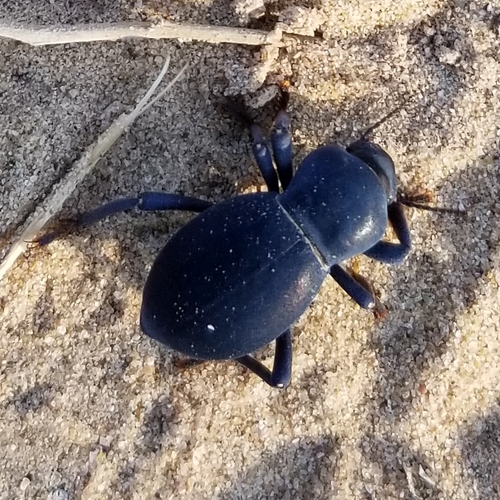
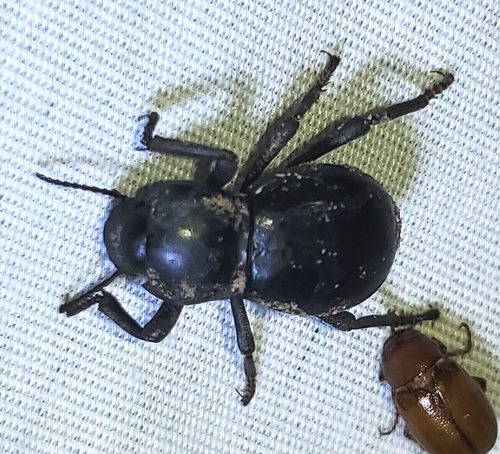
Questions people ask
How can I tell Asbolus laevis apart from similar beetles?
It is smaller, smoother and has a glossy black surface with fine dots and short rough points near the wing edges, unlike the larger, more textured Asbolus verrucosus.
Source: Wikipedia
Where might I find Asbolus laevis?
Look for it in dry, sandy desert areas such as the Sonoran Desert within its native range of southern California, Arizona, and northwestern Mexico.
Source: Wikipedia
Same family (Tenebrionidae)


Sources
- Wikipedia: https://en.wikipedia.org/wiki/Asbolus_laevis
Look it up elsewhere: GBIF · iNaturalist · BugGuide · Wikipedia
Text written 2026-10-25 from the sources above and checked sentence by sentence against them. Data fetched 2026-10-25.