 Bug FAQ
Arboreal Bicolored Slender Ant
Tetraponera rufonigra · Order: Hymenoptera · Family: Formicidae
Source: Wikipedia
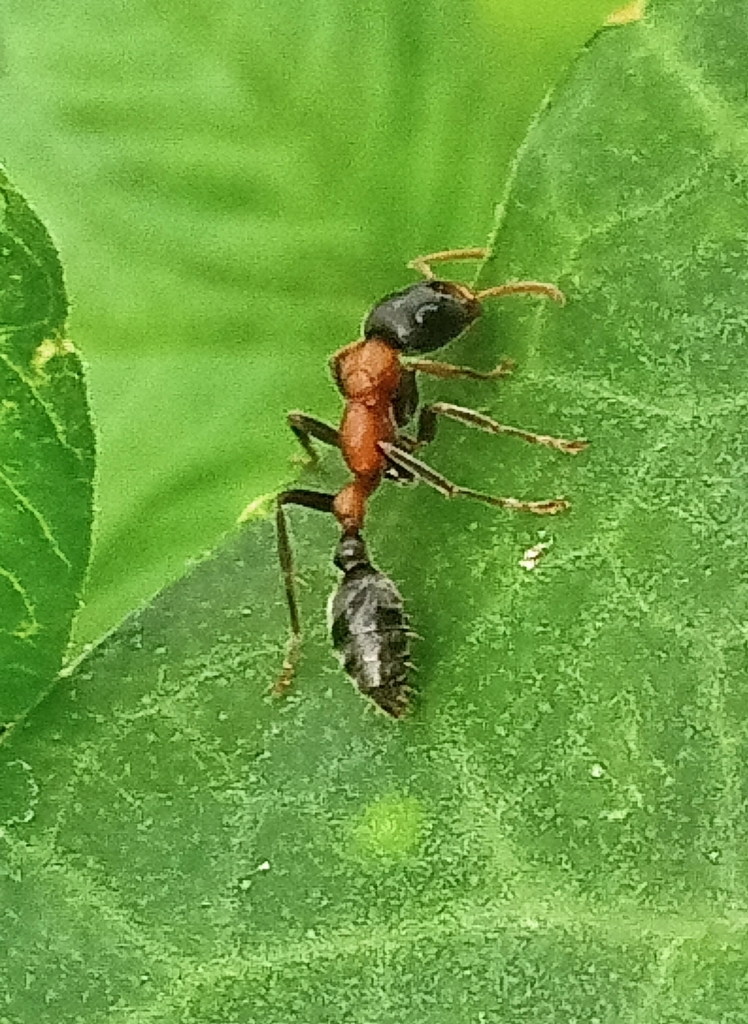
The bi-coloured arboreal ant lives in trees, making small nests in dried wood. It hunts small insects for food and is found across Southeast Asia. Its sting can trigger allergic reactions in humans.
Source: Wikipedia
How to recognize it
It is commonly called the bi-coloured arboreal ant.
Source: Wikipedia
Does it bite or sting?
They have a well-developed sting that can cause allergic reactions in people.
Source: Wikipedia
How to get rid of it
In Sinhala they are known as “Hath polayaa”.
Source: Wikipedia
Where it lives
These ants are arboreal and build small nests in dried parts of trees.
Source: Wikipedia
What it eats
They are active hunters that prey on small insects.
Source: Wikipedia
Where it comes from
They are distributed across Southeast Asia.
Source: Wikipedia
Lookalikes
Tetraponera rufonigra belongs to the subfamily Pseudomyrmecinae.
Source: Wikipedia
Questions people ask
Same family (Formicidae)
 Eastern Black Carpenter AntCamponotus pennsylvanicusCan damage your home
 Red Imported Fire AntSolenopsis invictaCan sting
 American Winter AntPrenolepis imparis
 Argentine AntLinepithema humileNuisance, not dangerous
 Immigrant Pavement AntTetramorium immigransCan sting
 Odorous House AntTapinoma sessileCan damage your home
Sources
- Wikipedia: https://en.wikipedia.org/wiki/Tetraponera_rufonigra
Look it up elsewhere: GBIF · iNaturalist · BugGuide · ITIS · Wikipedia
Text written 2026-10-22 from the sources above and checked sentence by sentence against them. Data fetched 2026-10-22.