 Bug FAQ
Apheloria montana
Apheloria montana · Order: Polydesmida · Family: Xystodesmidae
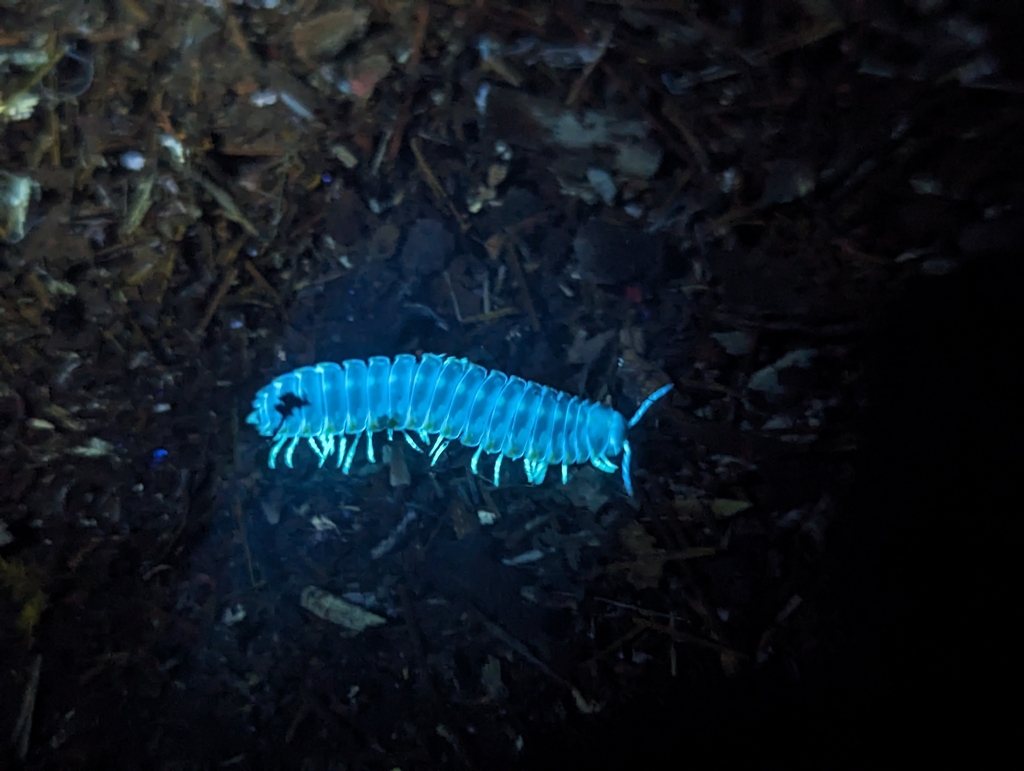
Apheloria montana is a large millipede about 42 to 55 mm long and weighing around a gram. It lives in moist deciduous forests and can also be found in drier mixed woods or rhododendron groves in eastern Tennessee and western North Carolina. The millipede feeds on leaf litter and also consumes its own feces to stay active.
Source: Wikipedia
How to recognize it
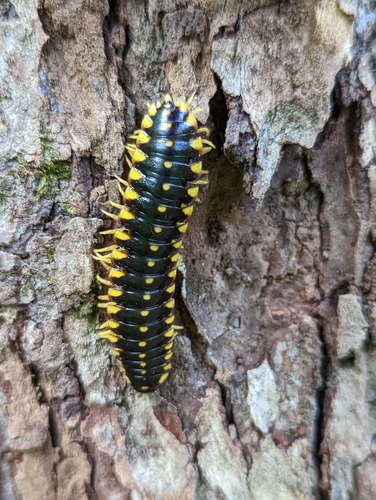
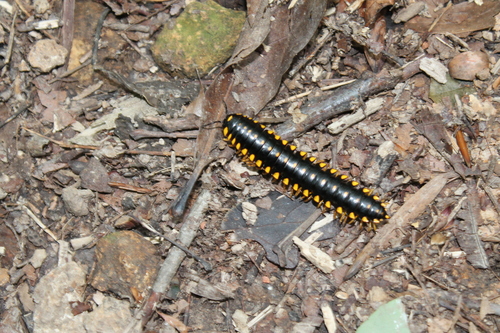
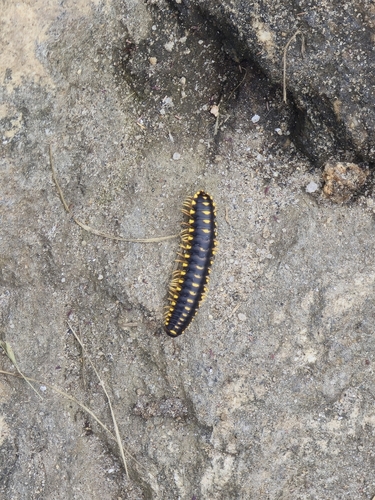
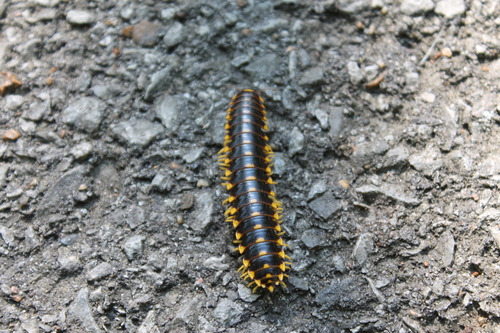
Its back is black with yellow spots on the sides and a line of yellow spots down the middle, and its legs are yellow. In some North Carolina populations the spots and legs are orange instead of yellow.
Source: Wikipedia
Size
Adults reach about two inches (42 to 55 mm) in length and weigh roughly one gram.
Source: Wikipedia
Where it lives
It prefers mesic, deciduous forest habitats. It can also occur in less moist mixed forests and rhododendron groves.
Source: Wikipedia
What it eats
It eats leaf litter and relies on consuming its own feces (coprophagy) for nutrition.
Source: Wikipedia
Life cycle
Adults have 20 body segments, counting the first (collum) and the last (telson). Adult females have 31 pairs of legs, while adult males have 30 pairs because the eighth pair is modified into gonopods.
Source: Wikipedia
Where it comes from
It is native to the United States, specifically Tennessee and North Carolina.
Source: Wikipedia
Lookalikes
It can be confused with its close relative Apheloria polychroma, which also occurs in eastern Tennessee, but the two differ in gonopod structure.
Source: Wikipedia
Where it is found in the US
Recorded in 6 of 51 states and DC. Most records: Tennessee, Virginia, North Carolina, Georgia, Kentucky, Alabama.
Darker = more records. Counts are museum and citizen-science records, not population size.
Source: GBIF
Months it is reported in the US
Source: GBIF
More photos
Questions people ask
How can I tell Apheloria montana apart from similar millipedes?
Look for a black back with yellow spots on the sides and a central line of yellow spots, plus yellow legs; some local forms have orange spots and legs, and the species has distinctive gonopods.
Source: Wikipedia
Where might I find this millipede?
It lives in moist deciduous forests and can also be found in mixed woods or rhododendron groves in Tennessee and North Carolina.
Source: Wikipedia
What does Apheloria montana eat?
It feeds on leaf litter and also consumes its own feces to stay active.
Source: Wikipedia
Same family (Xystodesmidae)



Sources
- Wikipedia: https://en.wikipedia.org/wiki/Apheloria_montana
Look it up elsewhere: GBIF · iNaturalist · BugGuide · Wikipedia
Text written 2026-10-25 from the sources above and checked sentence by sentence against them. Data fetched 2026-10-25.