 Bug FAQ
Yellow-spotted Millipede
Harpaphe haydeniana · Order: Polydesmida · Family: Xystodesmidae
Also called: Almond-scented Millipede, Cyanide Millipede, Night-train Millipede, clown millipede
Source: Wikipedia

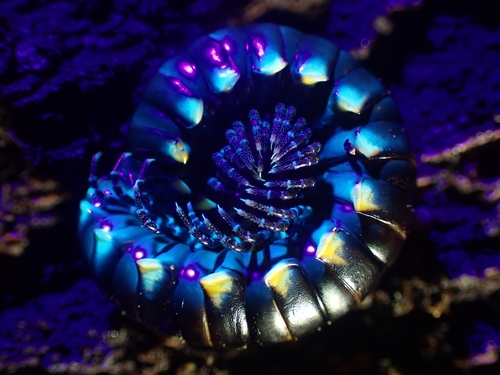
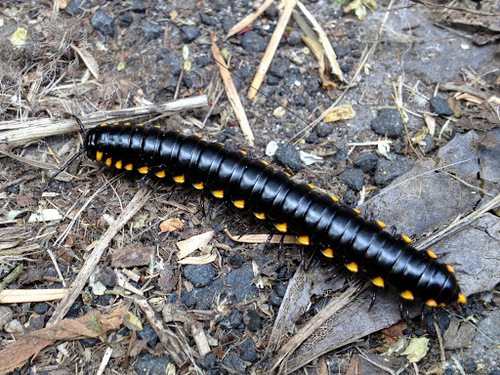
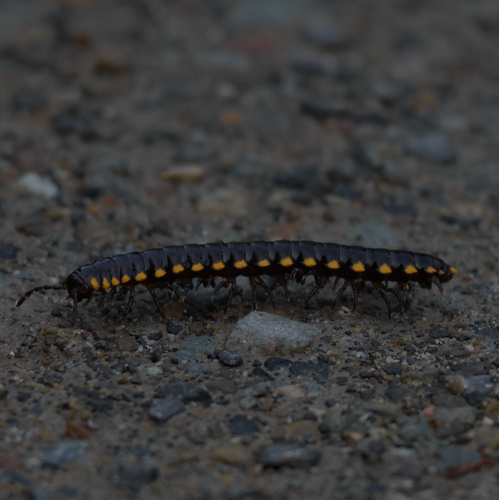
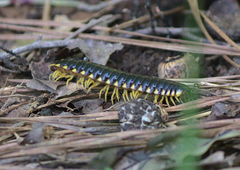
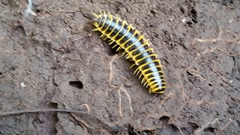
The yellow-spotted millipede grows to about 4 to 5 cm long and has a dark body with yellow-tipped sides. It lives in redwood forests from southeast Alaska to Monterey County, breaking down leaf litter for years.
Source: Wikipedia
How to recognize it
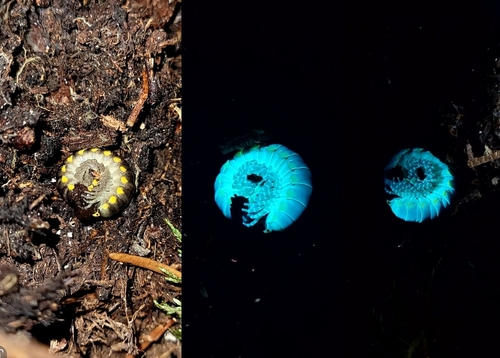
Its back is black to olive green with yellow patches along the sides, a warning of its cyanide spray.
Source: Wikipedia
Size
Adults reach 4 to 5 cm (1.6 to 2 in) in length.
Source: Wikipedia
Does it bite or sting?
The cyanide spray is not lethal to humans but can cause irritation if it contacts eyes, nose, mouth or other sensitive areas.
Source: Wikipedia
Where it lives
It is commonly found in redwood forest patches where many individuals gather.
Source: Wikipedia
What it eats
Young millipedes eat humus, and adults help decompose leaf litter, returning nutrients to the forest.
Source: Wikipedia
Life cycle
An individual lives for about two to three years.
Source: Wikipedia
Where it comes from
Its range extends from southeast Alaska down the coast to Monterey County, California, and east to the Sierra Nevada.
Source: Wikipedia
Lookalikes
Other Harpaphe species (H. pottera, H. telodonta) and several Xystodesmidae genera have similar yellow-tipped markings.
Source: Wikipedia
Where it is found in the US
Recorded in 6 of 51 states and DC. Most records: Washington, California, Oregon, Alaska, Missouri, Indiana.
Darker = more records. Counts are museum and citizen-science records, not population size.
Source: GBIF
Status: native in North America; native in Canada; native in United States. Source: iNaturalist
Months it is reported in the US
Source: GBIF
More photos
Questions people ask
Do yellow-spotted millipedes bite?
No, they do not bite; they may spray cyanide that can irritate sensitive tissues.
Source: Wikipedia
Are they dangerous to pets?
The cyanide spray can irritate a pet’s eyes, nose or mouth, but it is not lethal.
Source: Wikipedia
Can they damage my garden or trees?
They help break down leaf litter and do not harm plants; they are part of the forest ecosystem.
Source: Wikipedia
How can I tell this millipede apart from similar species?
Look for the dark body with yellow-tipped sides; other local Harpaphe and Xystodesmidae species have comparable markings.
Source: Wikipedia
Same family (Xystodesmidae)

Sources
- Wikipedia: https://en.wikipedia.org/wiki/Harpaphe_haydeniana
Look it up elsewhere: GBIF · iNaturalist · BugGuide · ITIS · Wikipedia
Text written 2026-10-22 from the sources above and checked sentence by sentence against them. Data fetched 2026-10-22.