 Bug FAQ
Ant Damselbug
Himacerus mirmicoides · Order: Hemiptera · Family: Nabidae
Also called: Ant Damsel Bug, Damsel ant bug
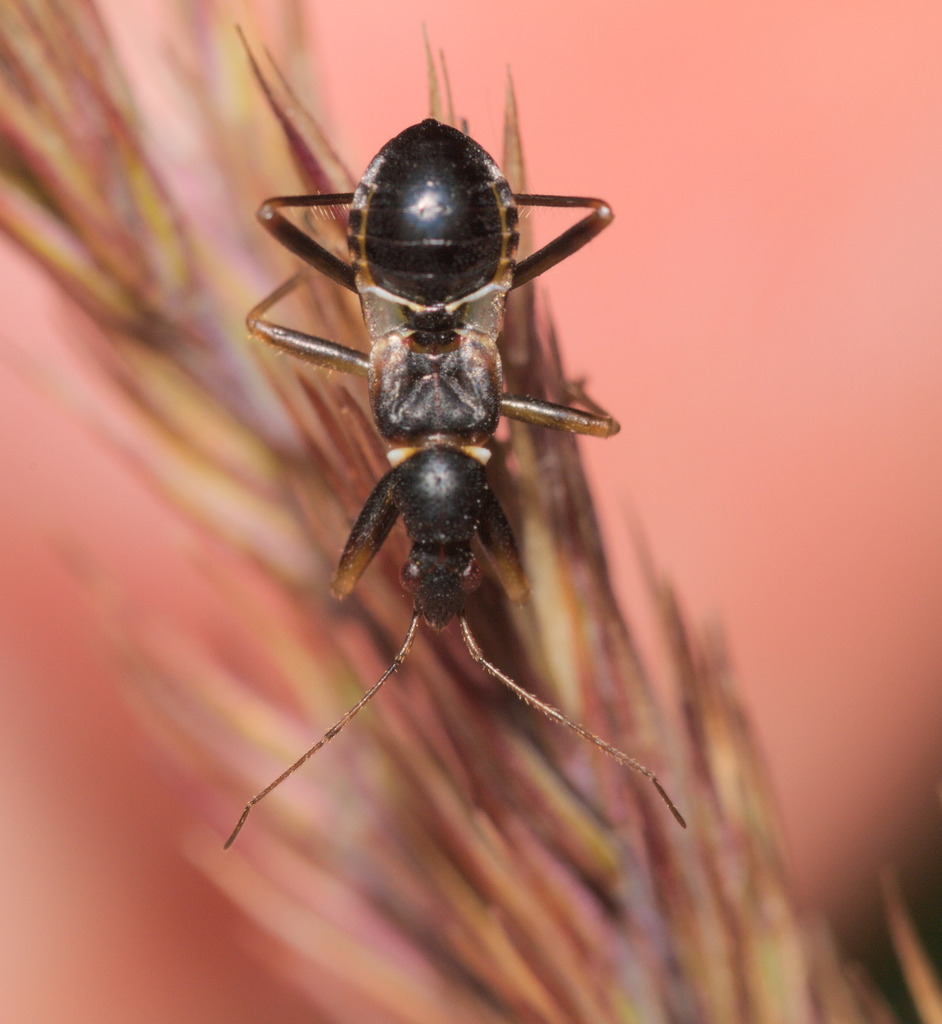
The ant damselbug is a small brown bug about 7 to 8 mm long with a black edge on the abdomen that has orange-red spots. It has short wings that are reddish in colour and can be found walking on the ground or low vegetation in dry open areas across most of Europe.
Source: Wikipedia
How to recognize it
Its body is brown, the outer edge of the abdomen (connexivum) is black with orange-red spots, and its wings are partly developed and reddish.
Source: Wikipedia
Size
Adults measure about 7 to 8 mm in length (0.28 to 0.31 in).
Source: Wikipedia
Where it lives
It lives on the ground, among low herbs, and in dry open habitats.
Source: Wikipedia
What it eats
It belongs to the damsel-bug family Nabidae and is a predatory true bug.
Source: Wikipedia
Life cycle
Adults can be seen all year, with mating and egg-laying starting in spring and a new generation appearing in August.
Source: Wikipedia
Where it comes from
The species occurs throughout most of Europe.
Source: Wikipedia
Lookalikes
It resembles Himacerus apterus but is smaller, has shorter antennae, and longer wings.
Source: Wikipedia
More photos
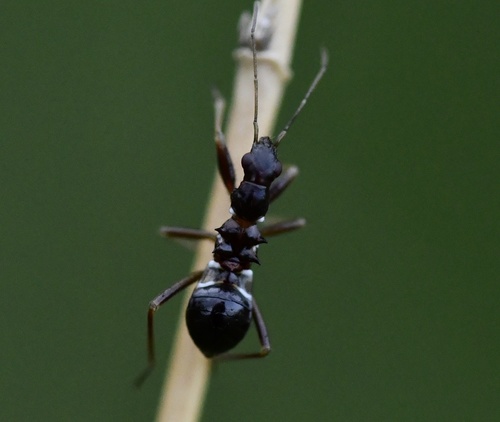
Same family (Nabidae)

Sources
- Wikipedia: https://en.wikipedia.org/wiki/Himacerus_mirmicoides
Look it up elsewhere: GBIF · iNaturalist · BugGuide · Wikipedia
Text written 2026-10-22 from the sources above and checked sentence by sentence against them. Data fetched 2026-10-22.