 Bug FAQ
Animals
Astylus trifasciatus

Adults are about 1.5 cm long. They have orange wing covers with a central black stripe and two additional black stripes across the elytra. They are native to Chile and feed on flowering plants, especially pollen from the orchid Bipinnula fimbriata.
Source: Wikipedia
How to recognize it
The beetle’s elytra are orange with a black stripe down the middle and two black stripes that divide the wings into thirds.
Source: Wikipedia
Where it lives
It occurs in Chile.
Source: Wikipedia
What it eats
It feeds on flowering plants and collects pollen from the orchid Bipinnula fimbriata.
Source: Wikipedia
Where it comes from
The species is native to Chile.
Source: Wikipedia
Where it is found in the US
Recorded in 51 of 51 states and DC. Most records: California, Texas, New York, Florida, Pennsylvania, Ohio, Arizona, Massachusetts.
Darker = more records. Counts are museum and citizen-science records, not population size.
Source: GBIF
Months it is reported in the US
Source: GBIF
More photos

Questions people ask
What does Astylus trifasciatus look like?
It has orange wing covers with a black stripe down the center and two black stripes across the elytra.
Source: Wikipedia
What does Astylus trifasciatus eat?
It feeds on flowering plants and gathers pollen from the orchid Bipinnula fimbriata.
Source: Wikipedia
Same family ()

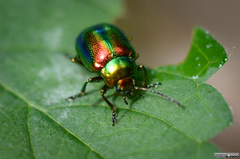
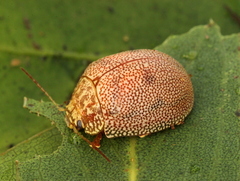


Sources
- Wikipedia: https://en.wikipedia.org/wiki/Astylus_trifasciatus
Look it up elsewhere: GBIF · iNaturalist · BugGuide · Wikipedia
Text written 2026-10-23 from the sources above and checked sentence by sentence against them. Data fetched 2026-10-22.