 Bug FAQ
Angle Shades
Phlogophora meticulosa · Order: Lepidoptera · Family: Noctuidae
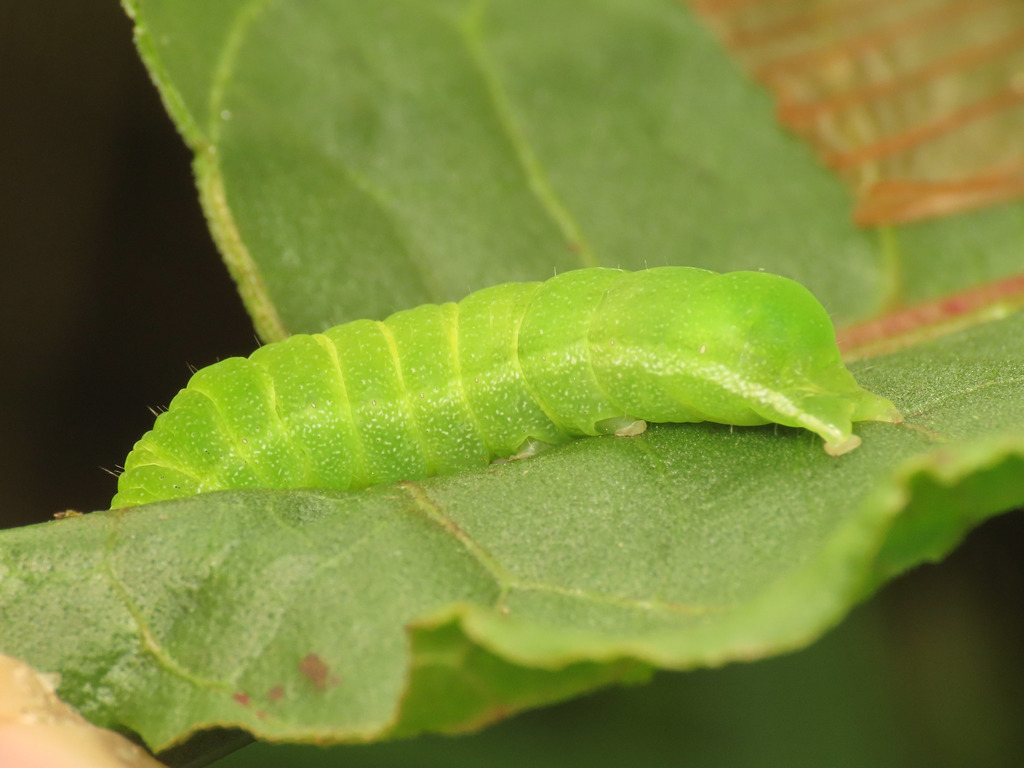
The angle shades moth has a wingspan of about 45 to 52 mm and a sharply pointed forewing tip with a distinctive V-shaped pink-and-green mark on a buff-brown background. It lives in gardens, hedgerows and woodland across most of Europe, the Azores, parts of North Africa and western Asia, and it migrates seasonally. Adults fly from May to October, have two or more generations per year, and the larvae overwinter before pupating in spring.
Source: Wikipedia
Size
The moth’s wingspan ranges from 45 to 52 mm.
Source: Wikipedia
Where it lives
It is commonly found in gardens, hedgerows and woodland.
Source: Wikipedia
What it eats
The caterpillars feed on a wide variety of plants.
Source: Wikipedia
Life cycle
Larvae overwinter and pupate in spring.
Source: Wikipedia
When you see it
Adults are on the wing from May through October in temperate areas. There are usually two or more generations each year.
Source: Wikipedia
Where it comes from
Its range covers most of Europe east to the Urals, the Azores, Algeria, and parts of Asia Minor, Armenia and Syria. The species is migratory.
Source: Wikipedia
Lookalikes
A related species, the small angle shades (Euplexia lucipara), looks similar.
Source: Wikipedia
Same family (Noctuidae)
 Ipsilon Dart MothAgrotis ipsilonDamages trees, gardens or crops
 Fall Armyworm MothSpodoptera frugiperdaDamages trees, gardens or crops
 Army Cutworm MothEuxoa auxiliarisDamages trees, gardens or crops
 Large Yellow UnderwingNoctua pronubaDamages trees, gardens or crops
 Silver ΥAutographa gamma
 American DaggerAcronicta americanaCan irritate skin
Sources
- Wikipedia: https://en.wikipedia.org/wiki/Angle_shades
Look it up elsewhere: GBIF · iNaturalist · BugGuide · Wikipedia
Text written 2026-10-22 from the sources above and checked sentence by sentence against them. Data fetched 2026-10-22.