 Bug FAQ
Anacampsis conclusella
Anacampsis conclusella · Order: Lepidoptera · Family: Gelechiidae
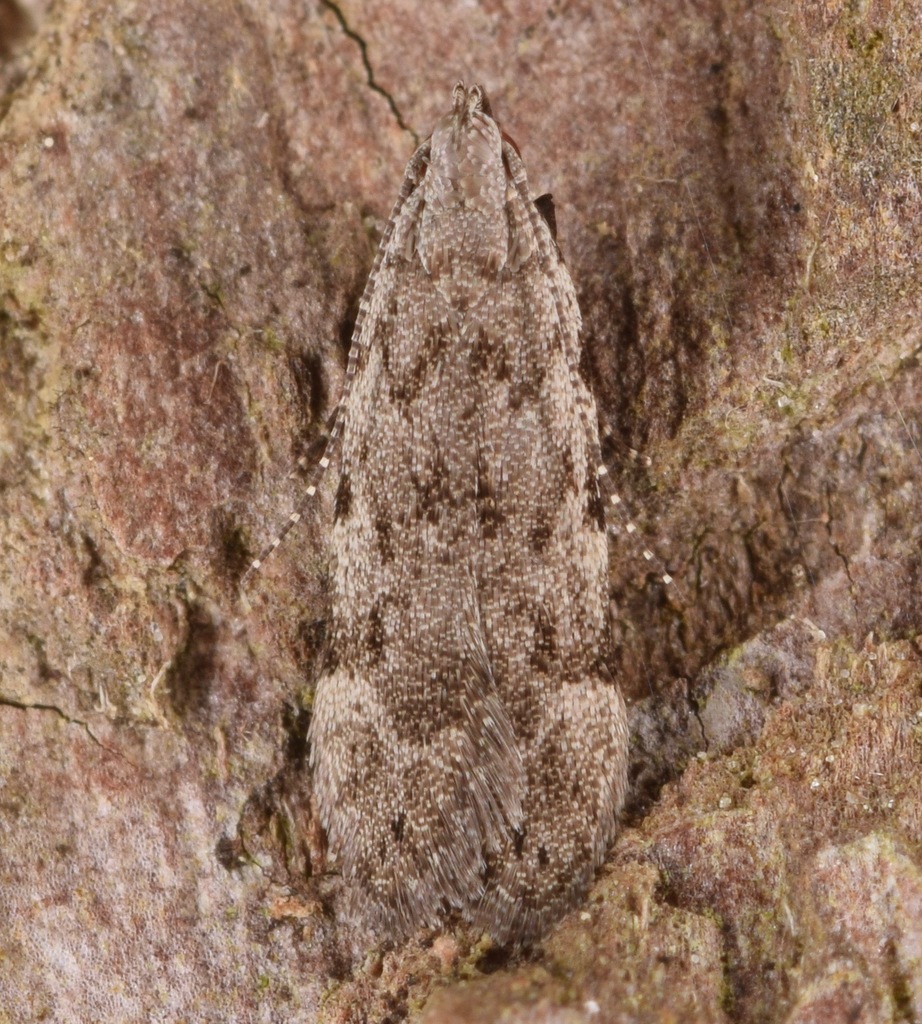
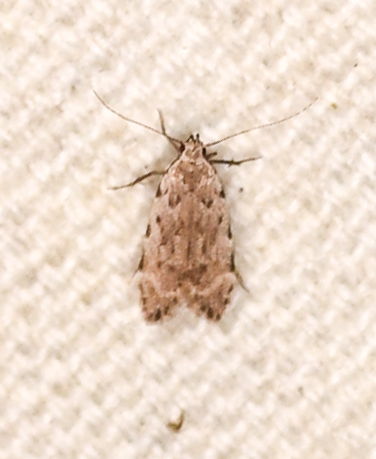
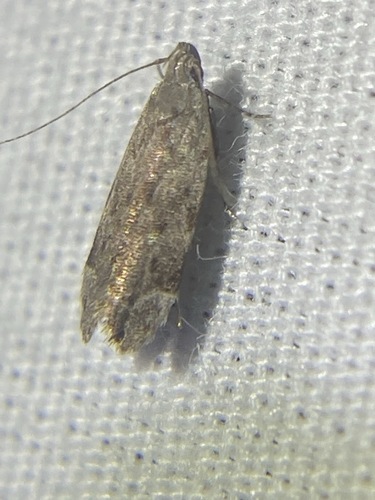
Anacampsis conclusella is a tiny moth with a wingspan of about 9 mm. Adults are ash-gray with fine black speckles, a pale transverse line near two-thirds of the forewing, three distinct black costal marks, and a submarginal line of elongated black points. It occurs across many parts of North America, including numerous U.S. states such as Alabama, Florida, New York, and Texas, as well as the Canadian province of Alberta.
Source: Wikipedia
How to recognize it
The moth’s forewings are dark ash-gray, minutely speckled with black and feature a pale ash-gray line across the wing at about two-thirds its length, forming two angles.
Source: Wikipedia
Size
The wingspan measures roughly 9 mm.
Source: Wikipedia
Where it comes from
It is found throughout North America, recorded in many U.S. states and in Alberta, Canada.
Source: Wikipedia
Where it is found in the US
Recorded in 21 of 51 states and DC. Most records: Texas, Louisiana, Tennessee, Georgia, North Carolina, Ohio, Alabama, New York.
Darker = more records. Counts are museum and citizen-science records, not population size.
Source: GBIF
Months it is reported in the US
Source: GBIF
More photos

Same family (Gelechiidae)
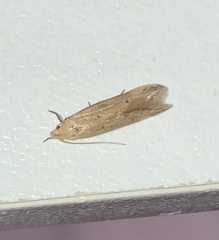 Angoumois Grain MothSitotroga cerealellaDamages trees, gardens or crops
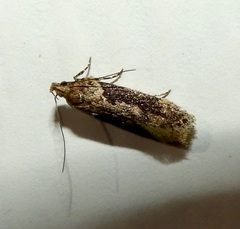 Boxelder Leafworm MothChionodes obscurusella
 Hairy, Toothed, and Shining Dichomeris Moths and AlliesDichomeris setosellaBlack-smudged Chionodes MothChionodes mediofuscella
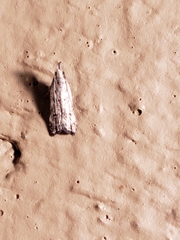 Inverse and Kimball's Dichomeris MothsDichomeris inversella
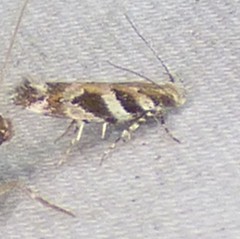 Pink-washed Aristotelia MothAristotelia roseosuffusella
Sources
- Wikipedia: https://en.wikipedia.org/wiki/Anacampsis_conclusella
Look it up elsewhere: GBIF · iNaturalist · BugGuide · Wikipedia
Text written 2026-10-27 from the sources above and checked sentence by sentence against them. Data fetched 2026-10-27.