 Bug FAQ
Alien field ant
Lasius alienus · Order: Hymenoptera · Family: Formicidae
Also called: Cornfield Ant
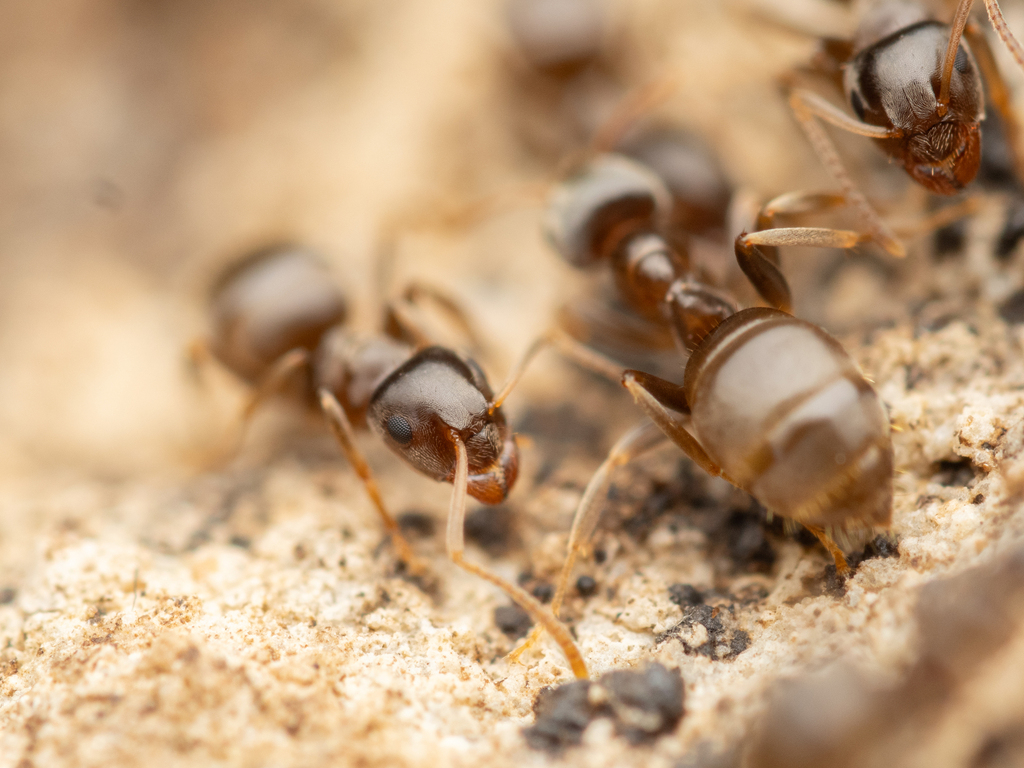
Worker ants are about 2 to 4 mm long, while queens are larger at 7 to 9 mm. They are native to Europe, ranging from Spain to the Caucasus. North-American populations once called cornfield ants are now recognized as a different species, Lasius americanus.
Source: Wikipedia
Size
Workers measure roughly 2 to 4 mm, and queens are about 7 to 9 mm long.
Source: Wikipedia
Where it lives
They live throughout Europe, from Spain eastward to the Caucasus.
Source: Wikipedia
Where it comes from
Their native range is Europe, spanning Spain to the Caucasus.
Source: Wikipedia
Lookalikes
The North American “cornfield ant” is now considered a separate species, Lasius americanus.
Source: Wikipedia
Where it is found in the US
Recorded in 46 of 51 states and DC. Most records: Colorado, Illinois, Mississippi, Ohio, Tennessee, Pennsylvania, North Carolina, Virginia.
Darker = more records. Counts are museum and citizen-science records, not population size.
Source: GBIF
Months it is reported in the US
Source: GBIF
More photos
Same family (Formicidae)
 Eastern Black Carpenter AntCamponotus pennsylvanicusCan damage your home
 Red Imported Fire AntSolenopsis invictaCan sting
 American Winter AntPrenolepis imparis
 Argentine AntLinepithema humileNuisance, not dangerous
 Immigrant Pavement AntTetramorium immigransCan sting
 Odorous House AntTapinoma sessileCan damage your home
Sources
- Wikipedia: https://en.wikipedia.org/wiki/Lasius_alienus
Look it up elsewhere: GBIF · iNaturalist · BugGuide · ITIS · Wikipedia
Text written 2026-10-23 from the sources above and checked sentence by sentence against them. Data fetched 2026-10-23.