 Bug FAQ
Alfalfa Looper Moth
Tathorhynchus exsiccata · Order: Lepidoptera · Family: Noctuidae
Also called: Levant blackneck moth, Levant Blackneck
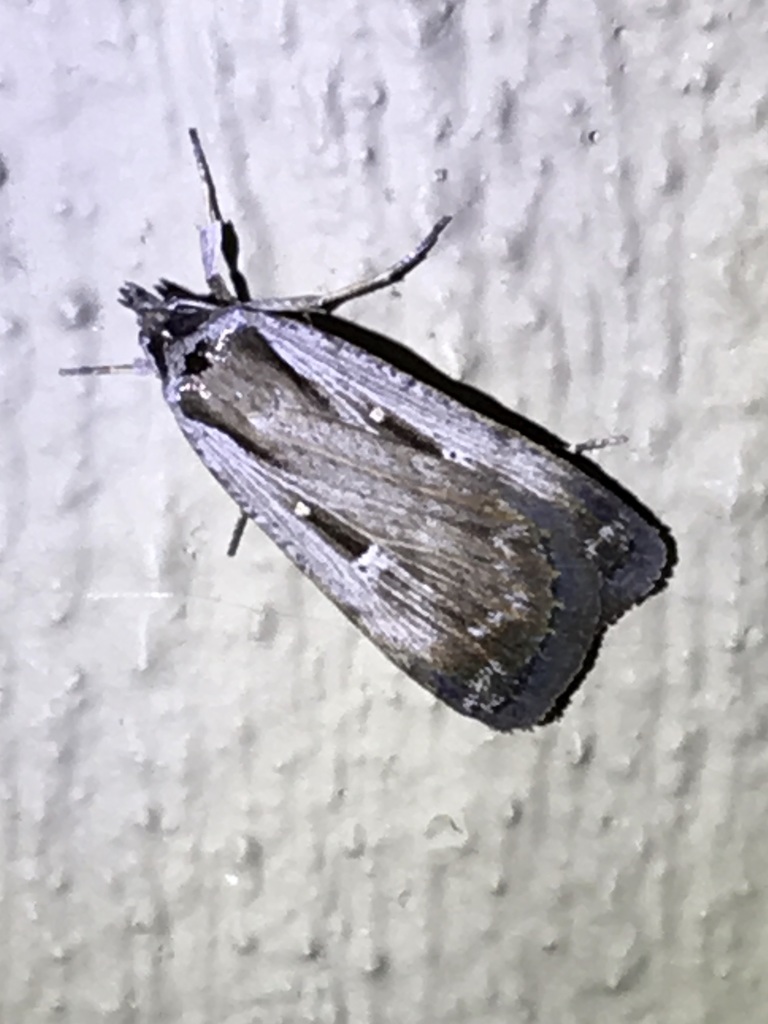
The alfalfa looper moth has a wingspan of about 40 mm. Its forewings are whitish with heavy grey-brown shading, pale spots marking the orbicular and reniform stigmata, a black dash between them, a pale outer line with preceding black marks, and a terminal row of black lunules; the hindwings are greyish-white, darker toward the edge. The nominate form lives on the Canary Islands, in North Africa, and across tropical Asia and Africa, while the subspecies *fallax* occurs in northern Australia, Norfolk Island, and New Zealand.
Source: Wikipedia
How to recognize it
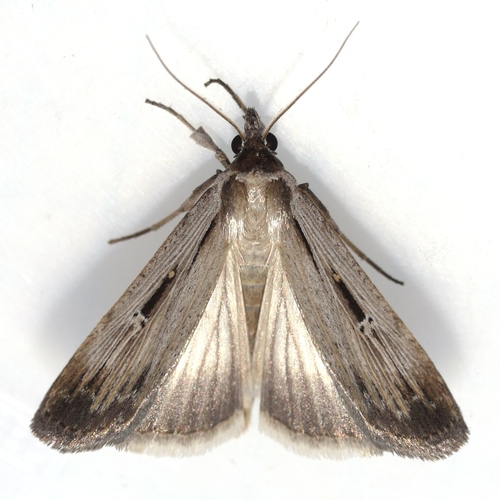
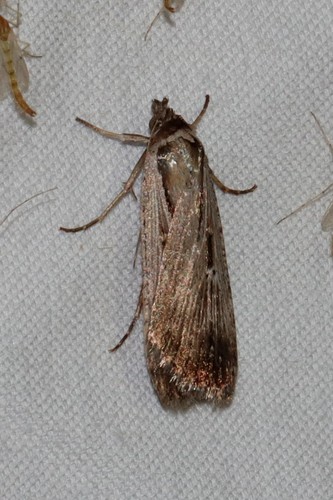
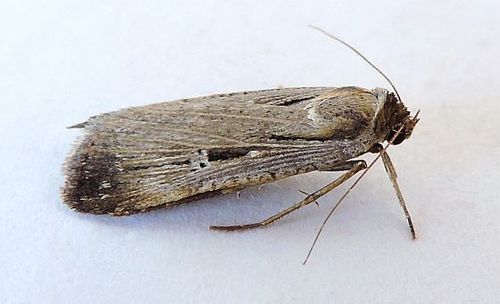
Forewings are whitish, heavily overlaid with grey-brown, darker near the edge, with pale spots marking the orbicular and reniform stigmata separated by a black dash, plus a pale outer line preceded by black marks and a terminal row of black lunules; hindwings are greyish-white, darker at the margin.
Source: Wikipedia
Size
Wingspan is about 40 mm.
Source: Wikipedia
Where it lives
Subspecies *Tathorhynchus exsiccata fallax* occurs in the northern half of Australia, Norfolk Island, and New Zealand.
Source: Wikipedia
What it eats
Larvae of the nominate form feed on indigo plant (*Indigofera tinctoria*), alfalfa (*Medicago sativa*), and Spanish broom (*Spartium junceum*). Larvae of the *fallax* subspecies probably feed on alfalfa (*Medicago sativa*).
Source: Wikipedia
Where it comes from
The nominate form is native to the Canary Islands, North Africa, tropical Asia and tropical Africa. Subspecies *fallax* is native to northern Australia, Norfolk Island and New Zealand.
Source: Wikipedia
Where it is found in the US
Recorded in 21 of 51 states and DC. Most records: Texas, Arizona, New Mexico, Oklahoma, Colorado, Kansas, Nebraska, Wyoming.
Darker = more records. Counts are museum and citizen-science records, not population size.
Source: GBIF
Status: introduced in United States. Source: iNaturalist
Months it is reported in the US
Source: GBIF
More photos
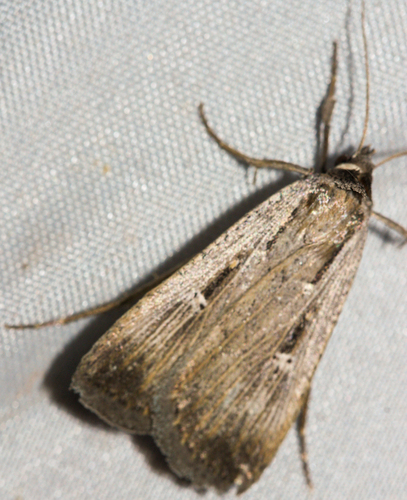
Same family (Noctuidae)
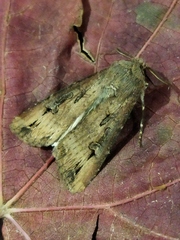 Ipsilon Dart MothAgrotis ipsilonDamages trees, gardens or crops
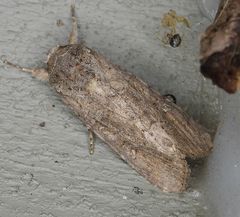 Fall Armyworm MothSpodoptera frugiperdaDamages trees, gardens or crops
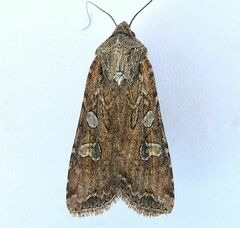 Army Cutworm MothEuxoa auxiliarisDamages trees, gardens or crops
 Large Yellow UnderwingNoctua pronubaDamages trees, gardens or crops
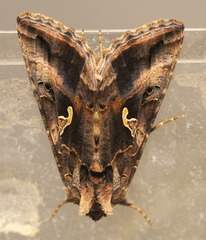 Silver ΥAutographa gamma
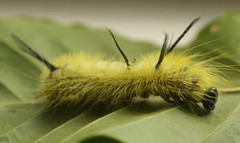 American DaggerAcronicta americanaCan irritate skin
Sources
- Wikipedia: https://en.wikipedia.org/wiki/Tathorhynchus
Look it up elsewhere: GBIF · iNaturalist · BugGuide · ITIS · Wikipedia
Text written 2026-10-24 from the sources above and checked sentence by sentence against them. Data fetched 2026-10-24.