 Bug FAQ
Albardia furcata
Albardia furcata · Order: Neuroptera · Family: Ascalaphidae
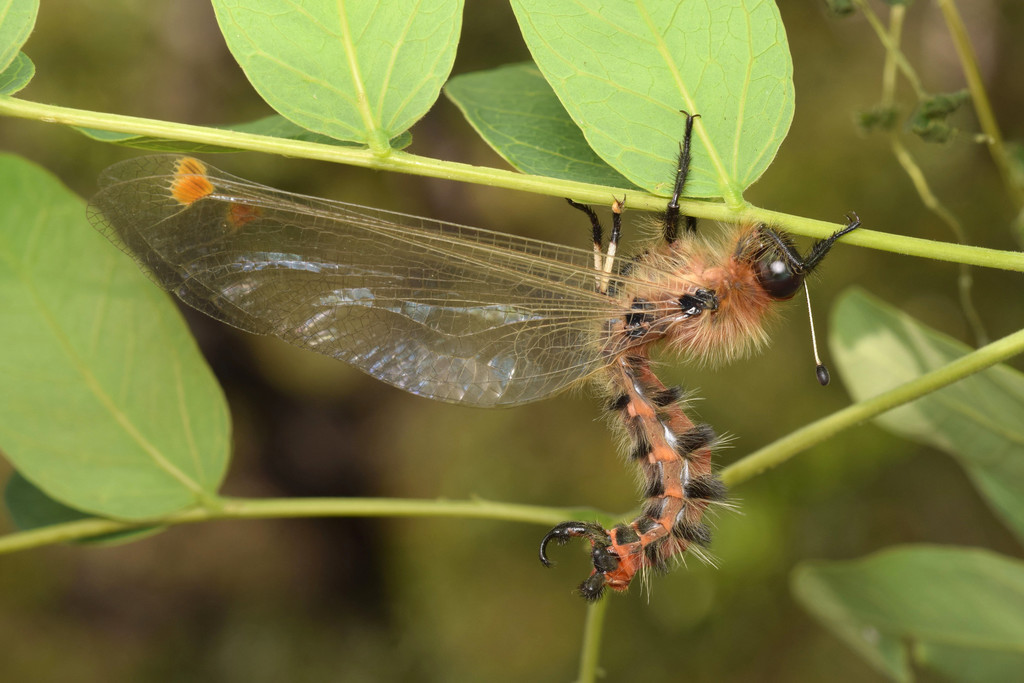
Albardia furcata is a reddish-brown insect with short, thick-based antennae and long, straight wings. Its abdomen looks woolly, the head and thorax are also reddish-brown, and its legs are covered in long bristles.
Source: Wikipedia
How to recognize it
Adults are rusty reddish-brown with a wool-textured abdomen, and their legs have long setae.
Source: Wikipedia
Where it lives
The species lives in Brazil’s tropical biomes, including the Cerrado, Caatinga, and Atlantic Forest.
Source: Wikipedia
Where it comes from
Albardia furcata is endemic to Brazil.
Source: Wikipedia
Lookalikes
It can be mistaken for dragonflies or damselflies because of its similar shape.
Source: Wikipedia
Questions people ask
How can I recognize Albardia furcata?
Look for a rusty reddish-brown insect with a woolly abdomen, short thick-based antennae, and long straight wings.
Source: Wikipedia
Where might I find Albardia furcata?
It is found in Brazil’s tropical regions such as the Cerrado, Caatinga, and Atlantic Forest.
Source: Wikipedia
What other insects does Albardia furcata resemble?
Its shape can be confused with insects in the order Odonata (dragonflies and damselflies).
Source: Wikipedia
Same family (Ascalaphidae)

Sources
- Wikipedia: https://en.wikipedia.org/wiki/Albardia_furcata
Look it up elsewhere: GBIF · iNaturalist · BugGuide · ITIS · Wikipedia
Text written 2026-10-23 from the sources above and checked sentence by sentence against them. Data fetched 2026-10-23.