 Bug FAQ
Acanalonia servillei
Acanalonia servillei · Order: Hemiptera · Family: Acanaloniidae
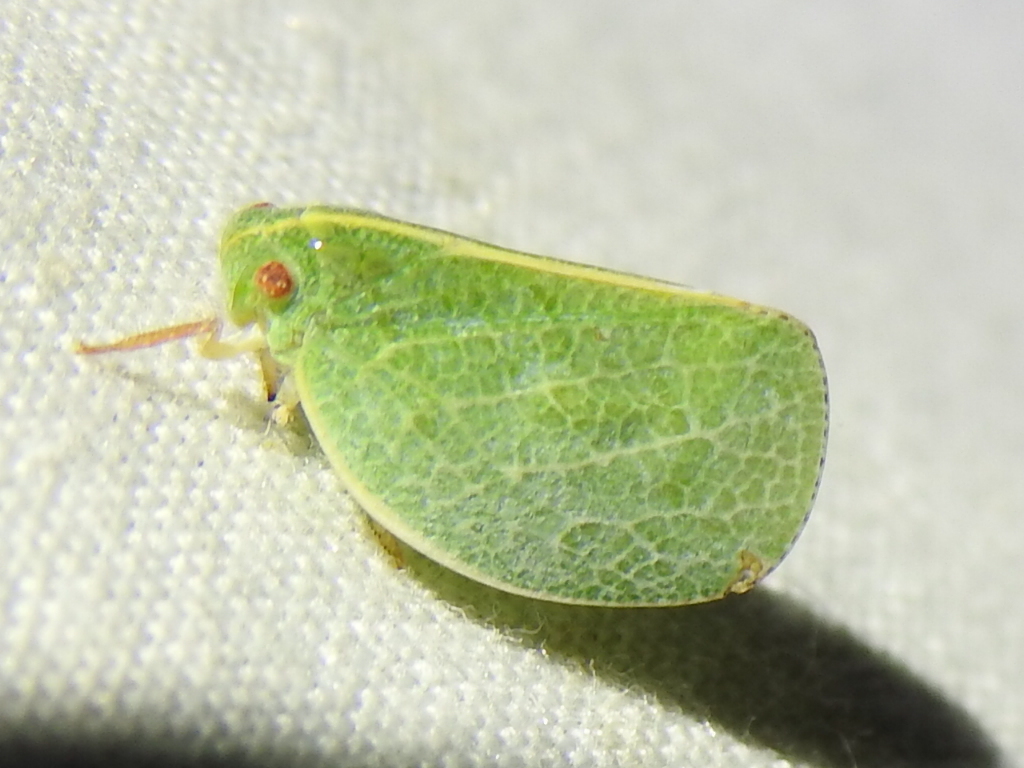
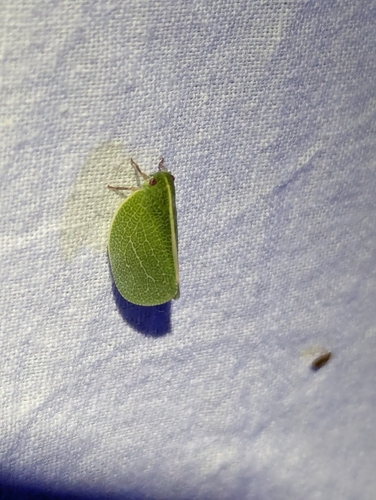
Acanalonia servillei is a relatively large planthopper, usually over 9 mm long. It feeds on plant sap and is often found on caper family plants like Capparis cynophallophora, though it will use other plants as well.
Source: Wikipedia
Size
Adults are usually larger than 9 mm.
Source: Wikipedia
Where it lives
Found along the East and Gulf Coasts of the United States, from New York down to Texas. Also present on many Caribbean islands, including the Bahamas, Cuba, Hispaniola and Jamaica.
Source: Wikipedia
What it eats
Feeds on the sap of plants. Often associated with Capparis cynophallophora and other caper family plants.
Source: Wikipedia
Where it comes from
Its native range includes the U.S. East and Gulf Coasts from New York to Texas.
Source: Wikipedia
Where it is found in the US
Recorded in 12 of 51 states and DC. Most records: Florida, North Carolina, Alabama, Louisiana, Georgia, South Carolina, Texas, Mississippi.
Darker = more records. Counts are museum and citizen-science records, not population size.
Source: GBIF
Status: native in North America; native in United States. Source: iNaturalist
Months it is reported in the US
Source: GBIF
More photos
Questions people ask
What does Acanalonia servillei eat?
It feeds on plant sap and is commonly found on caper family plants such as Capparis cynophallophora.
Source: Wikipedia
Where can I find Acanalonia servillei?
It occurs along the U.S. East and Gulf Coasts from New York to Texas and on Caribbean islands like the Bahamas, Cuba, Hispaniola and Jamaica.
Source: Wikipedia
Same family (Acanaloniidae)


Sources
- Wikipedia: https://en.wikipedia.org/wiki/Acanalonia_servillei
Look it up elsewhere: GBIF · iNaturalist · BugGuide · Wikipedia
Text written 2026-10-23 from the sources above and checked sentence by sentence against them. Data fetched 2026-10-22.