 Bug FAQ
Zelandoperla fenestrata
Zelandoperla fenestrata · Order: Plecoptera · Family: Gripopterygidae
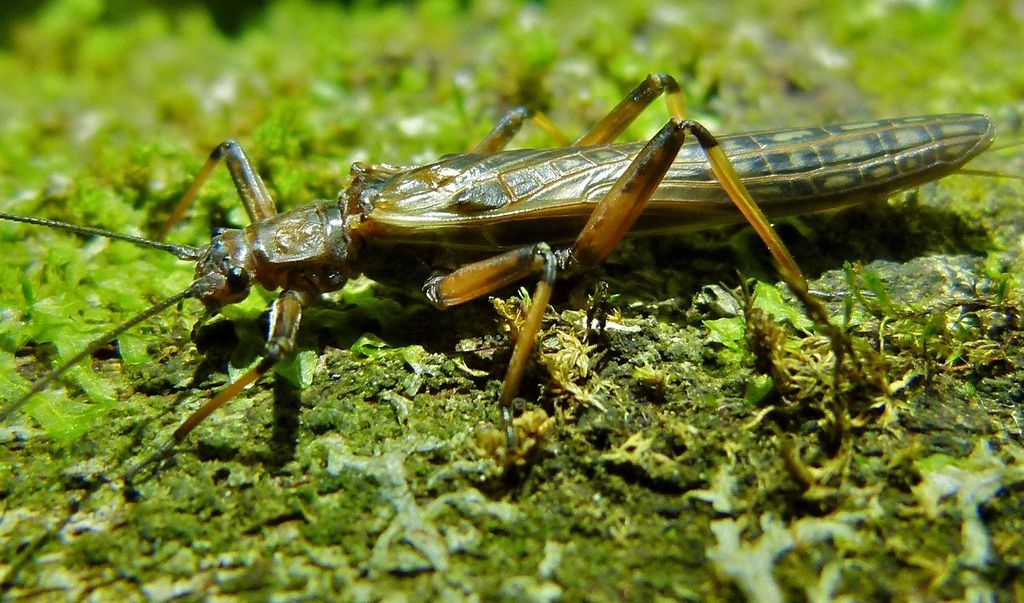
Zelandoperla fenestrata is a stonefly native to New Zealand that lives in fast-flowing, stony streams from sea level up to alpine heights. Adults show a window-like rectangular pattern on their wings, and the species has a strong colour polymorphism, including dark melanic forms that look like the toxic black stonefly Austroperla. Both fully winged and wing-reduced (flightless) forms exist, sometimes together, and they can interbreed or be reproductively isolated.
Source: Wikipedia
How to recognize it
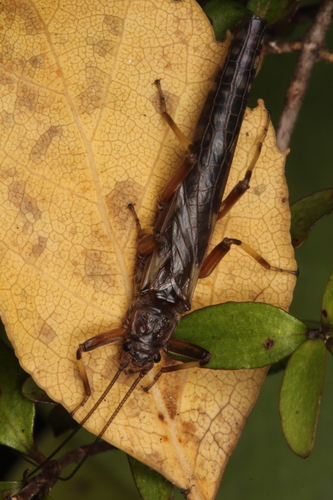
The name ‘fenestrata’ refers to the window-shaped markings on the wings of non-melanic adults. Melanic individuals look like the unrelated toxic black stonefly Austroperla.
Source: Wikipedia
Size
It is a long-tailed stonefly that can be abundant in high-gradient streams.
Source: Wikipedia
Where it lives
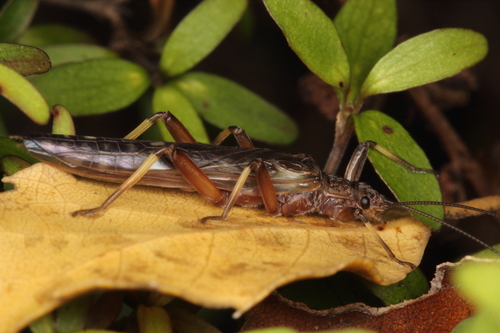
At high elevations above the alpine treeline, some populations have reduced wings and cannot fly.
Source: Wikipedia
Life cycle
The species shows great variation in wing length, with many high-elevation populations being wing-reduced and flightless. Full-winged and vestigial-winged ecotypes can occur together and may either interbreed or be reproductively isolated.
Source: Wikipedia
Where it comes from
Zelandoperla fenestrata is endemic to New Zealand.
Source: Wikipedia
Lookalikes
Melanic forms were once thought to be a separate species (Z. tillyardi) but are now known to interbreed with non-melanic forms. The Banks Peninsula population has highly reduced wings and is flightless.
Source: Wikipedia
More photos
Sources
- Wikipedia: https://en.wikipedia.org/wiki/Zelandoperla_fenestrata
Look it up elsewhere: GBIF · iNaturalist · BugGuide · Wikipedia
Text written 2026-10-23 from the sources above and checked sentence by sentence against them. Data fetched 2026-10-23.