 Bug FAQ
Yellow spotted sedge
Philopotamus montanus · Order: Trichoptera · Family: Philopotamidae
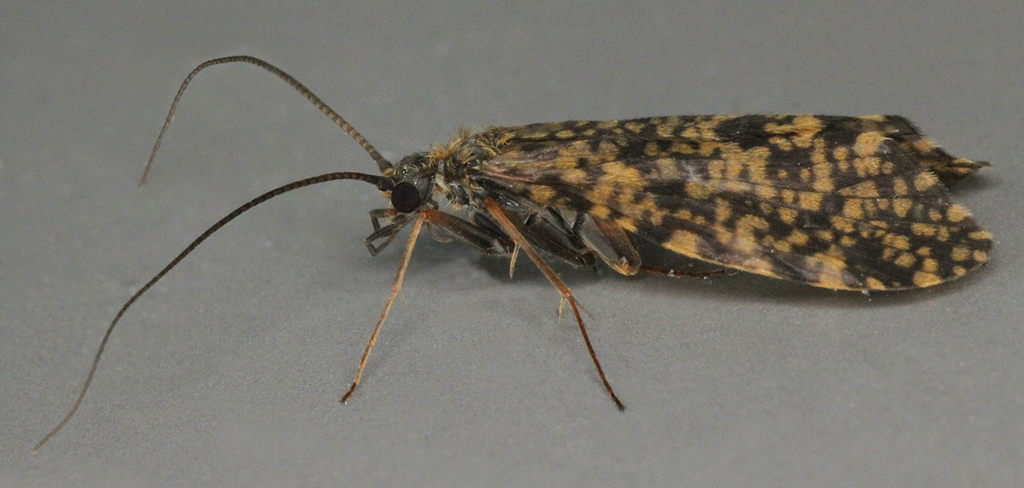
The yellow spotted sedge caddisfly measures about 4 to 9 mm long with a wingspan of 12 to 20 mm and is light brown or yellowish with many dark spots. Its larvae live in fast-flowing upland streams, building tubular nets on rocks to filter tiny particles and diatoms for food. Adults appear from February through October and there is one generation each year; the species is native across Europe into northern Russia.
Source: Wikipedia
How to recognize it
Adults are light brown or yellowish with many dark brown spots.
Source: Wikipedia
Size
Body length ranges from about 4 to 9 mm and wingspan from 12 to 20 mm.
Source: Wikipedia
Where it lives
Larvae are found in small upland rivers, brooks, rivulets and stony streams with fast currents.
Source: Wikipedia
What it eats
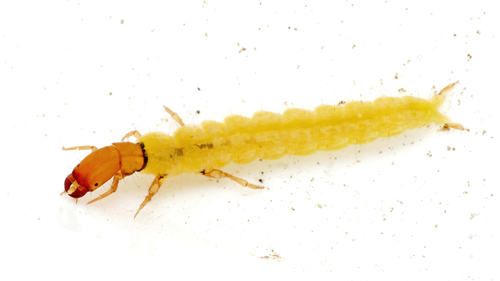
Larvae build long tubular nets on rocks and filter-feed on fine particles, diatoms and other small matter.
Source: Wikipedia
Life cycle
The species has one generation per year (univoltine).
Source: Wikipedia
Where it comes from
It is native to Europe, extending eastward to north-western and northern Russia.
Source: Wikipedia
More photos
Questions people ask
When can I see adult yellow spotted sedge caddisflies?
Adults are active from February through October.
Source: Wikipedia
What do the larvae of yellow spotted sedge eat?
They filter-feed on tiny particles, fine organic matter and diatoms using nets they build on rocks.
Source: Wikipedia
Where does yellow spotted sedge live?
Its aquatic larvae inhabit fast-flowing upland streams, brooks and stony rivers across Europe into northern Russia.
Source: Wikipedia
Sources
- Wikipedia: https://en.wikipedia.org/wiki/Philopotamus_montanus
Look it up elsewhere: GBIF · iNaturalist · BugGuide · ITIS · Wikipedia
Text written 2026-10-23 from the sources above and checked sentence by sentence against them. Data fetched 2026-10-23.