 Bug FAQ
Xenos vesparum
Xenos vesparum · Order: Strepsiptera · Family: Xenidae
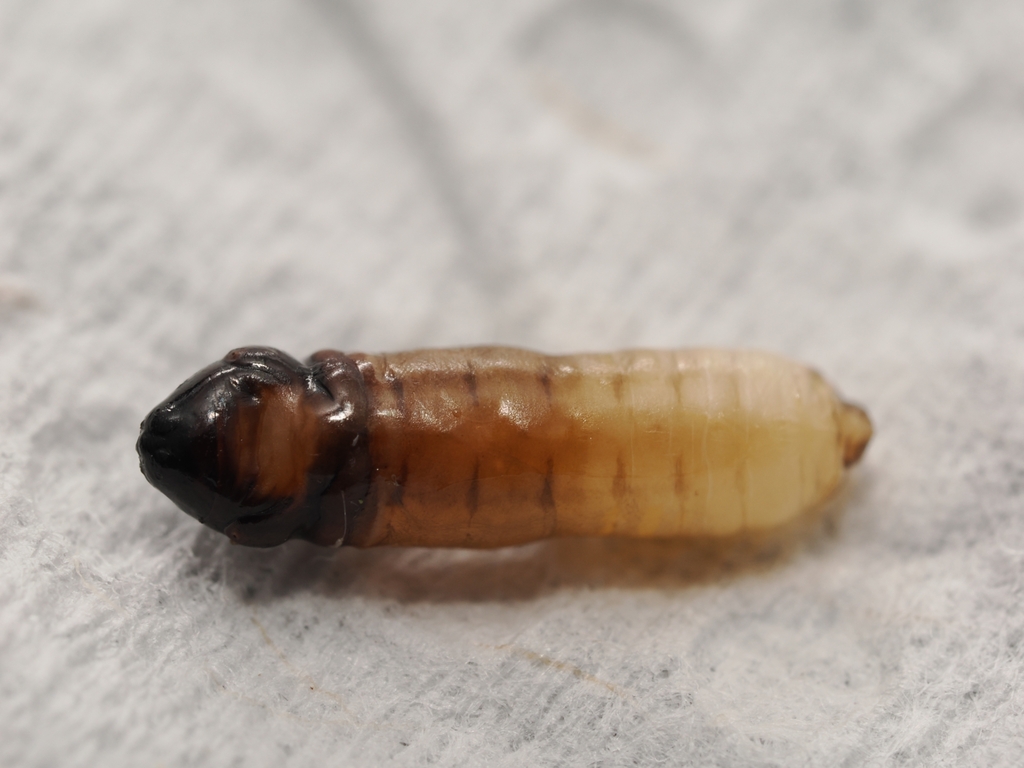
Xenos vesparum is a parasitic strepsipteran that lives inside paper wasps, especially Polistes dominula, and was first described in 1793. Males have very unusual eyes and their forewings are reduced to small club-like pseudohalteres, while females remain inside the host as neotenic forms.
Source: Wikipedia
How to recognize it
Male X. vesparum have eyes that look very different from those of other insects. Their forewings are transformed into tiny club-shaped structures called pseudohalteres.
Source: Wikipedia
Where it lives
Infected wasps tend to gather on trumpet-creeper (Campsis radicans) bushes.
Source: Wikipedia
What it eats
X. vesparum shows strong sexual dimorphism, with males and neotenic females having very different forms. The second and third larval stages grow slowly and large, likely to keep the host alive.
Source: Wikipedia
Life cycle
The only free-living stages are the first-instar larvae and the adult males. The final stage produces either a free-living male or a neotenic female that emerges partially or fully from the host.
Source: Wikipedia
When you see it
Adult males live less than five hours and spend that time searching for a mate by scent.
Source: Wikipedia
Questions people ask
What do male Xenos vesparum look like?
Males have unusually shaped eyes and tiny club-like pseudohalteres instead of normal forewings.
Source: Wikipedia
Which insects does Xenos vesparum parasitize?
It lives inside paper wasps, especially Polistes dominula.
Source: Wikipedia
How long do adult male Xenos vesparum live?
Adult males survive for less than five hours, using that time to find a mate.
Source: Wikipedia
Do infected wasps behave differently?
Infected wasps often gather on trumpet-creeper bushes.
Source: Wikipedia
Sources
- Wikipedia: https://en.wikipedia.org/wiki/Xenos_vesparum
Look it up elsewhere: GBIF · iNaturalist · BugGuide · ITIS · Wikipedia
Text written 2026-10-23 from the sources above and checked sentence by sentence against them. Data fetched 2026-10-23.