 Bug FAQ
White-marked Spider-beetle
Ptinus fur · Order: Coleoptera · Family: Ptinidae
Also called: Whitemark Spider Beetle, whitemarked spider beetle
Source: Wikipedia

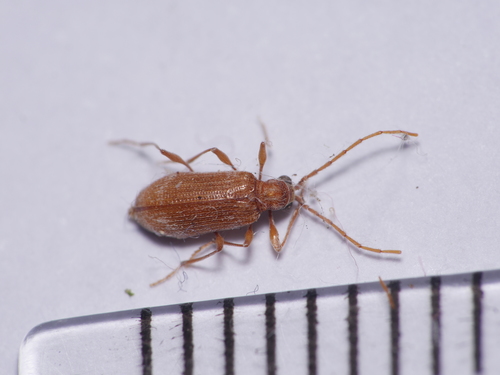
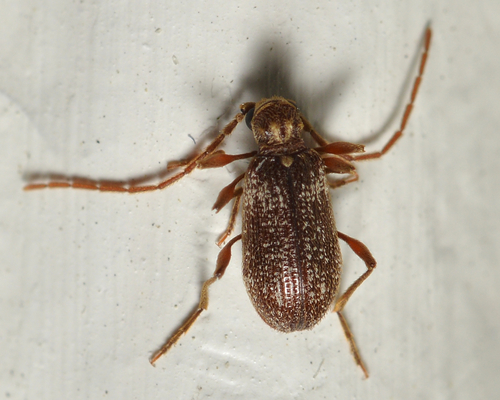
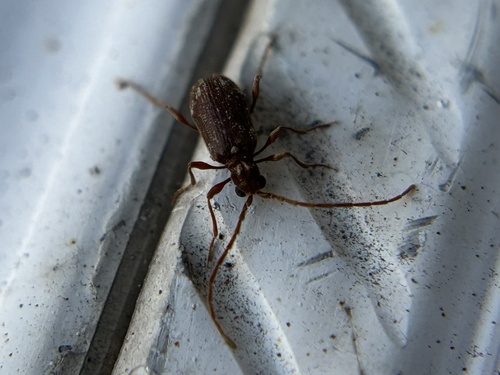
The white-marked spider-beetle is a small red-brown beetle about 2 to 4 mm long with yellow hairs. It lives in bird nests and in stored food supplies worldwide, where it leaves webby, grainy residues. Adults feed on dried or decaying animal and plant material and can also damage museum collections.
Source: Wikipedia
How to recognize it
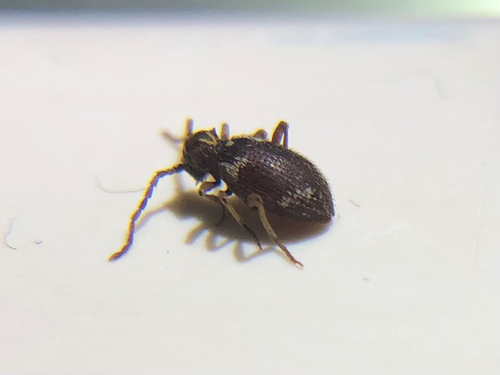
The beetle’s prothorax is covered densely with pale hairs and its wing covers have patches of white scales.
Source: Wikipedia
Size
It measures between 2.0 and 4.3 mm (0.08 to 0.17 in) in length.
Source: Wikipedia
Is it a pest in the house?
It infests stored foods worldwide, leaving webby, granular residues. It can also damage museum collections.
Source: Wikipedia
Where it lives
It is a pest of stored foods worldwide, leaving webbed, granular material on the products.
Source: Wikipedia
What it eats
Adults eat dried and decaying animal and vegetable matter. It also damages stored museum collections.
Source: Wikipedia
Life cycle
At 23 °C it can develop from egg to adult in about 132 days on fishmeal, faster on wheat feed. Final-instar larvae can enter diapause in cocoons for up to 220 days at 23 °C and up to 280 days at 20 °C.
Source: Wikipedia
Where it comes from
It has a nearly cosmopolitan distribution.
Source: Wikipedia
Lookalikes
It looks similar to other spider beetles, especially the hairy spider beetle (Ptinus villiger).
Source: Wikipedia
Where it is found in the US
Recorded in 21 of 51 states and DC. Most records: New Mexico, Pennsylvania, Massachusetts, Colorado, Ohio, Michigan, Alaska, Connecticut.
Darker = more records. Counts are museum and citizen-science records, not population size.
Source: GBIF
Months it is reported in the US
Source: GBIF
More photos
Questions people ask
How can I tell if I have this beetle in my pantry?
Look for a tiny red-brown beetle about 2 to 4 mm long with yellow hairs, white patches on the wing covers, and webby, grainy residues on stored food.
Source: Wikipedia
What damage can they cause?
They feed on dried food and can contaminate it with webbing, and they may also damage museum specimens.
Source: Wikipedia
Same family (Ptinidae)

Sources
- Wikipedia: https://en.wikipedia.org/wiki/Ptinus_fur
Look it up elsewhere: GBIF · iNaturalist · BugGuide · ITIS · Wikipedia
Text written 2026-10-22 from the sources above and checked sentence by sentence against them. Data fetched 2026-10-22.