 Bug FAQ
Wheat Stem Sawfly
Cephus cinctus · Order: Hymenoptera · Family: Cephidae
Source: Wikipedia
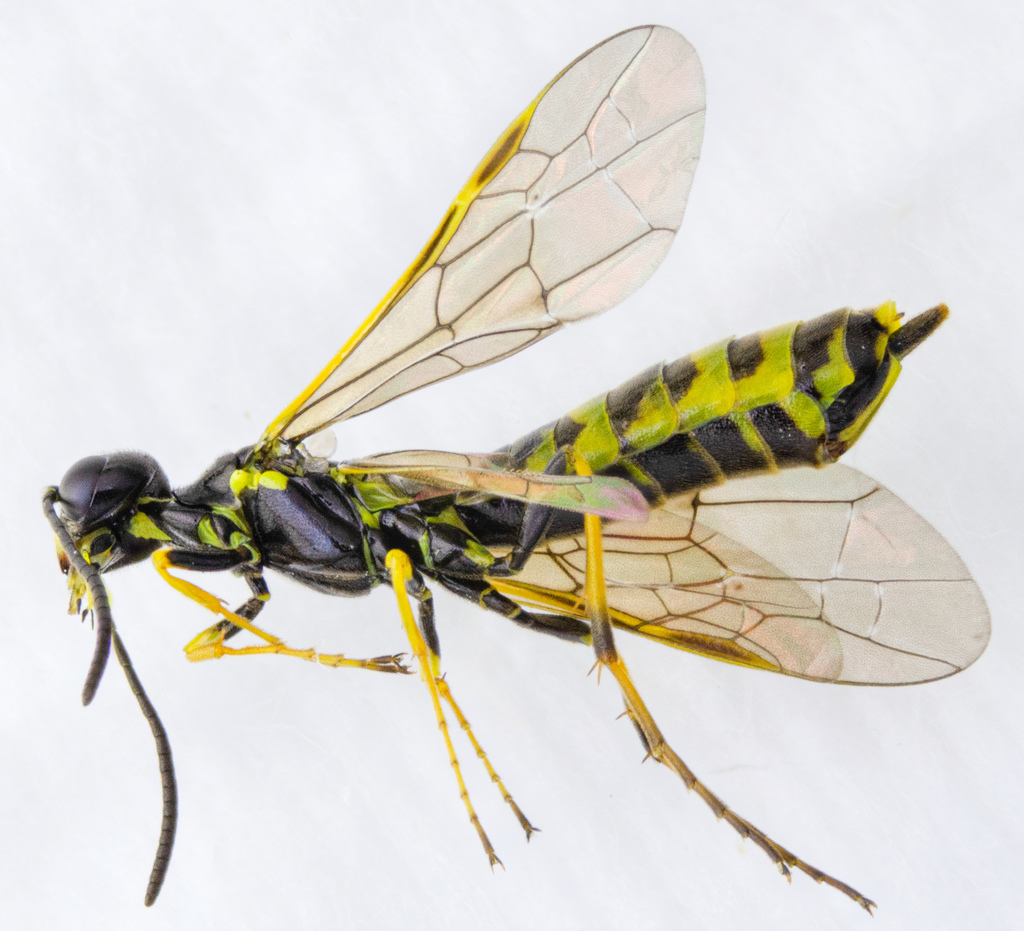
The wheat stem sawfly is a small black wasp with yellow abdominal bands, smoke-coloured wings and yellow legs, measuring 7 to 12 mm, females larger than males. Females lay eggs inside stems of wheat and related grasses before the head emerges; larvae feed inside the stem and pupate in spring, emerging as adults to repeat the cycle. Because most of its life occurs inside plant stems, insecticides do not work, and the insect reduces crop yields by shrinking heads, shrinking seeds and causing lodging.
Source: Wikipedia
Size
Adults are 7 to 12 mm long, with males smaller than females.
Source: Wikipedia
Is it a pest in the house?
Infestations lower head weight, grain quality and protein, cause seed shrivelling and stem lodging, reducing harvest efficiency.
Source: Wikipedia
How to get rid of it
Because the insect lives inside stems for most of its life, chemical sprays are not effective.
Source: Wikipedia
Where it lives
Most of its life is spent inside plant stems, making insecticides ineffective.
Source: Wikipedia
What it eats
It feeds on wheat, durum, barley, rye, wheatgrass, timothy, Elymus species and cheatgrass.
Source: Wikipedia
Life cycle
After mating, females insert eggs into stems before the grass head emerges. The larvae consume the stem’s parenchyma tissue. In the following spring they pupate, and adults emerge from the stems to mate and start the cycle again.
Source: Wikipedia
Where it comes from
The species is thought to have originated in northeastern Asia.
Source: Wikipedia
Where it is found in the US
Recorded in 24 of 51 states and DC. Most records: California, Colorado, Michigan, Texas, Oregon, Illinois, Ohio, Utah.
Darker = more records. Counts are museum and citizen-science records, not population size.
Source: GBIF
Status: native in North America; native in United States; native in Canada. Source: iNaturalist
Months it is reported in the US
Source: GBIF
More photos
Questions people ask
What crops does the wheat stem sawfly damage?
It feeds on wheat, durum, barley, rye and several grass species, and its feeding reduces yield, grain quality and protein.
Source: Wikipedia
How can I identify a wheat stem sawfly?
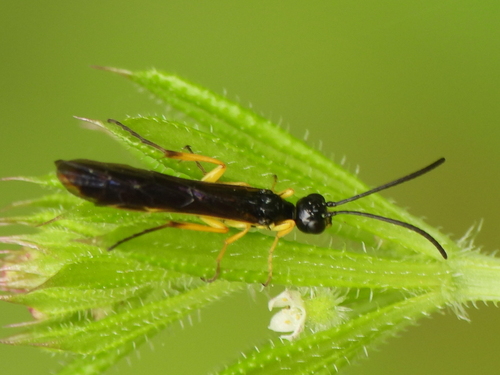
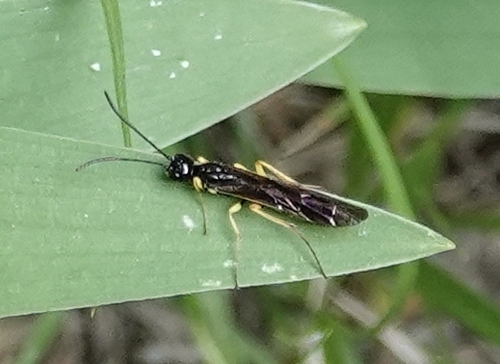
Look for a small (7 to 12 mm) black wasp with yellow abdominal bands, smoky wings and yellow legs; females are larger than males.
Source: Wikipedia
When does this insect appear?
Adults emerge in spring after pupating inside stems, then lay eggs before the grass head emerges.
Source: Wikipedia
How can I control wheat stem sawfly infestations?
Chemical insecticides are ineffective because the insect spends most of its life inside plant stems.
Source: Wikipedia
Sources
- Wikipedia: https://en.wikipedia.org/wiki/Cephus_cinctus
Look it up elsewhere: GBIF · iNaturalist · BugGuide · ITIS · Wikipedia
Text written 2026-10-26 from the sources above and checked sentence by sentence against them. Data fetched 2026-10-26.