 Bug FAQ
Western Yellow Centipede
Stigmatogaster subterranea · Order: Geophilomorpha · Family: Himantariidae
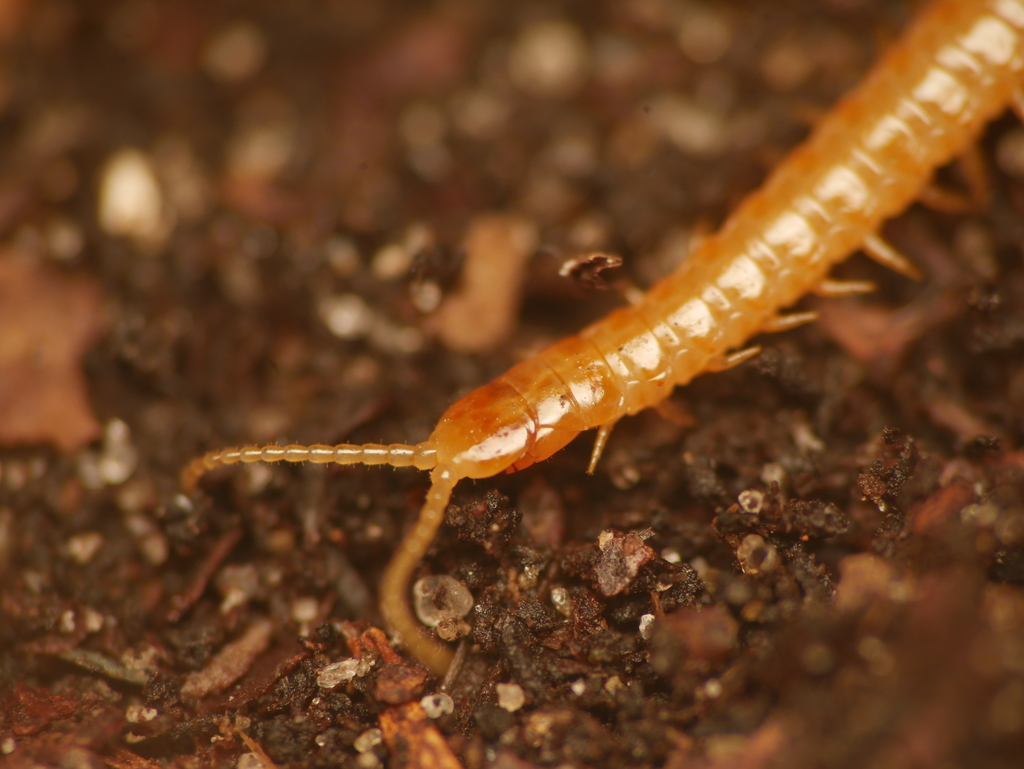
It can reach about 70 mm in length and has 77 to 83 pairs of legs. It lives in woods, grasslands, gardens and other places near humans. It is native to central and eastern Europe and the British Isles, and has been introduced to Newfoundland and New York.
Source: Wikipedia
How to recognize it
It has between 77 and 83 pairs of legs.
Source: Wikipedia
Size
It can grow up to about 70 mm long, sometimes a bit longer.
Source: Wikipedia
Where it lives
It is commonly found in woods, grasslands, gardens and other human-associated areas.
Source: Wikipedia
Where it comes from
It is native to central and eastern Europe and the British Isles, and has been introduced to parts of Canada and the United States.
Source: Wikipedia
Lookalikes
It was previously called Stigmatogaster subterranea, but the name was changed back to Haplophilus subterraneus in 2014.
Source: Wikipedia
Where it is found in the US
Recorded in 1 of 51 states and DC. Most records: Washington.
Darker = more records. Counts are museum and citizen-science records, not population size.
Source: GBIF
Sources
- Wikipedia: https://en.wikipedia.org/wiki/Haplophilus_subterraneus
Look it up elsewhere: GBIF · iNaturalist · BugGuide · Wikipedia
Text written 2026-10-23 from the sources above and checked sentence by sentence against them. Data fetched 2026-10-22.