 Bug FAQ
Western Sea Bristletail
Petrobius brevistylis · Order: Archaeognatha · Family: Machilidae
Also called: Jumping bristletail
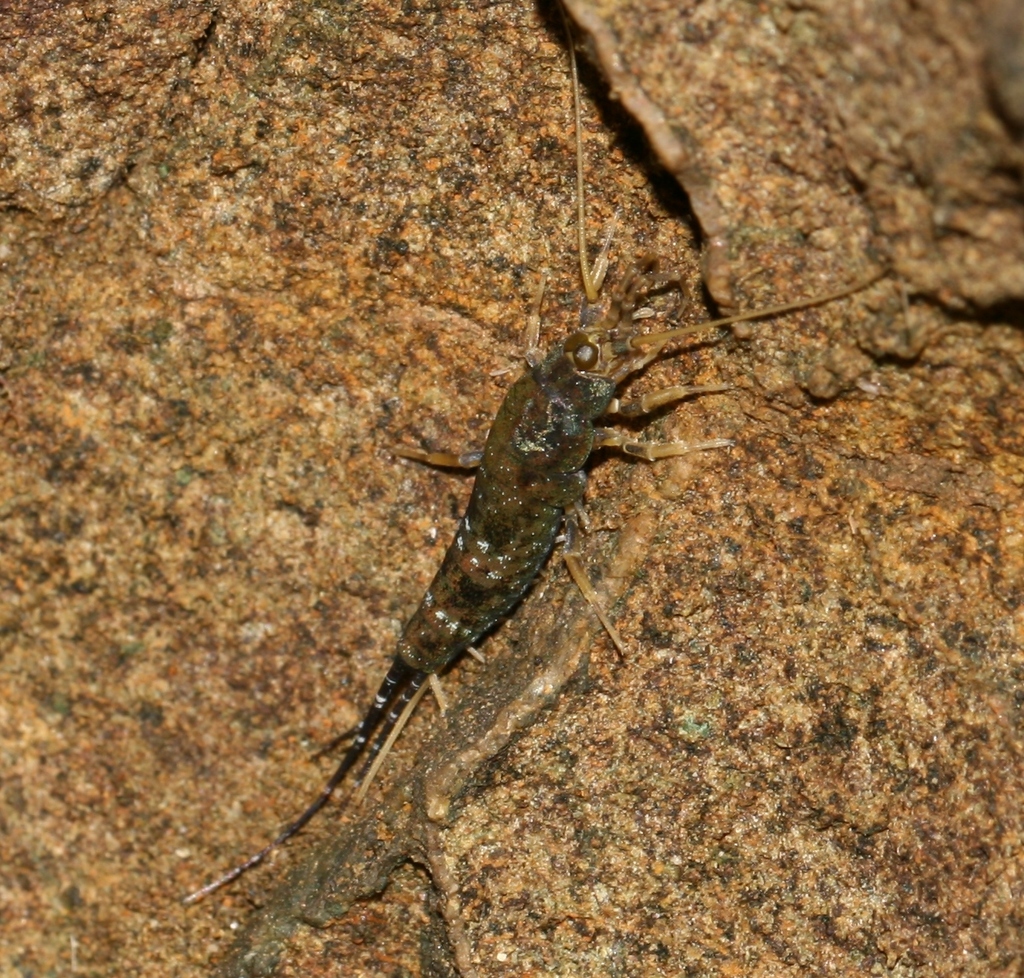
It lives just above the high tide line in cracks of rocks, breakwaters and harbor walls, preferring shaded, moist spots with algae and lichens. It is native to rocky coasts of Europe and northern Asia, especially the British Isles, Scandinavia and Iceland. At night it feeds on algae, lichens and detritus, and adults can live up to three years.
Source: Wikipedia
What it eats
Nocturnal feeder on algae, lichens and detritus.
Source: Wikipedia
Life cycle
Reproduces in rock crevices and juveniles develop gradually.
Source: Wikipedia
Where it is found in the US
Recorded in 2 of 51 states and DC. Most records: Maine, Arkansas.
Darker = more records. Counts are museum and citizen-science records, not population size.
Source: GBIF
Status: introduced in United States; native in North America; native in Canada. Source: iNaturalist
Same family (Machilidae)

Sources
- Wikipedia: https://en.wikipedia.org/wiki/Petrobius_brevistylis
Look it up elsewhere: GBIF · iNaturalist · BugGuide · ITIS · Wikipedia
Text written 2026-10-23 from the sources above and checked sentence by sentence against them. Data fetched 2026-10-23.