 Bug FAQ
Wandering Midget
Agriocnemis pygmaea · Order: Odonata · Family: Coenagrionidae
Also called: Pygmy Dartlet, Pygmy Wisp, Wandering Wisp, wandering shadefly
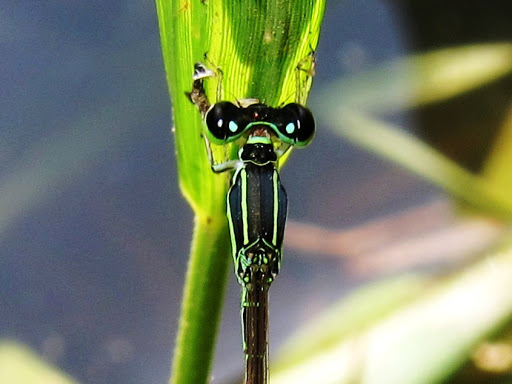
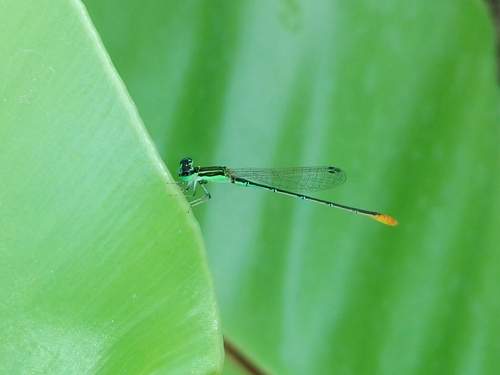
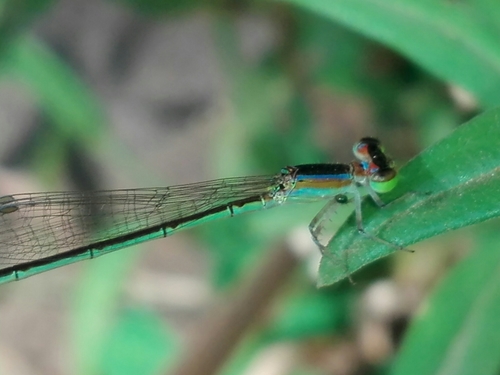
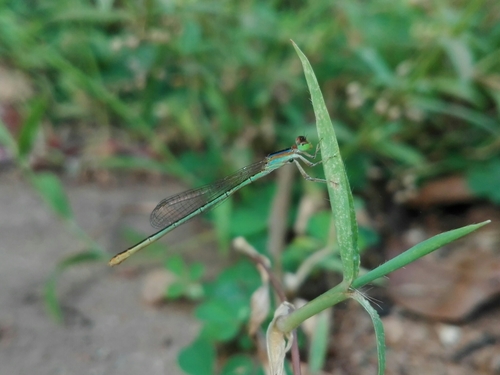
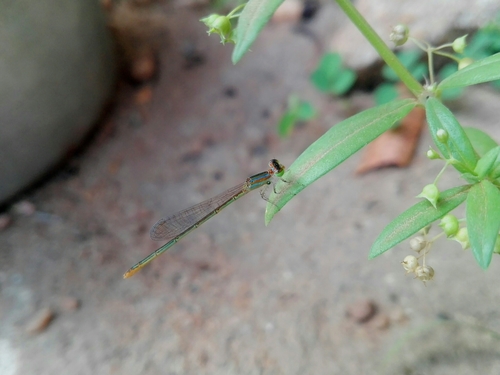
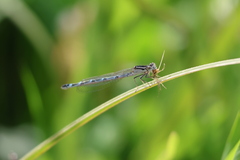
The wandering midget is a tiny damselfly with black-capped green eyes and a black thorax marked by apple-green side stripes. Its abdomen is black on the top for the first seven segments, pale green underneath, and the last segments are orange-red. It lives and breeds in marshes and ponds across much of Asia and parts of Australia.
Source: Wikipedia
Where it lives
Breeds in marshes and ponds.
Source: Wikipedia
Where it comes from
Found throughout Asia and some regions of Australia.
Source: Wikipedia
Lookalikes
Also called wandering midget, pygmy dartlet, or wandering wisp.
Source: Wikipedia
More photos
Questions people ask
What does the wandering midget look like?
It is a tiny damselfly with black-capped green eyes, a black thorax with apple-green side stripes, and an abdomen that is black on top for the first seven segments, pale green underneath, and orange-red on the last segments.
Source: Wikipedia
Where does the wandering midget live?
It lives in marshes and ponds and is found across much of Asia and parts of Australia.
Source: Wikipedia
Same family (Coenagrionidae)


Sources
- Wikipedia: https://en.wikipedia.org/wiki/Agriocnemis_pygmaea
Look it up elsewhere: GBIF · iNaturalist · BugGuide · Wikipedia
Text written 2026-10-22 from the sources above and checked sentence by sentence against them. Data fetched 2026-10-22.