 Bug FAQ
Vespiform Thrips
Franklinothrips vespiformis · Order: Thysanoptera · Family: Aeolothripidae
Also called: Banded thrip
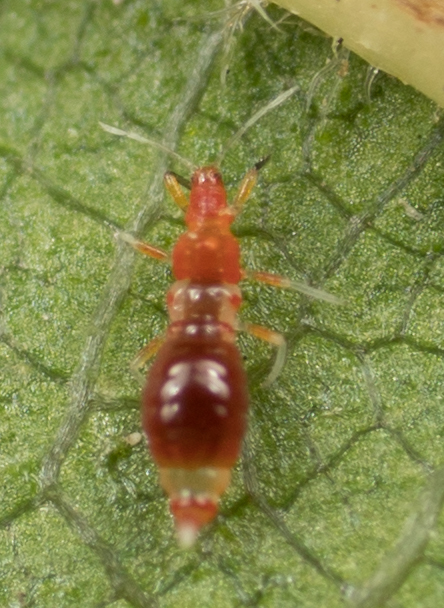
It occurs in many regions including the Caribbean, Central and South America, North America, Oceania, Southern Asia and Europe. It has been used to control the silverleaf whitefly, Bemisia tabaci.
Source: Wikipedia
How to get rid of it
Used in programs to reduce populations of Bemisia tabaci.
Source: Wikipedia
What it eats
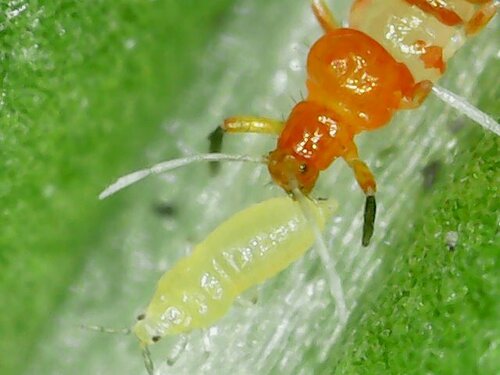
Employed as a biological control agent against the silverleaf whitefly (Bemisia tabaci).
Source: Wikipedia
Where it comes from
Found across the Caribbean, Central and South America, North America, Oceania, Southern Asia and Europe.
Source: Wikipedia
Where it is found in the US
Recorded in 5 of 51 states and DC. Most records: California, Arizona, Florida, Hawaii, Texas.
Darker = more records. Counts are museum and citizen-science records, not population size.
Source: GBIF
Months it is reported in the US
Source: GBIF
More photos

Sources
- Wikipedia: https://en.wikipedia.org/wiki/Franklinothrips_vespiformis
Look it up elsewhere: GBIF · iNaturalist · BugGuide · ITIS · Wikipedia
Text written 2026-10-23 from the sources above and checked sentence by sentence against them. Data fetched 2026-10-23.