 Bug FAQ
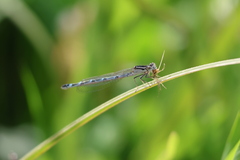
Tule Bluet
Enallagma carunculatum · Order: Odonata · Family: Coenagrionidae
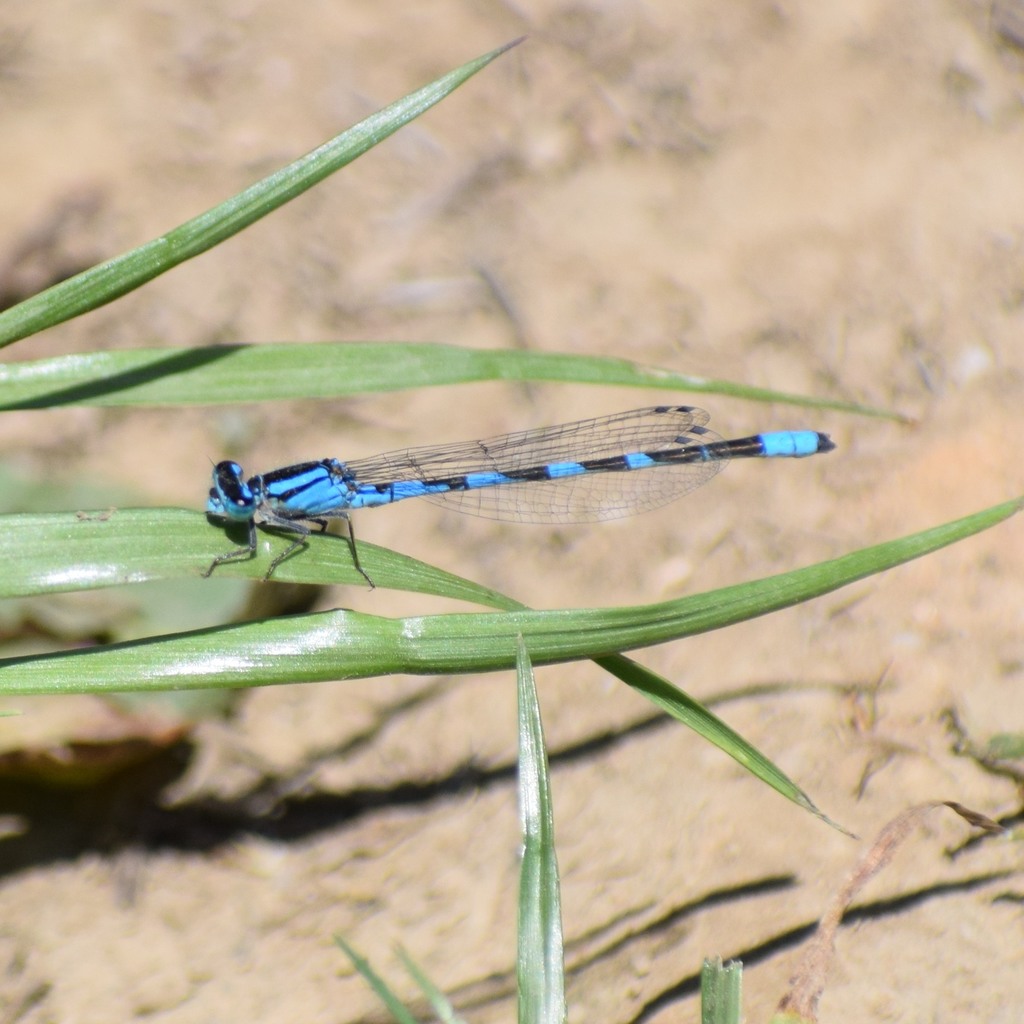
The tule bluet is a small damselfly about 27 to 37 mm long with a mostly black abdomen and some blue markings. Adults eat small flying insects while nymphs eat aquatic insect larvae; they are active from mid-May to mid-September (or early July to mid-October).
Source: Wikipedia
How to recognize it
The abdomen is blue and black, usually showing more black than blue, and the post-ocular spots are small, triangular, and separated by a thin bar.
Source: Wikipedia
Size
Body length ranges from 27 to 37 mm (about 1.1 to 1.5 in).
Source: Wikipedia
Where it lives
They are found where bulrushes grow, and can also live in alkaline or salty waters.
Source: Wikipedia
What it eats
Nymphs eat a variety of aquatic insect larvae such as mosquito and mayfly larvae. Adults catch small flying insects, including mayflies, flies, small moths, and mosquitoes.
Source: Wikipedia
Life cycle
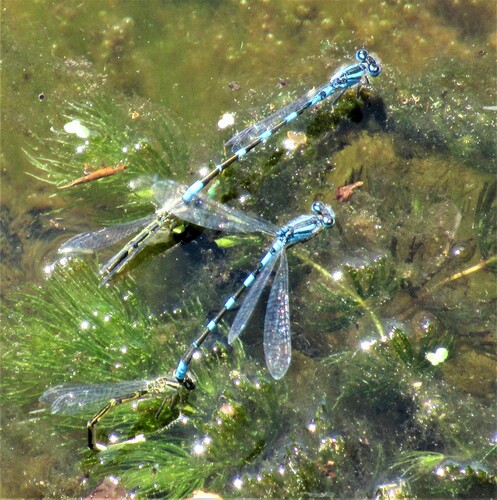
Males defend territories at preferred breeding sites, and after mating they stay attached to the female while she lays eggs in bulrush stems.
Source: Wikipedia
When you see it
Adults are on the wing from mid-May to mid-September, and sometimes from early July to mid-October.
Source: Wikipedia
Where it comes from
Their range covers North America from northern Mexico up to southern Canada.
Source: Wikipedia
Where it is found in the US
Recorded in 36 of 51 states and DC. Most records: California, Oregon, Washington, Michigan, Ohio, Wisconsin, Colorado, Minnesota.
Darker = more records. Counts are museum and citizen-science records, not population size.
Source: GBIF
Status: native in North America; native in Canada; native in United States. Source: iNaturalist
Months it is reported in the US
Source: GBIF
More photos
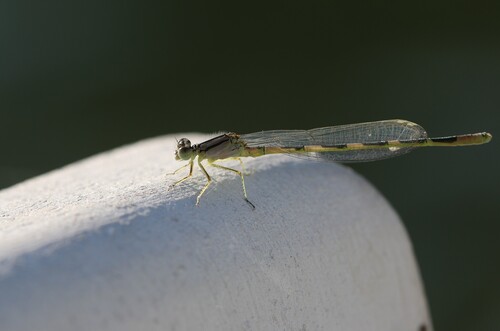
Same family (Coenagrionidae)


Sources
- Wikipedia: https://en.wikipedia.org/wiki/Tule_bluet
Look it up elsewhere: GBIF · iNaturalist · BugGuide · ITIS · Wikipedia
Text written 2026-10-22 from the sources above and checked sentence by sentence against them. Data fetched 2026-10-22.