 Bug FAQ
Hide beetle (Trox scaber)
Trox scaber · Order: Coleoptera · Family: Trogidae
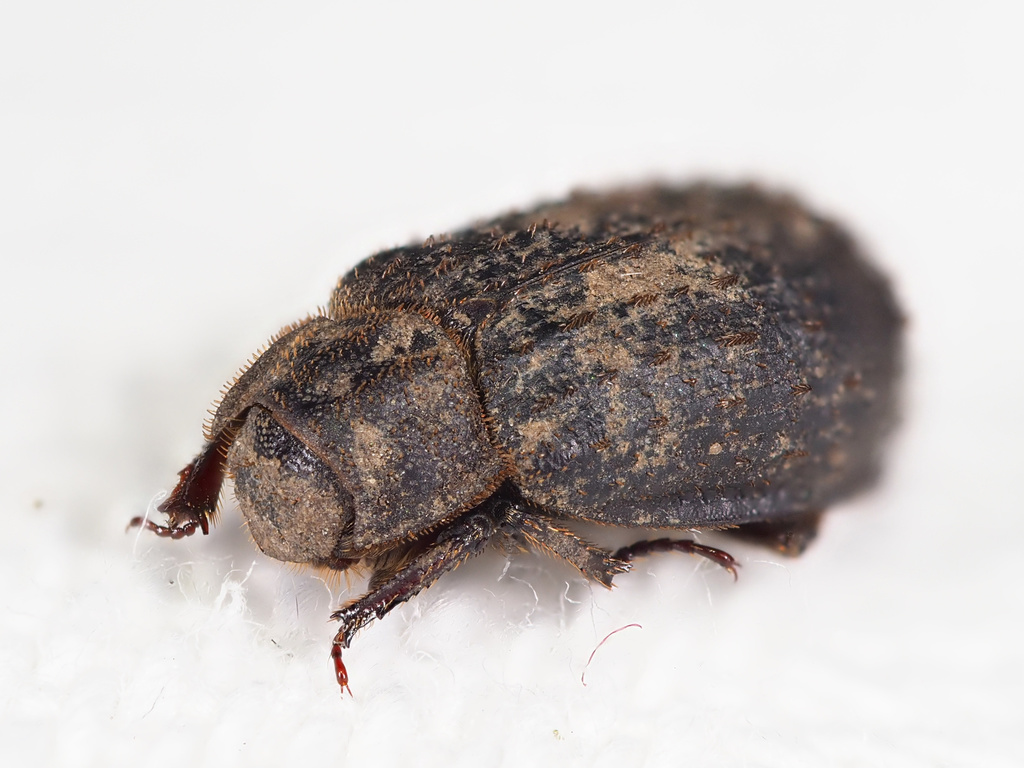
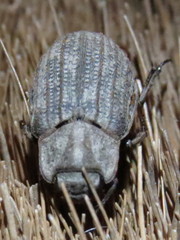
Trox scaber is a small beetle about 5 to 8 mm long that lives worldwide, especially in low-elevation areas of Central Europe. It is brown to black-brown with rust-red antennae, brownish-yellow bristles, and rough-sculptured elytra and pronotum bearing bristly scales on the ridges. The beetle feeds on dry small carcasses, inhabits the substructure of older bird nests and can chirp by rubbing its abdomen on the elytra.
Source: Wikipedia
How to recognize it
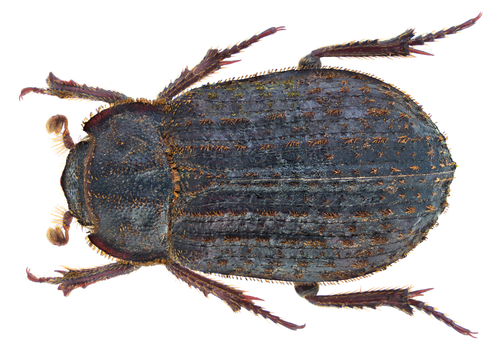
The beetle’s colour ranges from brown to black-brown, its antennae are rust-red, and its bristles are brownish-yellow. Its elytra and pronotum have a rough sculpture with bristly scales along the elytral ridges.
Source: Wikipedia
Size
Adults measure about 5 to 8 mm in length.
Source: Wikipedia
Where it lives
Trox scaber is found almost worldwide and is common in low-elevation terrain of Central Europe, but rare in the Alps. It lives mainly in the substructure of older large bird nests, but also in smaller nests, bird carcasses and hides, which it gnaws.
Source: Wikipedia
Life cycle
Larvae develop in the nests of tawny owls and other owls, as well as in hollow tree nests of jackdaws, woodpeckers and other birds.
Source: Wikipedia
When you see it
Adults are reluctant fliers and may produce chirping sounds by rubbing the abdomen on the elytra.
Source: Wikipedia
Where it comes from
The species occurs almost worldwide, including Europe.
Source: Wikipedia
Lookalikes
Trox scaber was once placed in the Scarabaeidae because its antennae resemble those of scarab beetles.
Source: Wikipedia
Where it is found in the US
Recorded in 18 of 51 states and DC. Most records: Ohio, Michigan, North Carolina, New York, Iowa, Massachusetts, Pennsylvania, Indiana.
Darker = more records. Counts are museum and citizen-science records, not population size.
Source: GBIF
Months it is reported in the US
Source: GBIF
More photos
Questions people ask
Where can I find Trox scaber?
It is common in low-elevation areas worldwide, especially in older bird nests and sometimes in bird carcasses or hides.
Source: Wikipedia
What does Trox scaber look like?
It is a 5 to 8 mm brown to black-brown beetle with rust-red antennae, brownish-yellow bristles, and rough-sculptured elytra bearing bristly scales.
Source: Wikipedia
What does Trox scaber eat?
Adults mainly feed on small dry carcasses, preferring dry material.
Source: Wikipedia
Do they make any sounds?
Yes, they can chirp by rubbing their abdomen against the elytra.
Source: Wikipedia
Same family (Trogidae)

Sources
- Wikipedia: https://en.wikipedia.org/wiki/Trox_scaber
Look it up elsewhere: GBIF · iNaturalist · BugGuide · ITIS · Wikipedia
Text written 2026-10-29 from the sources above and checked sentence by sentence against them. Data fetched 2026-10-29.