 Bug FAQ
Tropical Fowl Mite
Ornithonyssus bursa · Order: Mesostigmata · Family: Macronyssidae
Also called: starling mite
Source: Wikipedia
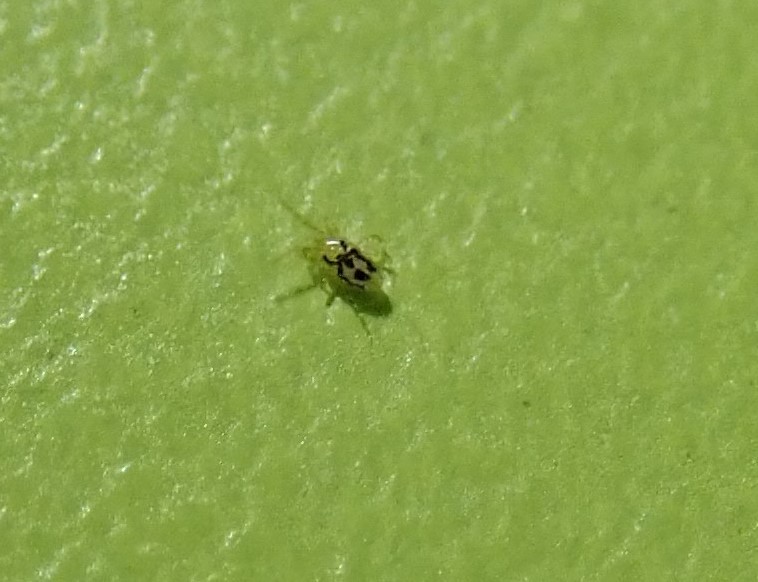
These mites normally live in bird feathers and nests, but they can move from nests into human homes. Their development includes five stages, egg, larva, protonymph, deutonymph, and adult, and they feed on blood during the last two stages. Bites to humans produce small, irritating skin lesions and may cause intense inflammation.
Source: Wikipedia
How to recognize it
It can be told apart from Ornithonyssus sylviarum by its broader posterior end and by having more than two pairs of legs on the sternal plate.
Source: Wikipedia
Is it a pest in the house?
It can move from bird nests into human homes, becoming a household pest.
Source: Wikipedia
Where it lives
It usually lives in the feathers of birds, but it prefers to lay its eggs in the birds' nests rather than on the feathers. The mite can leave bird nests and enter human homes.
Source: Wikipedia
What it eats
In the final two life stages the mite sucks blood from its host for food.
Source: Wikipedia
Life cycle
Its development passes through five stages: egg, larva, protonymph, deutonymph, and adult. During the protonymph and deutonymph stages it feeds on blood from its host.
Source: Wikipedia
When you see it
The species is often active during the day, unlike the nocturnal northern fowl mite.
Source: Wikipedia
Lookalikes
It is similar to Ornithonyssus sylviarum, but can be distinguished by a less narrowed posterior end and by having more than two pairs of legs on the sternal plate.
Source: Wikipedia
Where it is found in the US
Recorded in 7 of 51 states and DC. Most records: California, Florida, Alabama, New York, Maryland, Ohio, West Virginia.
Darker = more records. Counts are museum and citizen-science records, not population size.
Source: GBIF
Months it is reported in the US
Source: GBIF
More photos
Questions people ask
Do tropical fowl mites bite people?
Yes, their bites produce small irritating skin lesions and can cause intense inflammation.
Source: Wikipedia
Where do tropical fowl mites live?
They normally live in bird feathers and nests, but they can move from nests into human homes.
Source: Wikipedia
How do tropical fowl mites develop?
They go through five stages, egg, larva, protonymph, deutonymph, and adult, and feed on blood during the last two stages.
Source: Wikipedia
How can I tell tropical fowl mites apart from similar mites?
They have a broader posterior end and more than two pairs of legs on the sternal plate, unlike Ornithonyssus sylviarum.
Source: Wikipedia
Same family (Macronyssidae)

Sources
- Wikipedia: https://en.wikipedia.org/wiki/Ornithonyssus_bursa
Look it up elsewhere: GBIF · iNaturalist · BugGuide · ITIS · Wikipedia
Text written 2026-10-29 from the sources above and checked sentence by sentence against them. Data fetched 2026-10-29.