 Bug FAQ
Thorell's Lampshade-web Spider
Hypochilus thorelli · Order: Araneae · Family: Hypochilidae
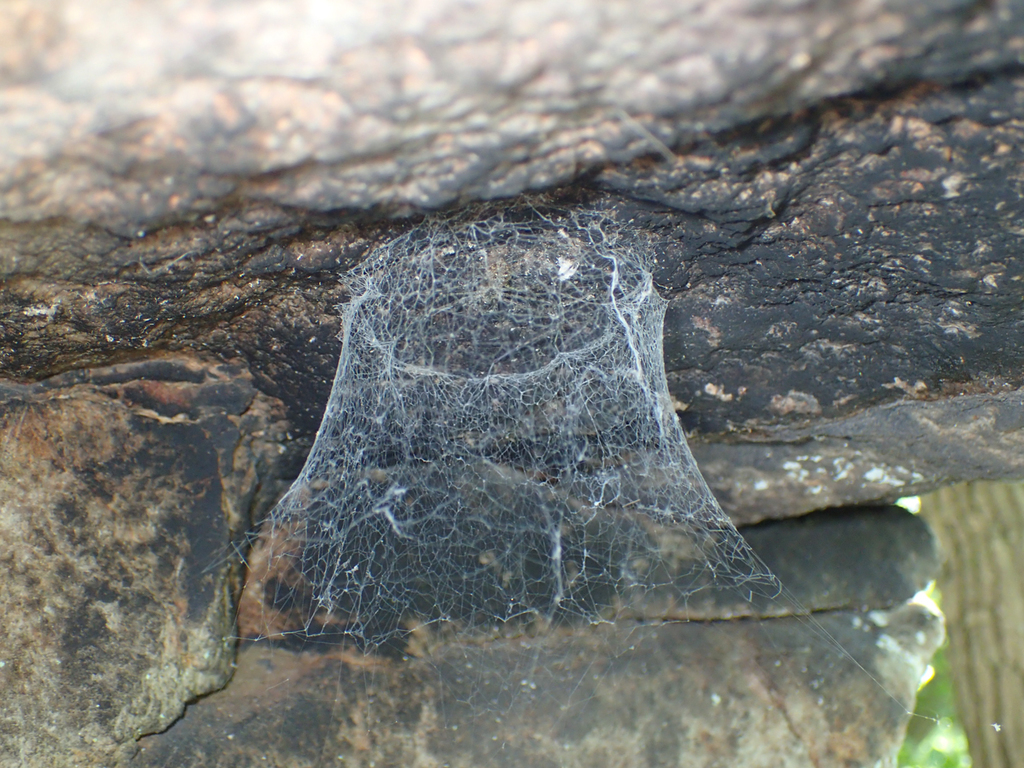
The female Thorell's lampshade-web spider is about 5.5 mm long in the cephalothorax and 9 mm in the abdomen, while the male is smaller at roughly 4 mm and 6 mm respectively. It lives in humid, shaded stream gorges of deciduous forests at 600 to 1100 m elevation, needing over-hanging or vertical surfaces for its web. Its diet is split evenly between flying insects such as crane flies and crawling arthropods like harvestmen and ants, which it kills by biting and eats without wrapping in silk.
Source: Wikipedia
How to recognize it
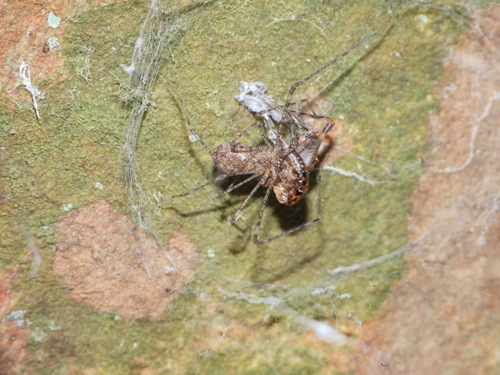
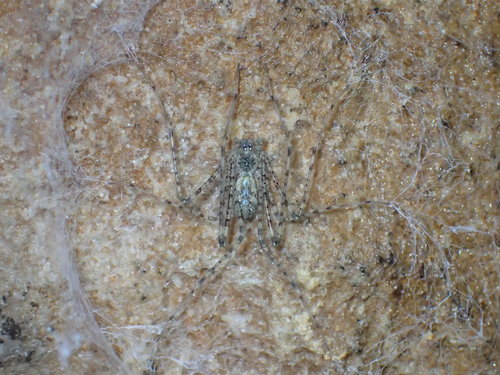
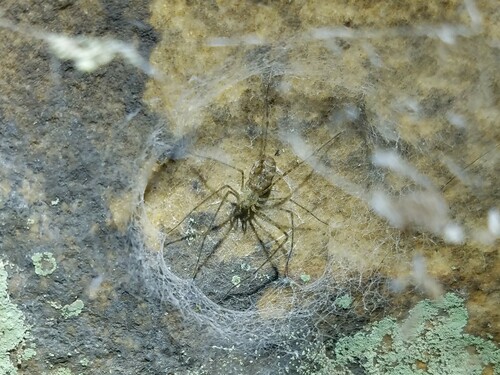
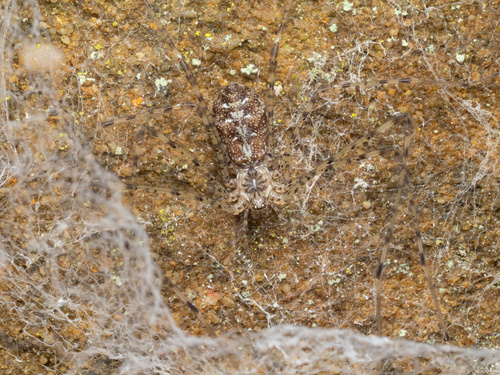
The cephalothorax is a light yellow-grey colour with a darker star-shaped mark underneath. The abdomen’s upper side is greyish with irregular black lines, while the underside is much lighter.
Source: Wikipedia
Size
Males are smaller, with a cephalothorax around 4 mm and an abdomen about 6 mm.
Source: Wikipedia
Where it lives
Preferred habitats are humid, shaded stream gorges in deciduous forests at elevations of 600 to 1100 m. They require humidity, shade, and suitable over-hanging or vertical surfaces for building their webs.
Source: Wikipedia
What it eats
Prey caught in the web includes both flying insects such as crane flies and crawling arthropods like harvestmen and ants, in roughly equal numbers. Captured prey are killed by biting and are consumed directly without being wrapped in silk.
Source: Wikipedia
Life cycle
Like all Hypochilidae, this spider possesses four book lungs, a feature visible on the underside of the abdomen.
Source: Wikipedia
Where it comes from
It is native to the southern Appalachian Mountains, occurring in North Carolina, Tennessee, Kentucky, Alabama, Georgia, and South Carolina.
Source: Wikipedia
Lookalikes
Four book lungs set members of the family apart from most other araneomorph spiders, which usually have only two.
Source: Wikipedia
Where it is found in the US
Recorded in 8 of 51 states and DC. Most records: Tennessee, Alabama, Georgia, Virginia, Kentucky, North Carolina, California, Colorado.
Darker = more records. Counts are museum and citizen-science records, not population size.
Source: GBIF
Months it is reported in the US
Source: GBIF
More photos
Questions people ask
How can I tell this spider apart from other spiders?
Look for a light yellow-grey cephalothorax with a dark star mark, a greyish abdomen with irregular black lines, and the visible four book lungs on the underside of the abdomen.
Source: Wikipedia
Where is Thorell's lampshade-web spider found?
It is native to the southern Appalachian region of the United States, recorded in North Carolina, Tennessee, Kentucky, Alabama, Georgia, and South Carolina.
Source: Wikipedia
What does this spider eat?
It catches both flying insects like crane flies and crawling arthropods such as harvestmen and ants, killing them by biting and eating them without silk wrapping.
Source: Wikipedia
What kind of habitat does it prefer?
It lives in humid, shaded stream gorges of deciduous forests at 600 to 1100 m elevation, needing over-hanging or vertical surfaces for its web.
Source: Wikipedia
Sources
- Wikipedia: https://en.wikipedia.org/wiki/Hypochilus_thorelli
Look it up elsewhere: GBIF · iNaturalist · BugGuide · ITIS · Wikipedia
Text written 2026-10-25 from the sources above and checked sentence by sentence against them. Data fetched 2026-10-25.