 Bug FAQ
Temperate White Springtail
Folsomia candida · Order: Entomobryomorpha · Family: Isotomidae
Also called: Springtail
Source: Penn State Extension
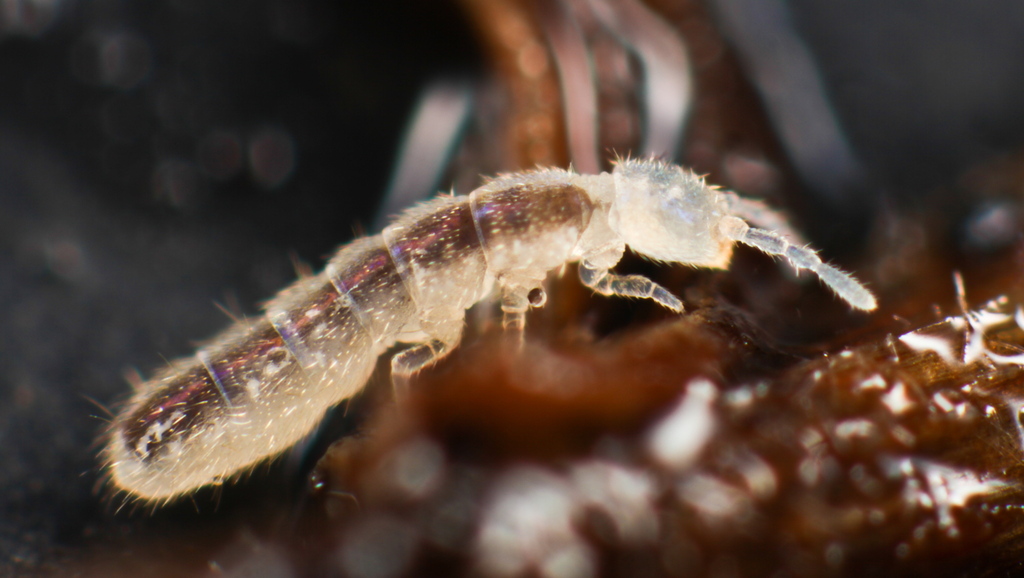
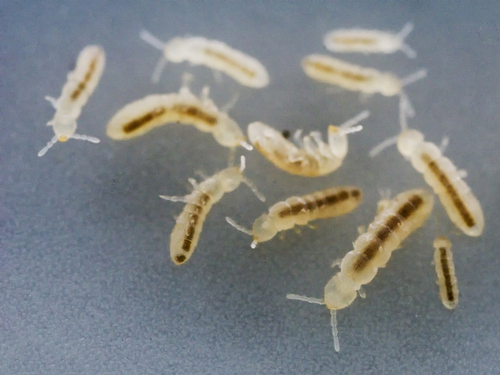
These tiny, unpigmented springtails are up to 3 mm long and have four-segmented antennae, no eyes, and a forked tail (furcula) for jumping. [1,3,4] They live in moist, organic-rich soils worldwide, often in homes with high humidity where they feed on mold and fungi, and they can harm crops and mushroom cultures. [6,7,15,16]
Source: Wikipedia, Penn State Extension
How to recognize it
Their most recognizable feature is a furcula, a spring-like structure used for jumping. [4]
Source: Penn State Extension
Size
Adults are slender, unpigmented, and up to 3 mm (0.1 in) long. [1]
Source: Wikipedia
How to get rid of it
Lower indoor humidity with air-conditioning or a de-humidifier to make the environment unsuitable for them. [13] A pest-management professional can apply insecticide around the building’s foundation and perimeter. [14]
Source: Penn State Extension
Where it lives
They are found in soil worldwide, often spread by human activity. [6] They also occur in mines, caves, high-organic soils, farms, leaf litter, and stream verges. [7]
Source: Wikipedia
What it eats
They mainly eat fungal hyphae, including root mycorrhizae. [9] In the lab they can be kept on granulated baker’s yeast. [10]
Source: Wikipedia
Life cycle
Populations consist only of females that reproduce without males (parthenogenesis). [11] White eggs hatch in about a week at 21 °C, and the juveniles reach maturity in three weeks after five molts. [12]
Source: Wikipedia
Where it comes from
This species is considered a “tramp” insect; its original range is unclear because it has been moved globally in soil and plant pots. [8]
Source: Wikipedia
Where it is found in the US
Recorded in 8 of 51 states and DC. Most records: Kentucky, Illinois, Iowa, Minnesota, Alaska, New York, Pennsylvania, Arkansas.
Darker = more records. Counts are museum and citizen-science records, not population size.
Source: GBIF
Status: native in North America; native in Canada. Source: iNaturalist
More photos
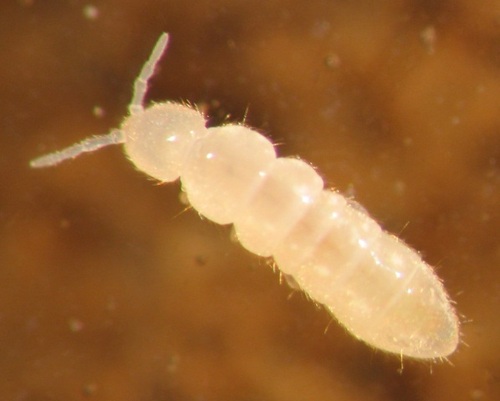
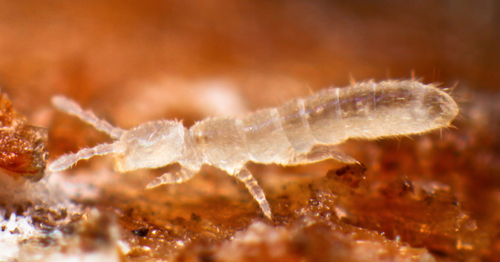
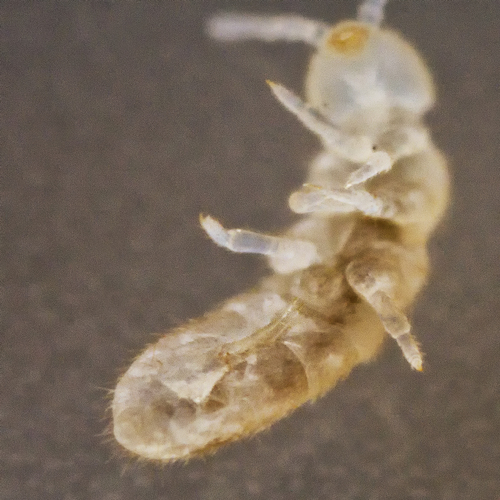
Questions people ask
How can I get rid of springtails in my house?
Reduce indoor humidity with air-conditioning or a de-humidifier, and consider having a professional treat the exterior foundation. [13,14]
Source: Penn State Extension
Can they damage my garden or crops?
Yes, they feed on fungi and can damage crops, garden plants and cultivated mushrooms. [16]
Source: Penn State Extension
What do they look like?
They are tiny (up to 3 mm), white, slender springtails with four-segmented antennae, no eyes, and a forked tail (furcula) for jumping. [1,3,4]
Source: Wikipedia, Penn State Extension
Sources
- Penn State Extension: https://extension.psu.edu/springtails
- Wikipedia: https://en.wikipedia.org/wiki/Folsomia_candida
Look it up elsewhere: GBIF · iNaturalist · BugGuide · ITIS · Wikipedia
Text written 2026-10-22 from the sources above and checked sentence by sentence against them. Data fetched 2026-10-22.