 Bug FAQ
Telmatogeton torrenticola
Telmatogeton torrenticola · Order: Diptera · Family: Chironomidae
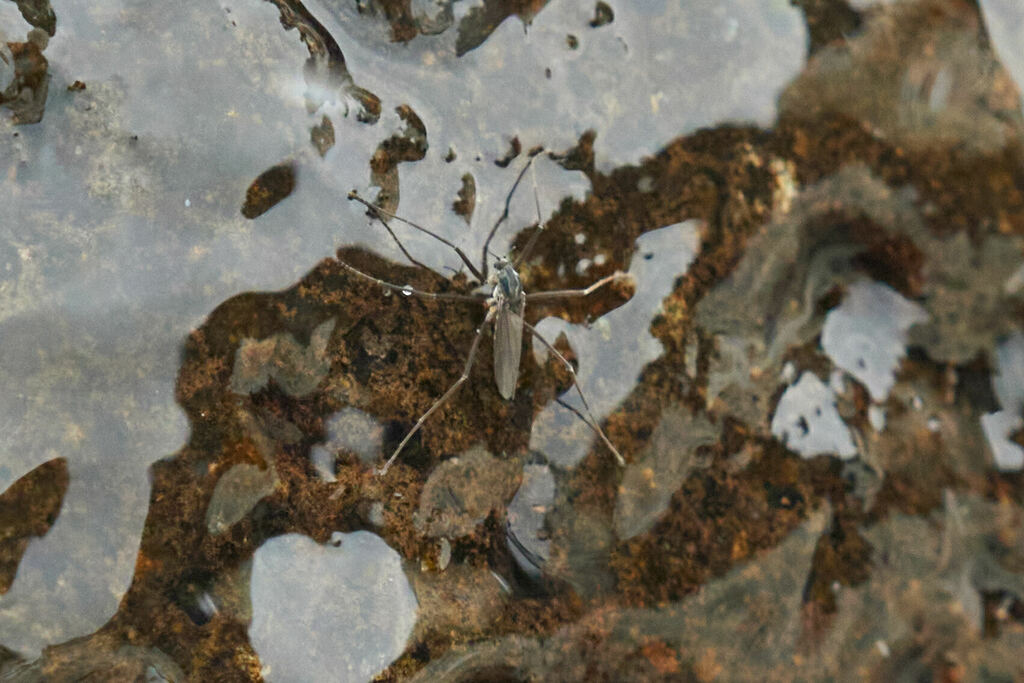
The Hawaiian torrent midge is a small gray fly about 5 mm long, with wings of similar length. Its larvae are much larger, reaching 18 to 20 mm in length. It lives on wet rock faces beside fast-moving streams and rapids in moderate-elevation Hawaiian streams.
Source: Wikipedia
How to recognize it
It is a small gray midge.
Source: Wikipedia
Size
Adults are about 5 mm long, with wings of similar length. Larvae grow to 18 to 20 mm.
Source: Wikipedia
Where it lives
It inhabits wet rock faces next to fast rapids in moderate-elevation streams and rivers.
Source: Wikipedia
Lookalikes
Although its ancestors lived in coastal intertidal zones, this species is not found at sea level.
Source: Wikipedia
Where it is found in the US
Recorded in 1 of 51 states and DC. Most records: Hawaii.
Darker = more records. Counts are museum and citizen-science records, not population size.
Source: GBIF
Status: endemic in United States. Source: iNaturalist
Months it is reported in the US
Source: GBIF
Questions people ask
What size are the adults and larvae?
Adults are about 5 mm long, while larvae grow to 18 to 20 mm.
Source: Wikipedia
What habitat does it prefer?
It lives on wet rock faces beside fast-moving streams and rapids at moderate elevations.
Source: Wikipedia
Same family (Chironomidae)



Sources
- Wikipedia: https://en.wikipedia.org/wiki/Telmatogeton_torrenticola
Look it up elsewhere: GBIF · iNaturalist · BugGuide · ITIS · Wikipedia
Text written 2026-10-29 from the sources above and checked sentence by sentence against them. Data fetched 2026-10-29.