 Bug FAQ
Greenhouse Camel Cricket
Tachycines asynamorus · Order: Orthoptera · Family: Rhaphidophoridae
Also called: Green-house Camel-cricket, Greenhouse Stone Cricket
Source: Wikipedia
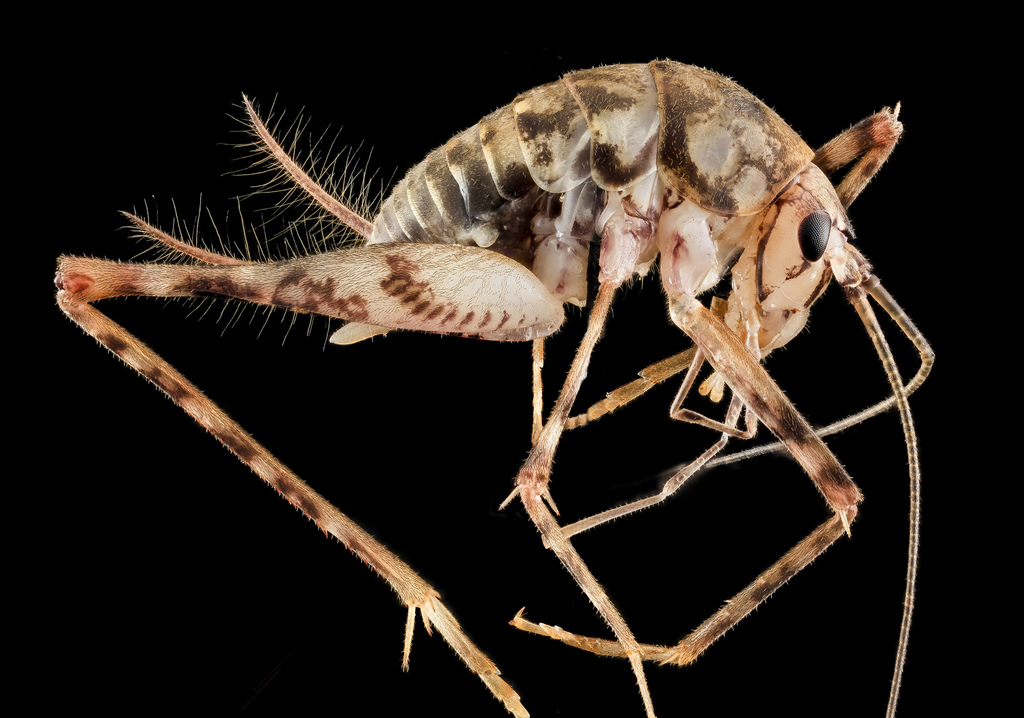
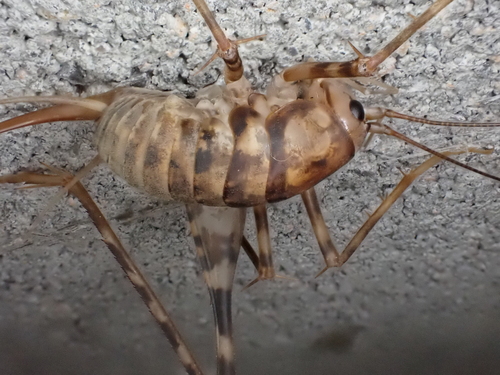
Greenhouse camel crickets are small, 11 to 15 mm long, with very long antennae and a gray-to-brown body marked with dark spots and rings on the legs. They live in warm, moist places such as greenhouses, cellars, and caves, and are active at night, hiding during the day. They eat both small insects and plant material, and can damage seedlings, fruits and other greenhouse crops.
Source: Wikipedia
How to recognize it
The body is gray to reddish-brown with dark brown spots and stripes on the abdomen, a dark edge on the pronotum, and dark, lightly ringed legs, especially the hind legs.
Source: Wikipedia
Size
Their antennae are 70 to 80 mm long, roughly four times the body length.
Source: Wikipedia
Is it a pest in the house?
They are crepuscular and nocturnal, and can become a nuisance in greenhouses when they occur in large numbers.
Source: Wikipedia
How to get rid of it
Targeted control measures have reduced their numbers in botanical gardens. In the U.S., people have been asked to survey homes for camel crickets and send specimens to a university for research.
Source: Wikipedia
Where it lives
They prefer warm, moist habitats with plenty of hiding spots, such as greenhouses and warm cellars.
Source: Wikipedia
What it eats
They are omnivorous, eating small insects, fruits, seeds, seedlings, young leaves and flowers.
Source: Wikipedia
Life cycle
They reproduce continuously throughout the year because they live close to humans.
Source: Wikipedia
When you see it
They are active at dusk and night, avoiding light, and hide in crevices during the day. In temperate regions they are only seen outdoors during very hot summer periods.
Source: Wikipedia
Where it comes from
The species originates from caves in eastern Asia, including Korea.
Source: Wikipedia
Lookalikes
They can be mistaken for Kollar's cave cricket, but differ by having spines on the front and middle legs and a uniformly tapering ovipositor in females.
Source: Wikipedia
Where it is found in the US
Recorded in 34 of 51 states and DC. Most records: Maryland, Virginia, North Carolina, New York, Pennsylvania, Illinois, New Jersey, Tennessee.
Darker = more records. Counts are museum and citizen-science records, not population size.
Source: GBIF
Status: introduced in United States; introduced in Canada. Source: iNaturalist
Months it is reported in the US
Source: GBIF
More photos
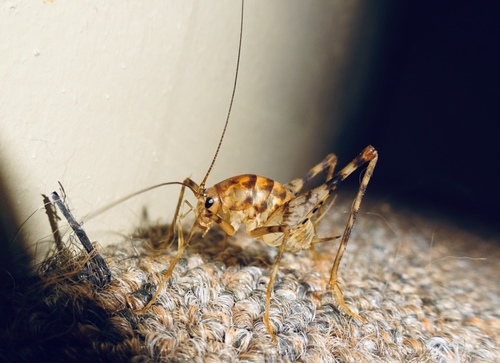
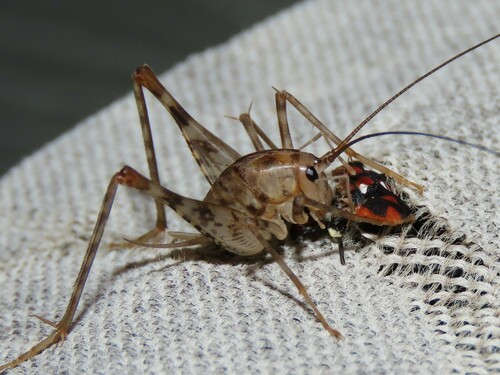
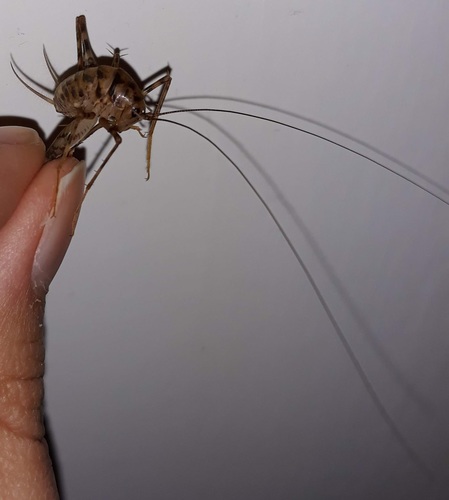
Questions people ask
Can they damage my garden or greenhouse plants?
Yes, they feed on seedlings, fruits, leaves and flowers and can damage greenhouse crops when present in large numbers.
Source: Wikipedia
Where are these crickets likely to be found in my home?
They like warm, moist places such as greenhouses, warm cellars, and hidden spots like under boards or flower pots.
Source: Wikipedia
How can I tell them apart from similar crickets?
Look for spines on the front and middle legs and a smoothly tapering ovipositor in females; these features differ from Kollar's cave cricket.
Source: Wikipedia
Same family (Rhaphidophoridae)


Sources
- Wikipedia: https://en.wikipedia.org/wiki/Tachycines_asynamorus
Look it up elsewhere: GBIF · iNaturalist · BugGuide · ITIS · Wikipedia
Text written 2026-10-22 from the sources above and checked sentence by sentence against them. Data fetched 2026-10-22.