 Bug FAQ
Sycamore Seed Bug
Belonochilus numenius · Order: Hemiptera · Family: Lygaeidae
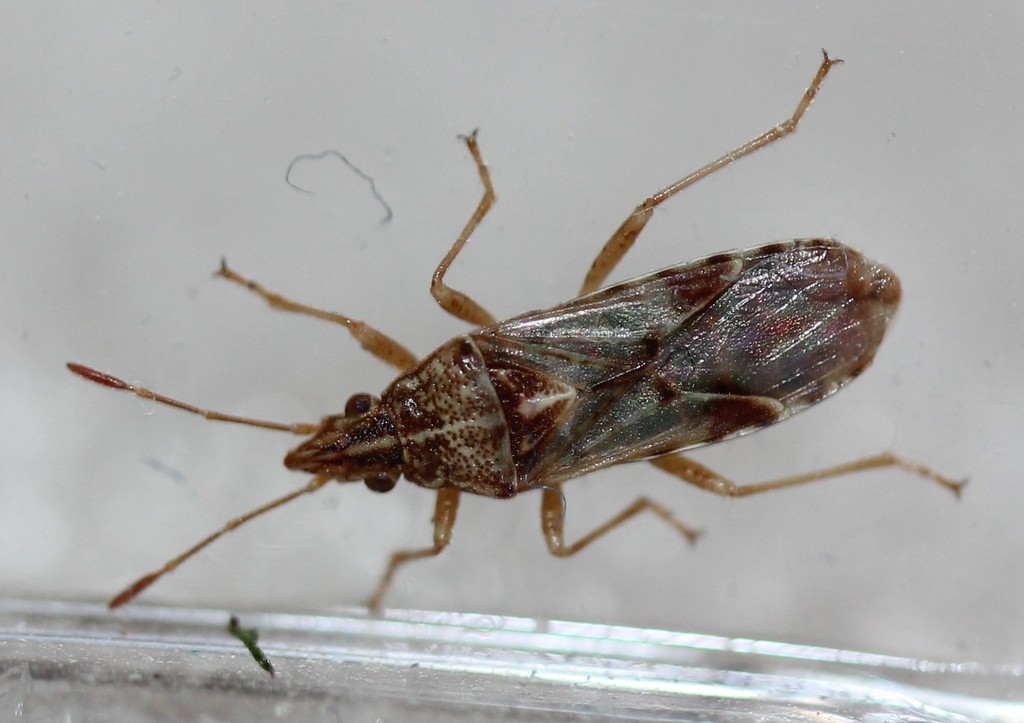
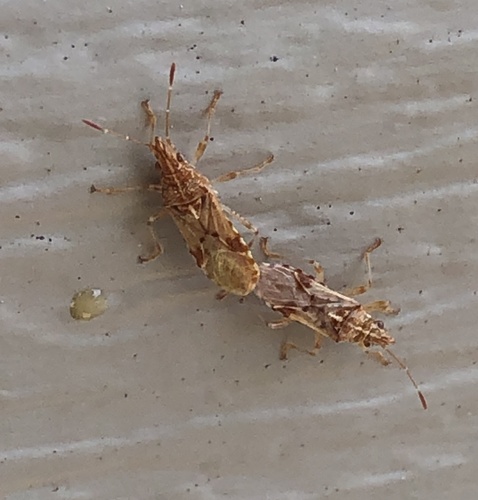
The sycamore seed bug belongs to the genus Belonochilus, which has only one described species. It feeds on sycamore (Platanus) trees and lays its eggs on the fruit of those trees, sometimes overwintering under the bark. It is native to North America but has become an invasive species in Europe.
Source: Wikipedia
Where it lives
The bug lives on sycamore trees, where it feeds and lays eggs, and some individuals spend the winter beneath the bark.
Source: Wikipedia
What it eats
Its primary food source is the sycamore (Platanus) tree.
Source: Wikipedia
Life cycle
Belonochilus is a monotypic genus, containing only the species B. numenius, the sycamore seed bug.
Source: Wikipedia
Where it comes from
It originates from North America. It has spread to Europe as an invasive species.
Source: Wikipedia
Where it is found in the US
Recorded in 36 of 51 states and DC. Most records: California, Pennsylvania, Texas, Virginia, Maryland, Ohio, Illinois, New Mexico.
Darker = more records. Counts are museum and citizen-science records, not population size.
Source: GBIF
Status: introduced in Canada. Source: iNaturalist
Months it is reported in the US
Source: GBIF
More photos
Questions people ask
What trees does the sycamore seed bug live on?
It lives on sycamore (Platanus) trees, feeding on them and laying its eggs on the fruit.
Source: Wikipedia
Has the sycamore seed bug spread to other continents?
Yes, it is now an invasive species in Europe.
Source: Wikipedia
Same family (Lygaeidae)
 Large Milkweed BugOncopeltus fasciatus
 Small Milkweed BugLygaeus kalmii
 False Milkweed BugLygaeus turcicus
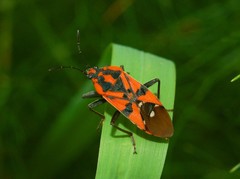 Indian Milkweed BugSpilostethus pandurusDamages trees, gardens or crops
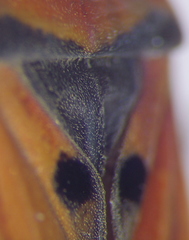 Black-and-Red BugLygaeus equestris
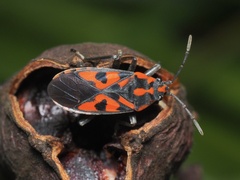 Harlequin bug (Spilostethus saxatilis)Spilostethus saxatilisDamages trees, gardens or crops
Sources
- Wikipedia: https://en.wikipedia.org/wiki/Belonochilus
Look it up elsewhere: GBIF · iNaturalist · BugGuide · ITIS · Wikipedia
Text written 2026-10-25 from the sources above and checked sentence by sentence against them. Data fetched 2026-10-25.