 Bug FAQ
Swift Forktail
Ischnura erratica · Order: Odonata · Family: Coenagrionidae
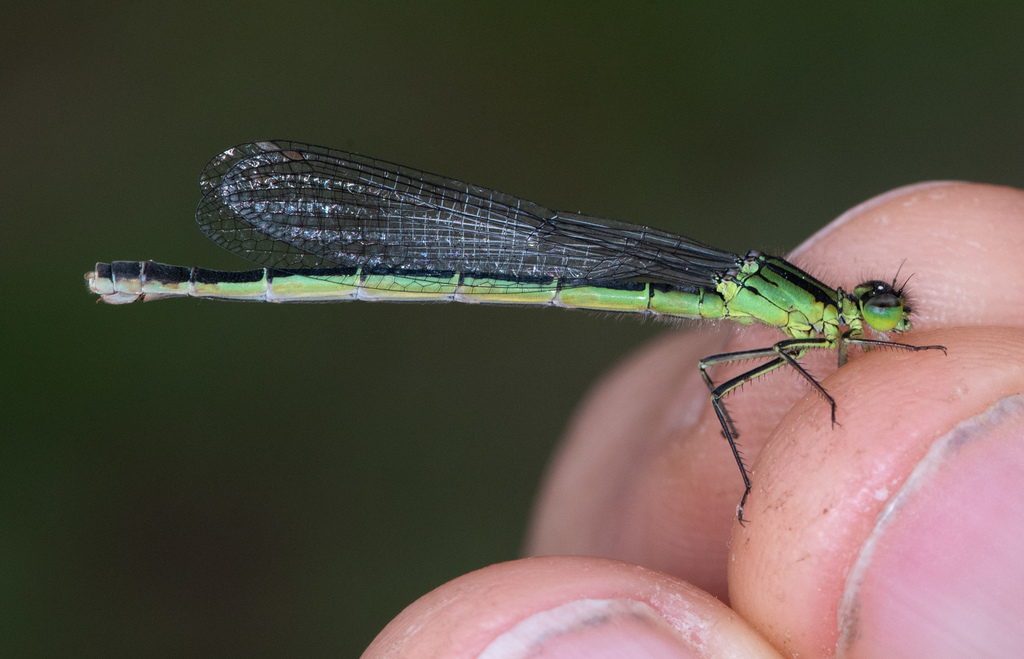
The Swift Forktail is a robust damselfly about 30-35 mm long with a wingspan of 35-40 mm. It lives in the Pacific Northwest from British Columbia to northern California, breeding in peat bogs, forest lakes, beaver dams, ponds, ditches and cool-stream backwaters, and often perches on lily pads, rocks, logs or the ground. Adults are on the wing from late April to June in British Columbia and from February to September in California.
Source: Wikipedia
How to recognize it
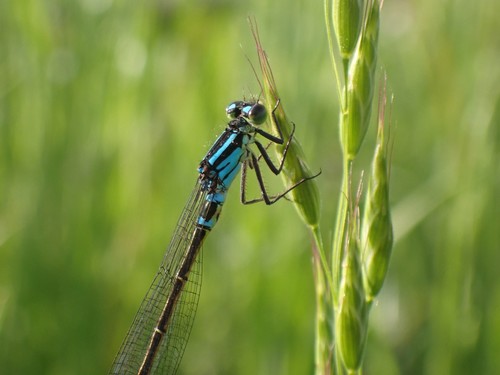
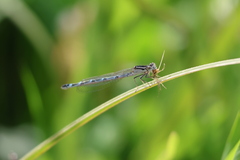
Their abdomen is shiny black on top and yellow-green or yellow-orange underneath.
Source: Wikipedia
Size
They measure 30-35 mm in length and have a wingspan of 35-40 mm.
Source: Wikipedia
Where it lives
Adults often perch on lily pads, rocks, logs or the ground, resting the tip of their abdomen on the surface.
Source: Wikipedia
Life cycle
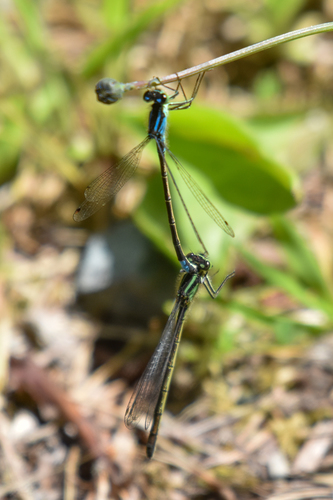
Mating can last an hour or more, after which the pair separate before the female begins laying eggs.
Source: Wikipedia
When you see it
In British Columbia adults fly from the very end of April through June or later, while in California they are active from February to September.
Source: Wikipedia
Where it comes from
The species is native to the Pacific Northwest, from British Columbia down to northern California.
Source: Wikipedia
Where it is found in the US
Recorded in 4 of 51 states and DC. Most records: Oregon, California, Washington, Idaho.
Darker = more records. Counts are museum and citizen-science records, not population size.
Source: GBIF
Status: native in North America; native in Canada. Source: iNaturalist
Months it is reported in the US
Source: GBIF
More photos
Questions people ask
How big is the Swift Forktail?
It is about 30-35 mm long with a wingspan of 35-40 mm.
Source: Wikipedia
When can I see them flying?
In British Columbia they appear from late April to June, and in California from February through September.
Source: Wikipedia
Where does this damselfly live?
It is native to the Pacific Northwest, from British Columbia to northern California, and breeds in peat bogs, forest lakes, beaver dams, ponds, ditches and cool-stream backwaters.
Source: Wikipedia
Same family (Coenagrionidae)


Sources
- Wikipedia: https://en.wikipedia.org/wiki/Ischnura_erratica
Look it up elsewhere: GBIF · iNaturalist · BugGuide · ITIS · Wikipedia
Text written 2026-10-24 from the sources above and checked sentence by sentence against them. Data fetched 2026-10-24.