 Bug FAQ
Sumac Micromoth
Holcocera chalcofrontella · Order: Lepidoptera · Family: Blastobasidae
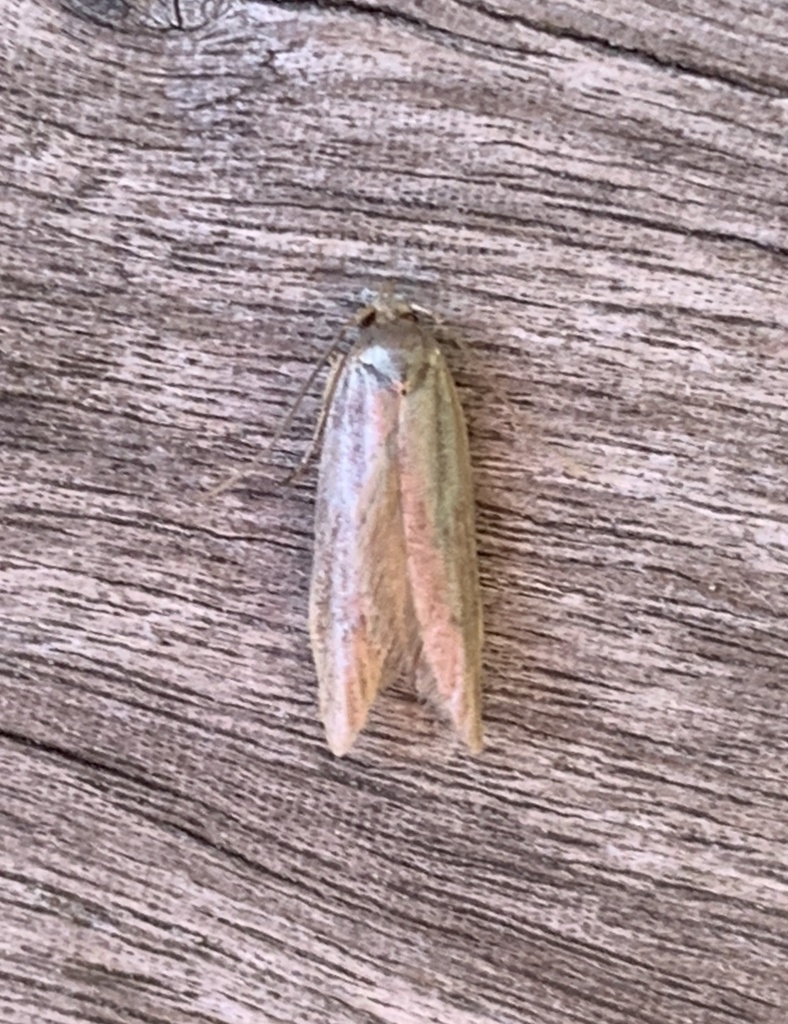
The sumac micromoth lives across many parts of North America, including many U.S. states and Canadian provinces. Its larvae have been raised on the seeds of Rhus plants and on chestnut burrs.
Source: Wikipedia
What it eats
Larvae have been successfully reared on the seeds of Rhus species and on chestnut burrs.
Source: Wikipedia
Where it comes from
It is found in a wide range of locations throughout North America, from U.S. states such as Pennsylvania, Texas, Missouri, Maryland, West Virginia, Arizona, Florida, Illinois, Maine, Michigan, Ohio, Tennessee, Vermont, Washington to Canadian provinces including British Columbia, Manitoba, New Brunswick, Ontario, and Quebec.
Source: Wikipedia
Where it is found in the US
Recorded in 19 of 51 states and DC. Most records: Washington, Michigan, Arkansas, Massachusetts, Montana, Tennessee, Virginia, Pennsylvania.
Darker = more records. Counts are museum and citizen-science records, not population size.
Source: GBIF
Status: native in North America; native in Canada. Source: iNaturalist
Months it is reported in the US
Source: GBIF
More photos
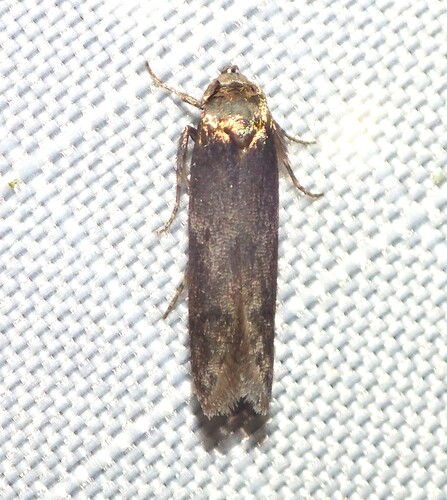
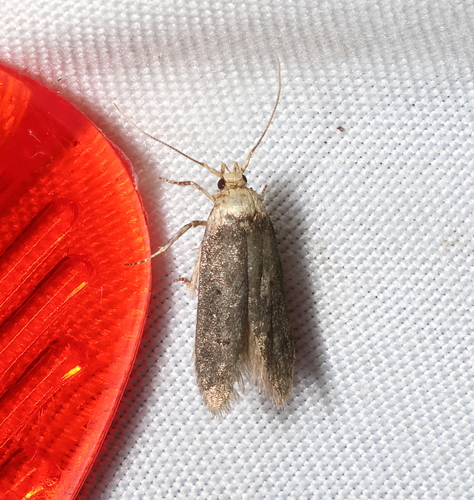
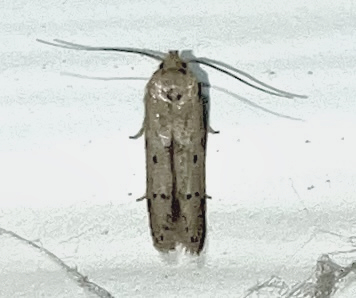
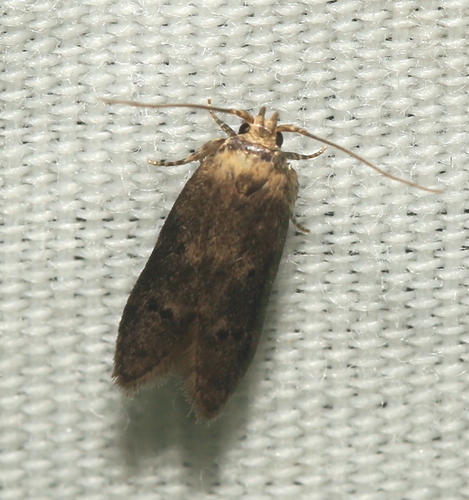
Same family (Blastobasidae)

Sources
- Wikipedia: https://en.wikipedia.org/wiki/Holcocera_chalcofrontella
Look it up elsewhere: GBIF · iNaturalist · BugGuide · Wikipedia
Text written 2026-10-27 from the sources above and checked sentence by sentence against them. Data fetched 2026-10-27.