 Bug FAQ
Spotted Snake Millipede
Blaniulus guttulatus · Order: Julida · Family: Blaniulidae
Also called: Millipede, snake millepede
Source: Wikipedia
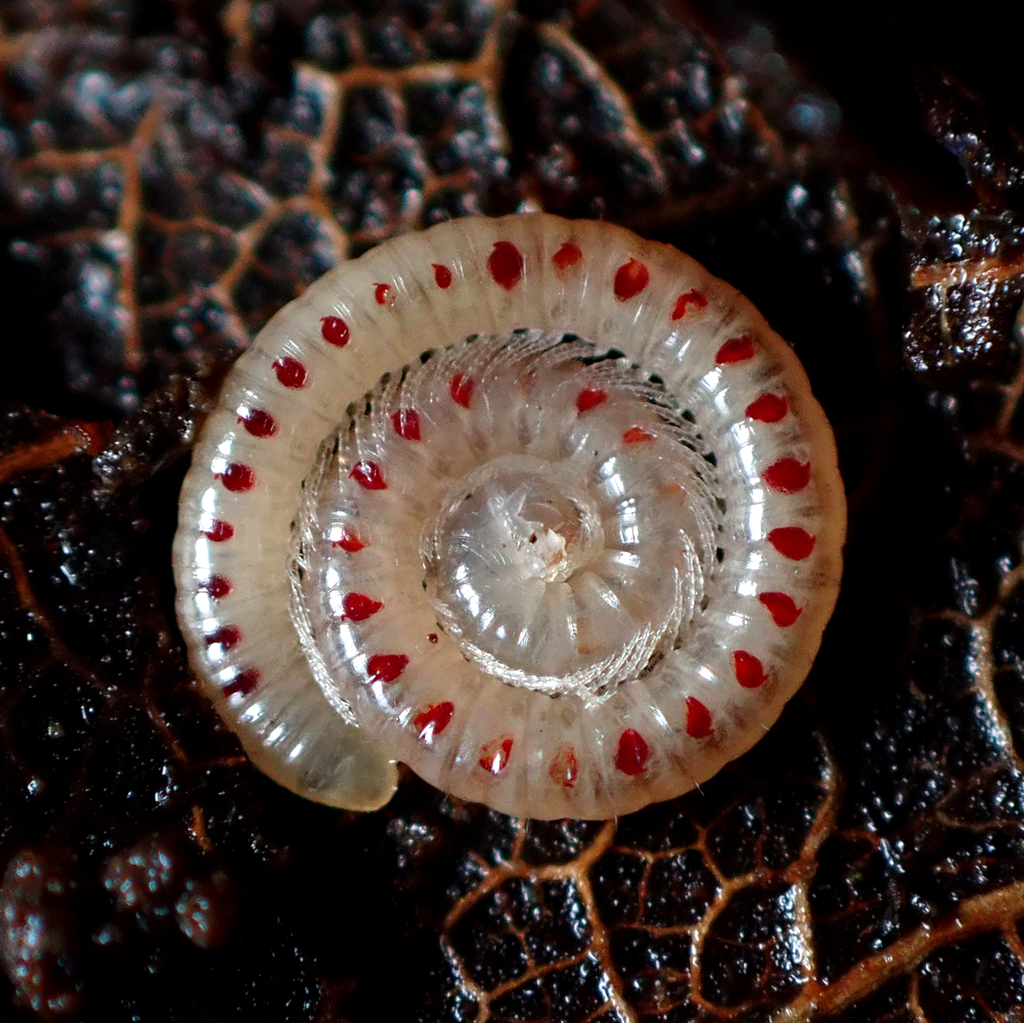
The spotted snake millipede is a thin, whitish-cream creature with bright red spots on each segment and no eyes. Males are 8 to 12 mm long, females 12 to 15 mm, and they can live as nymphs for three years before maturing. It is common in gardens across Europe and North America and feeds on crops like sugar beets, becoming a pest in prolonged drought.
Source: Wikipedia
How to recognize it
The body is cream-coloured with conspicuous deep-red spots on each segment and lacks eyes. Short setae line the dorsal margin of each segment.
Source: Wikipedia
Size
Males are usually 8 to 12 mm long and about 0.4 mm wide, sometimes reaching 14 mm long.
Source: Wikipedia
Where it lives
It is common in gardens and cultivated areas throughout Europe and North America.
Source: Wikipedia
Life cycle
The species spends three years as a nymph before reaching adulthood. Males mature earlier than females.
Source: Wikipedia
Where it comes from
It has been introduced to the United States, Canada, several islands, and parts of Australia such as Tasmania.
Source: Wikipedia
Where it is found in the US
Recorded in 19 of 51 states and DC. Most records: California, New York, Pennsylvania, Massachusetts, Oregon, Michigan, Utah, Washington.
Darker = more records. Counts are museum and citizen-science records, not population size.
Source: GBIF
Status: introduced in North America; introduced in Canada; introduced in United States. Source: iNaturalist
Months it is reported in the US
Source: GBIF
More photos

Questions people ask
Is this millipede a garden pest?
Yes, it can become an agricultural pest in prolonged droughts, damaging crops like sugar beets.
Source: Wikipedia
How long does it stay a nymph?
It remains in the nymph stage for about three years before maturing.
Source: Wikipedia
How can I recognize a spotted snake millipede?
Look for a thin, cream-coloured body with deep-red spots on each segment and no eyes.
Source: Wikipedia
Sources
- Wikipedia: https://en.wikipedia.org/wiki/Blaniulus_guttulatus
Look it up elsewhere: GBIF · iNaturalist · BugGuide · ITIS · Wikipedia
Text written 2026-10-23 from the sources above and checked sentence by sentence against them. Data fetched 2026-10-22.