 Bug FAQ
Spotted Maize Beetle
Astylus atromaculatus · Order: Coleoptera · Family: Melyridae
Source: Wikipedia
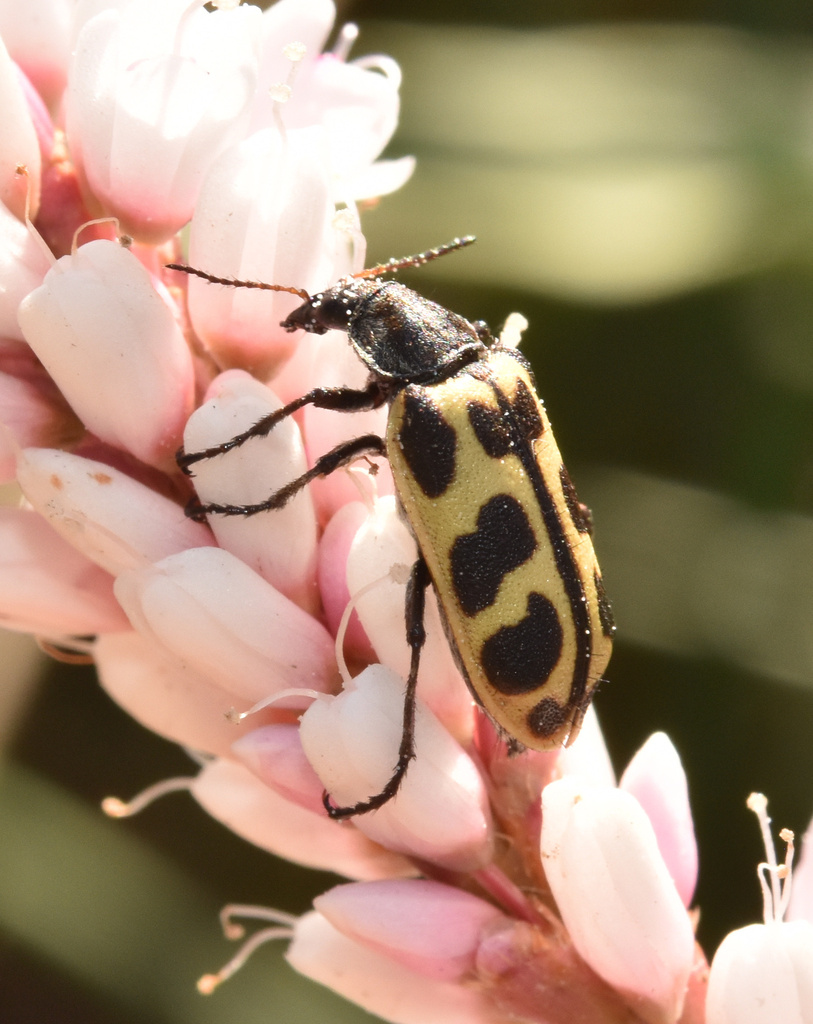
Adult spotted maize beetles are about 12 mm long, black with pale hairs and yellow-orange elytra that have a black median stripe and two cross-marks. They feed on pollen from wind-pollinated grasses and can become numerous enough to damage maize, sorghum and other Poaceae crops, especially where they are invasive.
Source: Wikipedia
How to recognize it
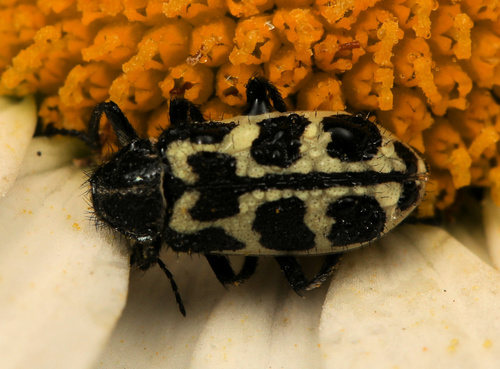
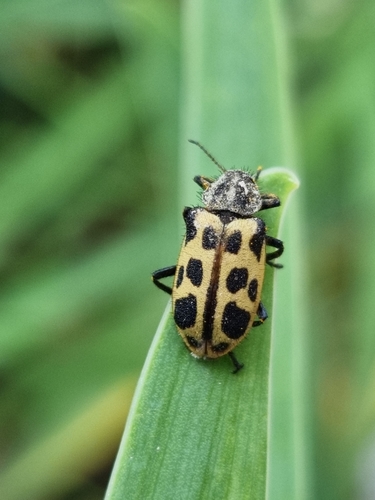
The beetle’s body is black with pale hairs on the pronotum and two large eye-like black spots. Its elytra are yellow to orange with a black stripe down the middle and two short cross-marks on that stripe.
Source: Wikipedia
Size
Adults are about 12 mm long and 5 mm wide.
Source: Wikipedia
Is it a pest in the house?
They are attracted to wind-pollinated grasses such as maize and sorghum and can reach numbers that damage these crops.
Source: Wikipedia
Does it bite or sting?
Large numbers of beetles can be poisonous to livestock that ingest them, leading to deaths.
Source: Wikipedia
How to get rid of it
Keep livestock out of pastures during times when beetles are inactive, especially in cool mornings and evenings. Yellow detergent trays can trap adults, though their impact on heavy infestations is uncertain.
Source: Wikipedia
Where it lives
It is native to Argentina and nearby countries but has become invasive in warm parts of South Africa.
Source: Wikipedia
What it eats
Adults feed on pollen from flowers, especially those of grain crops. Larvae live in soil, eating decaying plant matter, seeds and germinating seedlings.
Source: Wikipedia
Life cycle
Larvae are covered with long, silky brown-to-reddish hairs.
Source: Wikipedia
When you see it
Populations peak in midsummer and autumn when pollen is abundant.
Source: Wikipedia
Where it comes from
Its original range includes Argentina and neighboring nations.
Source: Wikipedia
More photos
Questions people ask
How can I reduce beetle damage to my crops?
Use yellow detergent traps to catch adults and avoid grazing livestock in fields when beetles are abundant, especially during cool periods when they are less active.
Source: Wikipedia
Are these beetles poisonous to animals?
Yes, livestock that eat large numbers of the beetles can die from poisoning.
Source: Wikipedia
Same family (Melyridae)

Sources
- Wikipedia: https://en.wikipedia.org/wiki/Astylus_atromaculatus
Look it up elsewhere: GBIF · iNaturalist · BugGuide · Wikipedia
Text written 2026-10-23 from the sources above and checked sentence by sentence against them. Data fetched 2026-10-22.