 Bug FAQ
Spotted Ground Swift Spider
Nyssus coloripes · Order: Araneae · Family: Corinnidae
Also called: Australian ground spider, Painted swift spider

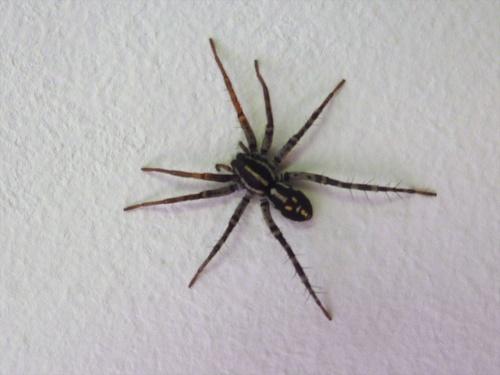
They are small spiders about 6 to 7 mm long and are mostly black with white spots and orange front legs. In New Zealand they are often found inside homes and in short grassland, while they are native to Australia. They hunt without webs during the day and may use webs only to sense prey.
Source: Wikipedia
How to recognize it
They are mostly black with white spots on the body and orange front legs.
Source: Wikipedia
Size
Adults measure about 6 to 7 mm in length.
Source: Wikipedia
Is it a pest in the house?
They are frequently encountered inside homes in New Zealand.
Source: Wikipedia
What it eats
They hunt prey without building webs, though they may use webs to detect prey.
Source: Wikipedia
When you see it
They are active during daylight hours.
Source: Wikipedia
Where it comes from
The orange-legged swift spider originates from Australia.
Source: Wikipedia
More photos
Questions people ask
What do orange-legged swift spiders look like?
They are mostly black with white spots on the body and have orange front legs.
Source: Wikipedia
Where are they found in New Zealand?
They are often seen inside homes and in short grassland.
Source: Wikipedia
Sources
- Wikipedia: https://en.wikipedia.org/wiki/Nyssus_coloripes
Look it up elsewhere: GBIF · iNaturalist · BugGuide · Wikipedia
Text written 2026-10-22 from the sources above and checked sentence by sentence against them. Data fetched 2026-10-22.