 Bug FAQ
Spirobolellus immigrans
Spirobolellus immigrans · Order: Spirobolida · Family: Spirobolellidae
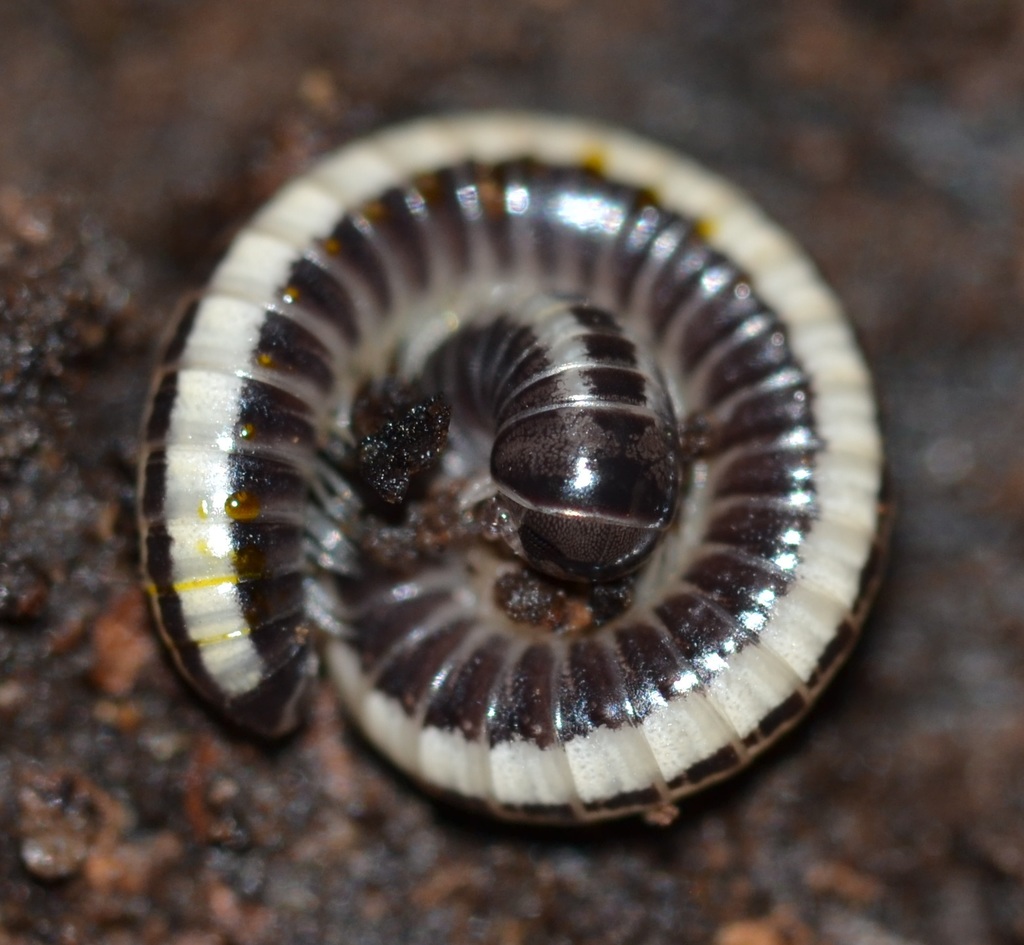
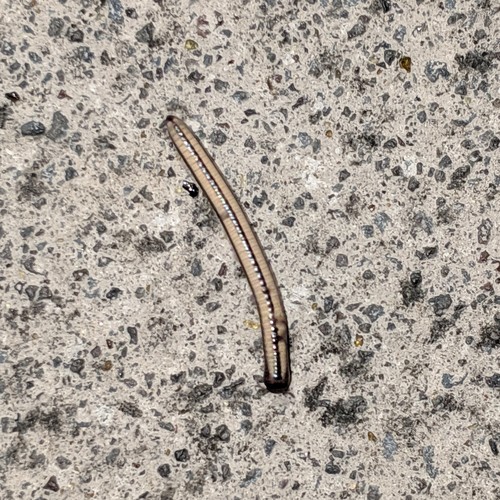
Adults are about 2 mm wide and up to 20 mm long, while juveniles can be around 8.5 mm long. They have an orange back split by a thin black stripe, black sides, and a yellow-orange belly. They live in moist leaf litter or under logs, often on staghorn ferns, and eat decaying plant material. The species is native to Australia, though it was first described from a specimen imported to California.
Source: Wikipedia
How to recognize it
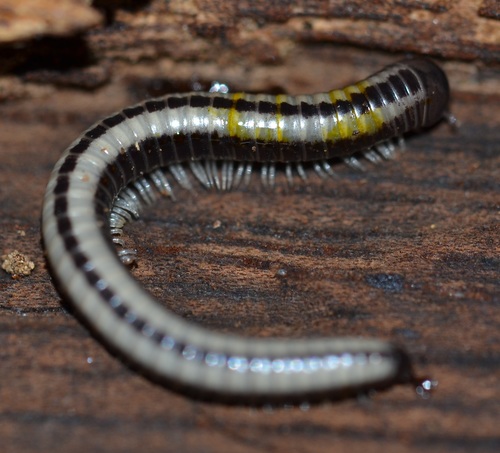
The dorsal surface is orange with a narrow black stripe down the middle, the sides are black, and the ventral side is yellow-orange.
Source: Wikipedia
Size
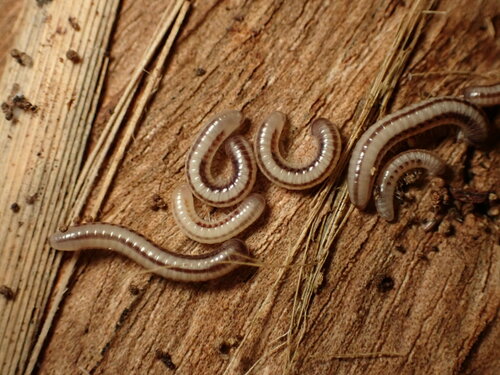
Immature individuals can be about 8.5 mm long.
Source: Wikipedia
Where it lives
They are found in moist environments such as leaf litter, under logs, and on staghorn ferns.
Source: Wikipedia
What it eats
They feed on soft plant parts and decaying vegetation.
Source: Wikipedia
Where it comes from
Spirobolellus immigrans is native to Australia.
Source: Wikipedia
Where it is found in the US
Recorded in 1 of 51 states and DC. Most records: Hawaii.
Darker = more records. Counts are museum and citizen-science records, not population size.
Source: GBIF
Months it is reported in the US
Source: GBIF
More photos
Sources
- Wikipedia: https://en.wikipedia.org/wiki/Spirobolellus_immigrans
Look it up elsewhere: GBIF · iNaturalist · BugGuide · Wikipedia
Text written 2026-10-23 from the sources above and checked sentence by sentence against them. Data fetched 2026-10-23.