 Bug FAQ
Spined Turban Gall Wasp
Antron douglasii
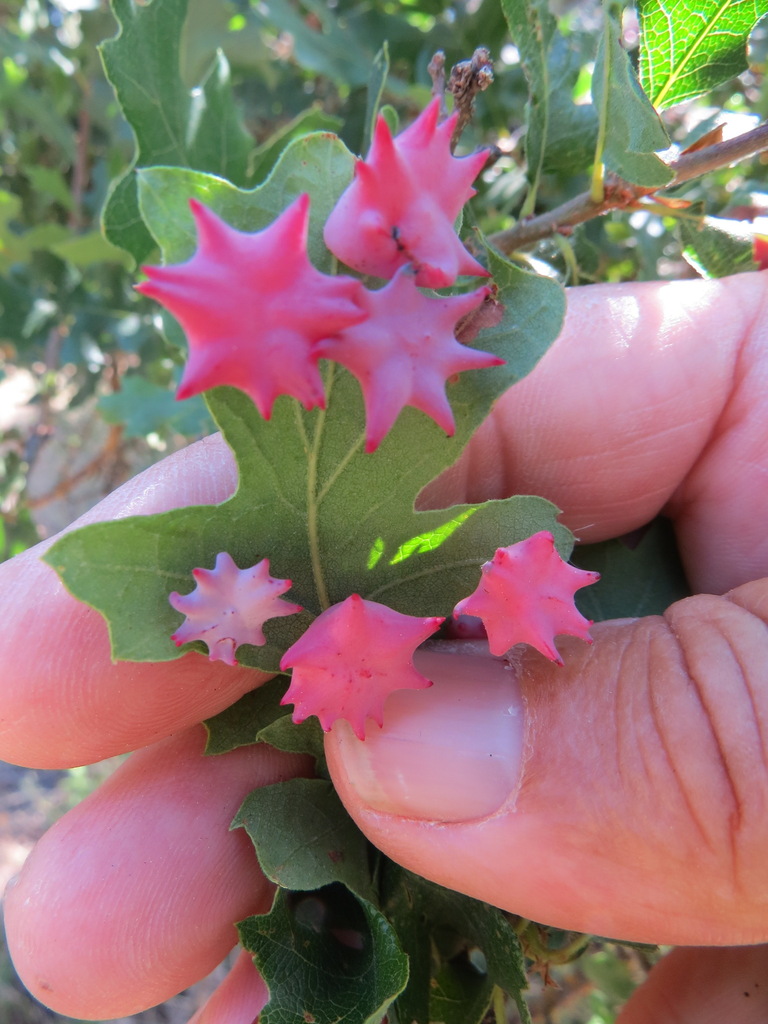
The spined turban gall wasp reaches about 10 mm wide and 15 mm high. Its summer galls on oak leaves have spiny white, purple or pink tips.
Source: Wikipedia
How to recognize it
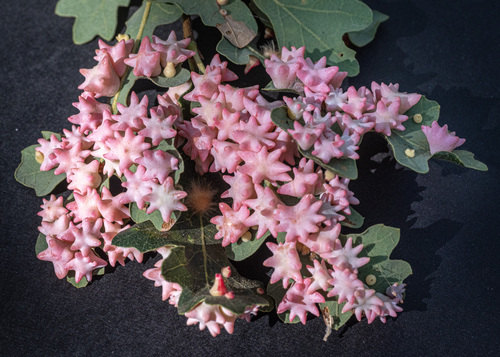
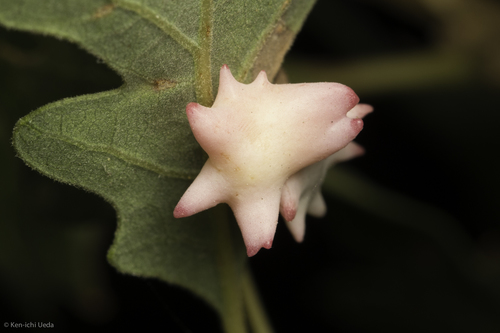
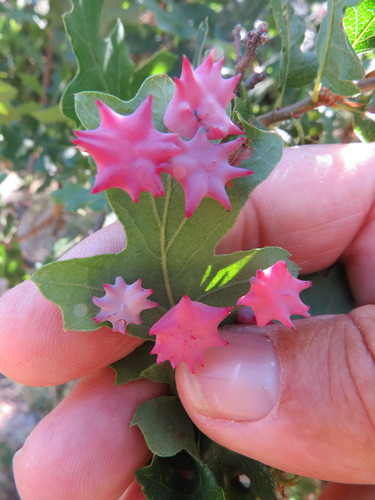
Summer leaf galls are spiny and may be white, purple, or pink.
Source: Wikipedia
Size
Adults can be up to 10 mm wide and 15 mm high.
Source: Wikipedia
Where it lives
It forms galls on valley oak, blue oak, and California scrub oak.
Source: Wikipedia
What it eats
It induces galls on valley oak, blue oak, and California scrub oak.
Source: Wikipedia
Where it comes from
The spined turban gall wasp belongs to the family Cynipidae.
Source: Wikipedia
Where it is found in the US
Recorded in 2 of 51 states and DC. Most records: California, Nevada.
Darker = more records. Counts are museum and citizen-science records, not population size.
Source: GBIF
Status: native in North America; native in United States. Source: iNaturalist
Months it is reported in the US
Source: GBIF
More photos

Questions people ask
What do the galls of the spined turban gall wasp look like?
They are spiny leaf galls that can be white, purple, or pink in color.
Source: Wikipedia
Sources
- Wikipedia: https://en.wikipedia.org/wiki/Cynips_douglasii
Look it up elsewhere: iNaturalist · BugGuide · ITIS · Wikipedia
Text written 2026-10-24 from the sources above and checked sentence by sentence against them. Data fetched 2026-10-24.