 Bug FAQ
Spearhead bluet
Coenagrion hastulatum · Order: Odonata · Family: Coenagrionidae
Also called: Northern Blue Damselfly, Northern Coenagrion, Northern Damselfly
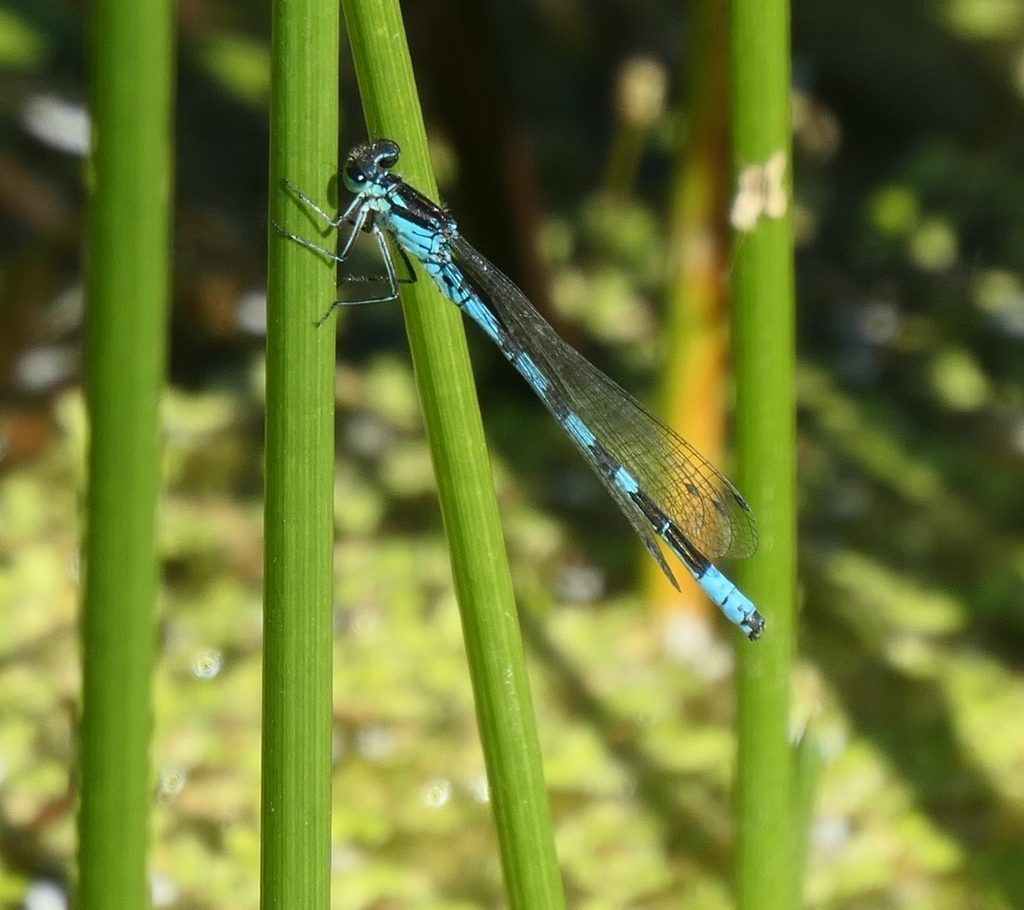
The spearhead bluet measures about 31 to 33 mm in length. Its name comes from a spear-shaped marking on the second abdominal segment. It is common across northern Eurasia, favoring elevated or bog-like sites, and in Britain it is found only in a few small lochans in Scotland.
Source: Wikipedia
How to recognize it
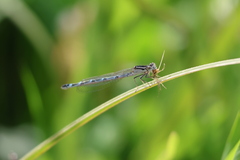
The second abdominal segment has a distinctive spear-shaped mark.
Source: Wikipedia
Size
Adults are 31 to 33 mm long.
Source: Wikipedia
Where it lives
It lives in elevated or bog-like habitats across northern Eurasia. In Britain it is limited to a few small lochans in Scotland.
Source: Wikipedia
More photos

Questions people ask
Where does the spearhead bluet live?
It is common in northern Eurasia, preferring elevated or bog-like sites, and in Britain it occurs only in a few small lochans in Scotland.
Source: Wikipedia
Why is it called 'hastulatum'?
The name refers to a spear-shaped marking on the second abdominal segment.
Source: Wikipedia
Same family (Coenagrionidae)


Sources
- Wikipedia: https://en.wikipedia.org/wiki/Coenagrion_hastulatum
Look it up elsewhere: GBIF · iNaturalist · BugGuide · Wikipedia
Text written 2026-10-22 from the sources above and checked sentence by sentence against them. Data fetched 2026-10-22.