 Bug FAQ
Southern House Spider
Kukulcania hibernalis · Order: Araneae · Family: Filistatidae
Also called: crevice weaver
Source: Wikipedia, lsuagcenter.com, UF/IFAS
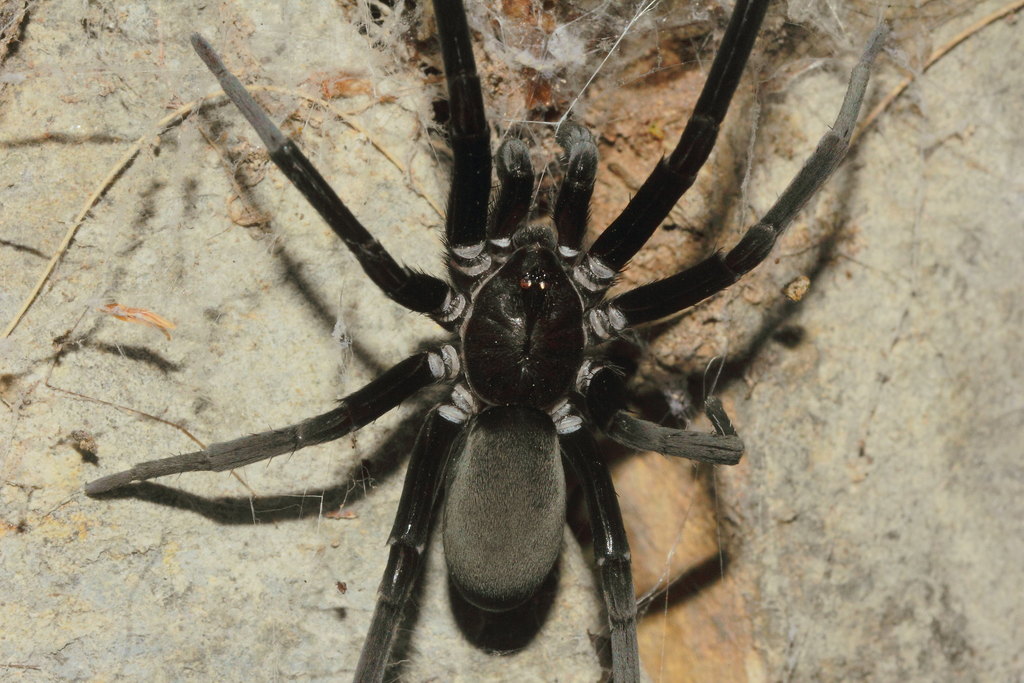
These spiders are common in homes in the southern United States and like to hide in cracks and crevices. They rarely bite people. In two reported cases the bite caused pain and swelling for up to two days.
Source: Wikipedia, UF/IFAS, lsuagcenter.com
How to recognize it
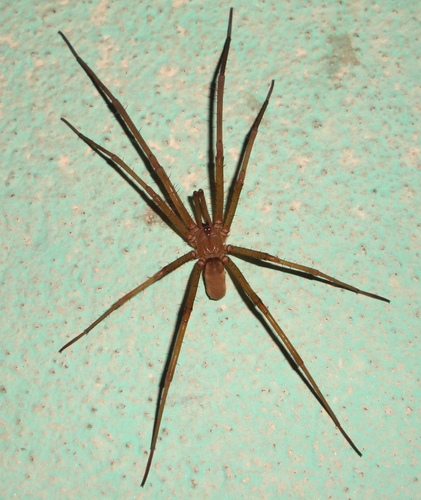
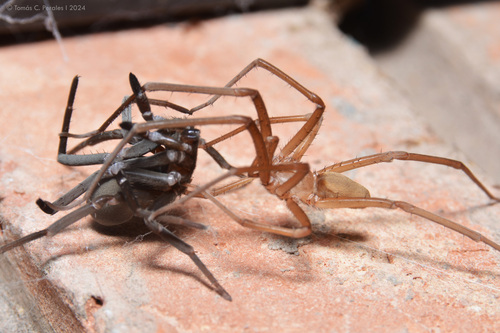
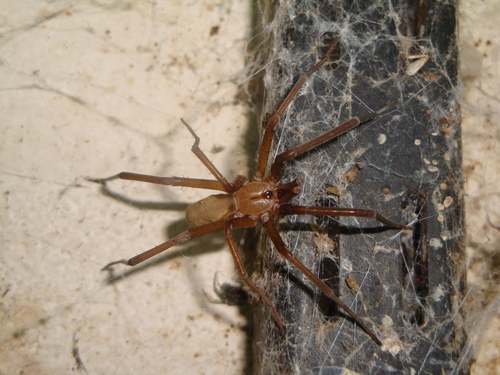
Females are dark brown or black, compact, with a velvety light-gray abdomen. Adults are plain brown to grayish-brown; males are smaller, slender, khaki to amber, with long legs and palpi. Females measure 13 to 19 mm and are charcoal gray; males are 9 to 10 mm long.
Source: Wikipedia, lsuagcenter.com, UF/IFAS
Size
Both sexes can span about 2 inches (5 cm) when legs are spread. Males have longer legs, while females have larger, bulbous bodies.
Source: Wikipedia
Is it a pest in the house?
They often colonize unkept areas of houses, outbuildings, and warehouses. Females make coarse, tangled webs in corners, cracks, and near ceilings; wandering males may also be seen. They are common in Florida and much of the southern U.S. in human-occupied structures. They favor masonry spaces such as dark window-sill recesses, shutters, and overhangs.
Source: lsuagcenter.com, UF/IFAS
Does it bite or sting?
Males may act aggressive but only bite when trapped; their mouthparts are too small to easily pierce skin. They are harmless to humans and reluctant to bite; the venom is not medically significant. Two reported bites caused pain and swelling lasting up to two days.
Source: Wikipedia, lsuagcenter.com, UF/IFAS
How to get rid of it
Webs can be removed safely with a broom or vacuum, and entry points should be sealed. Females may live up to eight years. The species was originally placed in Filistata and later moved to Kukulcania.
Source: lsuagcenter.com, UF/IFAS
Where it lives
Females build radial webs in crevices, giving the family the name crevice weavers. They can squeeze through gaps as narrow as ¼ inch (0.66 cm) because of their elongated bodies.
Source: Wikipedia
What it eats
They capture prey by combing webbing with a cribellum near the spinnerets. Males wander to find insects and females for mating.
Source: Wikipedia
Life cycle
Females lay clutches of about 129 eggs. Average female body mass is roughly 347 mg.
Source: Wikipedia
Where it comes from
They are found throughout the southern United States, Central America, the Caribbean, and into southern South America.
Source: Wikipedia
Lookalikes
Male southern house spiders are often mistaken for brown recluse spiders because of similar color and shape. They differ by being larger, lacking the violin-shaped marking, and having very long slender pedipalps.
Source: Wikipedia, lsuagcenter.com, UF/IFAS
Where it is found in the US
Recorded in 19 of 51 states and DC. Most records: North Carolina, Florida, Georgia, Texas, South Carolina, Alabama, Virginia, Louisiana.
Darker = more records. Counts are museum and citizen-science records, not population size.
Source: GBIF
Months it is reported in the US
Source: GBIF
More photos

Questions people ask
Do southern house spiders bite?
Rarely. In two reported cases the bite caused pain and swelling for up to two days, and the venom is not medically significant.
Source: Wikipedia, lsuagcenter.com, UF/IFAS
How can I get rid of their webs?
Remove the webs with a broom or vacuum and seal cracks and other entry points.
Source: lsuagcenter.com
Where are southern house spiders usually found in a home?
They hide in dark crevices, corners, and cracks of walls, ceilings, and masonry such as window sills and shutters.
Source: Wikipedia, lsuagcenter.com, UF/IFAS
Can I mistake a male southern house spider for a brown recluse?
Yes, males look similar in color and shape, but they are larger, lack the violin marking, and have very long pedipalps.
Source: Wikipedia, lsuagcenter.com, UF/IFAS
Sources
- Wikipedia: https://en.wikipedia.org/wiki/Southern_house_spider
- lsuagcenter.com: https://www.lsuagcenter.com/articles/page1553877264091
- UF/IFAS: https://edis.ifas.ufl.edu/publication/IN301
Look it up elsewhere: GBIF · iNaturalist · BugGuide · ITIS · Wikipedia
Text written 2026-10-23 from the sources above and checked sentence by sentence against them. Data fetched 2026-10-23.