 Bug FAQ
Southern Damselfly
Coenagrion mercuriale · Order: Odonata · Family: Coenagrionidae
Also called: Southern Blue Damselfly, Mercury Bluet, Southern Coenagrion, Southern Damslefly

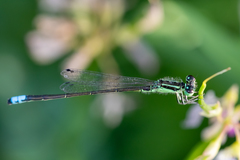
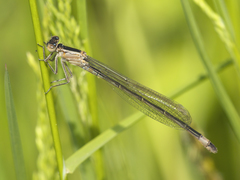
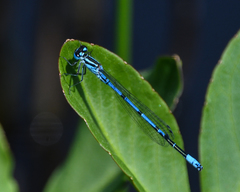
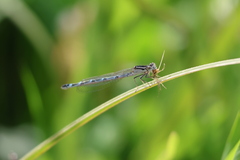
The Southern Damselfly has a distinctive marking on the second abdominal segment that looks like the Mercury symbol ☿. It lives near rivers and freshwater springs, needing open vegetation and slow-flowing water to lay its eggs. Its larvae stay underwater for about two years before emerging as adults.
Source: Wikipedia
How to recognize it
A key identifier is a Mercury-like symbol on the second abdominal segment.
Source: Wikipedia
Where it lives
It is found in rivers and freshwater springs.
Source: Wikipedia
Life cycle
The larvae spend two years underwater before they emerge as adult damselflies.
Source: Wikipedia
Where it comes from
Its range includes many European and North African countries such as France, Germany, Italy, Spain, the United Kingdom and Morocco.
Source: Wikipedia
More photos


Questions people ask
How can I identify a Southern Damselfly?
Look for the Mercury-like mark on the second abdominal segment.
Source: Wikipedia
Where does the Southern Damselfly live?
It lives near rivers and freshwater springs with open vegetation and slow water for laying eggs.
Source: Wikipedia
What countries is the Southern Damselfly found in?
It occurs in many European and North African nations, including France, Germany, Italy, Spain, the United Kingdom and Morocco.
Source: Wikipedia
How long do Southern Damselfly larvae stay in the water?
The larvae remain underwater for about two years before emerging.
Source: Wikipedia
Same family (Coenagrionidae)




Sources
- Wikipedia: https://en.wikipedia.org/wiki/Coenagrion_mercuriale
Look it up elsewhere: GBIF · iNaturalist · BugGuide · Wikipedia
Text written 2026-10-23 from the sources above and checked sentence by sentence against them. Data fetched 2026-10-22.